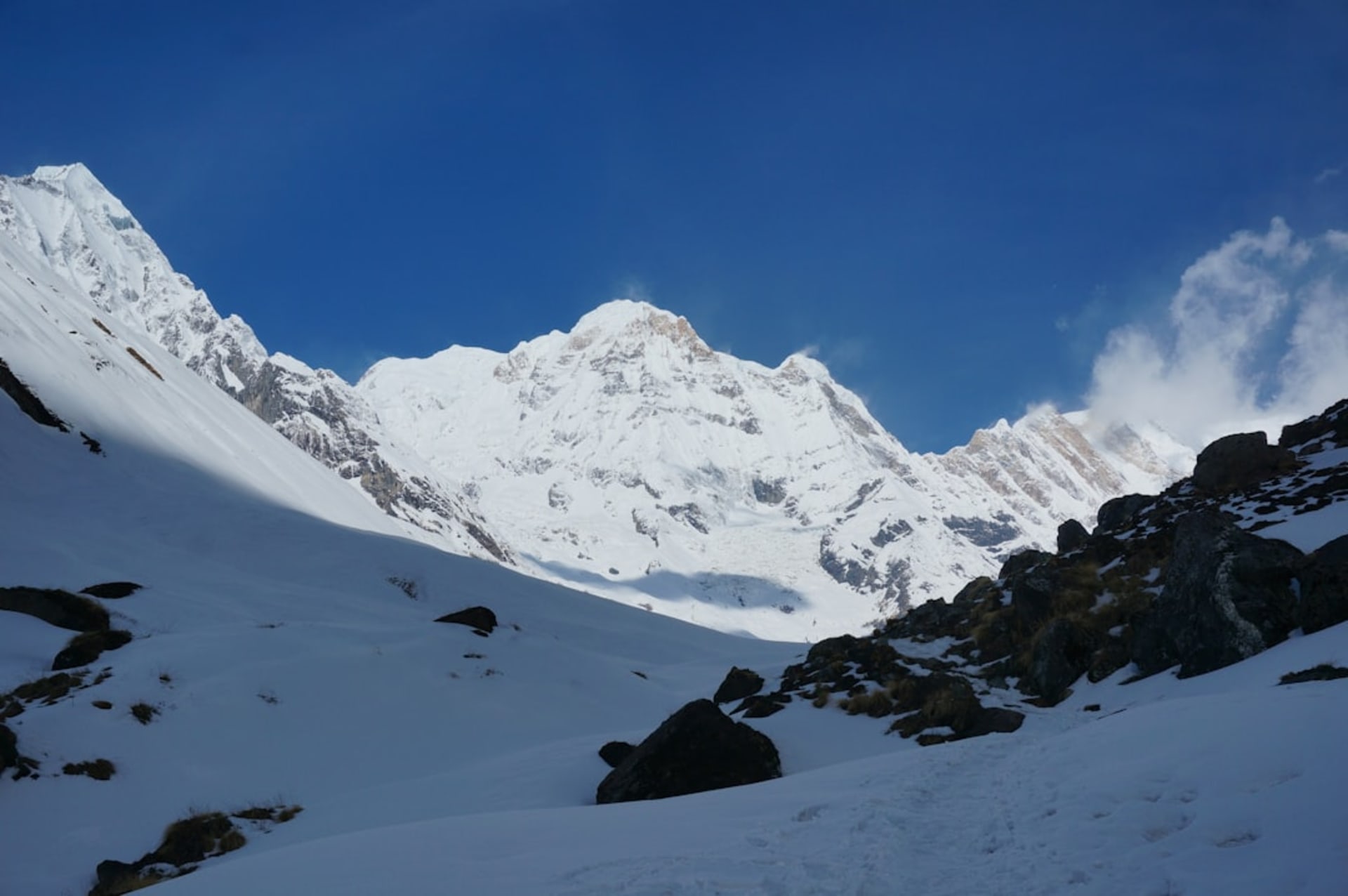
Annapurna Base Camp
"You spend a week walking uphill through a gorge and then, all at once, the walls open and you're standing in a room made of the tallest mountains on the planet."
A natural amphitheater of ice at 4,130 meters, ringed entirely by 7,000- and 8,000-meter peaks, reached without a single high mountain pass or technical section.
The trek to Annapurna Base Camp is sold on the mountains, correctly, but the part nobody mentions in advance is the gorge you walk through to get there. For two days past Chhomrong the trail drops and climbs through the Modi Khola valley — bamboo forest, waterfalls, a claustrophobic corridor of rock walls close enough on both sides that the sky becomes a narrow strip overhead. It’s genuinely a little unnerving, and it’s also the reason the arrival at the Sanctuary lands so hard. You’ve been enclosed for two days and then the valley simply opens into a flat glacial basin ringed by Annapurna I, Annapurna South, Hiunchuli, Gangapurna, and Machapuchare — all of it at once, all of it enormous.
Machapuchare Base Camp, the warm-up
The stop below ABC, Machapuchare Base Camp at 3,700 meters, is worth its own paragraph. Machapuchare — Fishtail — is a sacred, unclimbed peak that no permit has ever been granted for, and its twin-pronged summit fills the entire northern sky from MBC in a way that feels deliberately staged. I stayed the night here rather than pushing straight to ABC, mostly for the altitude adjustment, and woke to the peak lit orange before the sun had reached the valley floor.
Arriving at the Sanctuary
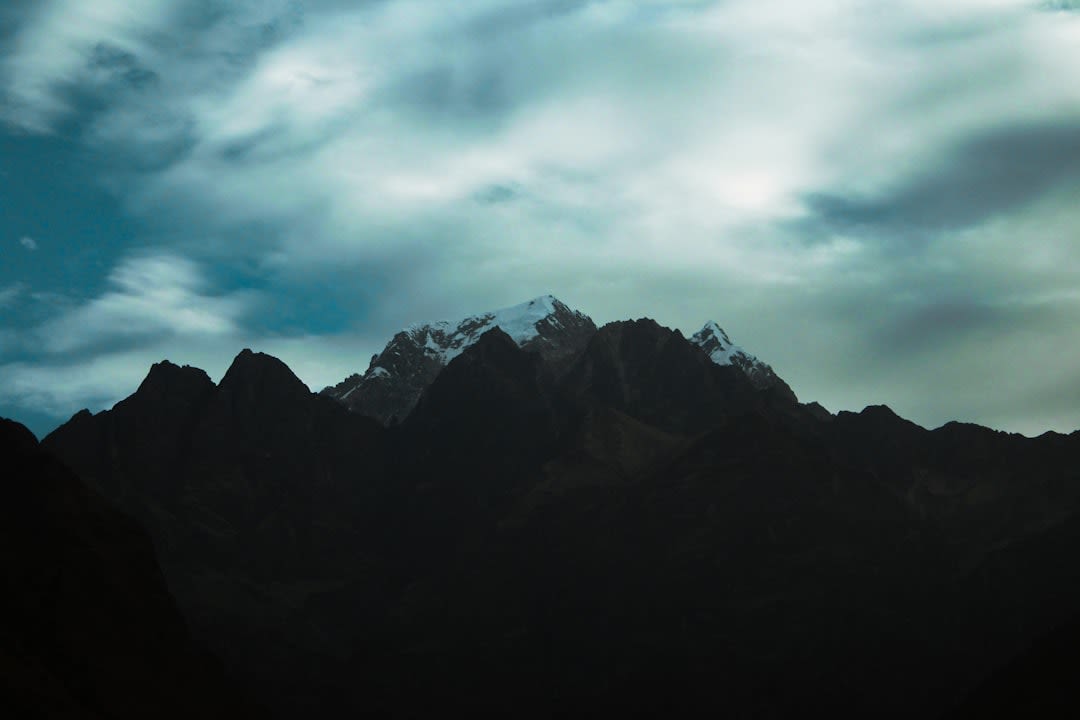
The final push from MBC to ABC is two hours of gradual, unglamorous walking that gives no indication of what’s coming until the terrain flattens and the amphitheater reveals itself completely. Annapurna I, at 8,091 meters the tenth-highest mountain on earth and among the deadliest to climb historically, sits directly across the basin. There’s a small memorial near the lodges for climbers who didn’t come back from it, which sobers the mood in a way that felt appropriate rather than heavy.
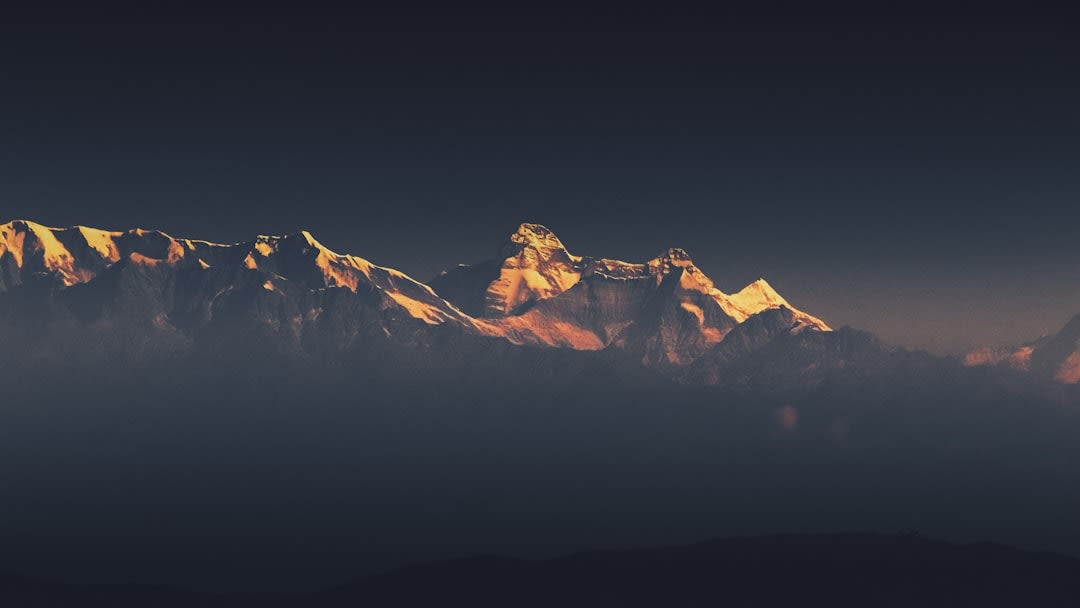
Lia and I sat outside past dark, which the lodge staff mildly discouraged given the cold, and watched the peaks go from orange to grey to a strange glowing blue under a full moon. Nobody at altitude sleeps well, so nobody really minded the company.
When to go: October and November for the clearest views and driest trail conditions. March through April brings rhododendron on the lower sections and warmer nights at the Sanctuary itself, though afternoon cloud cover is more common.