Waterberg Plateau National Park
"Some places ask you to be quiet before they let you understand them."
A red sandstone tableland rising from the bushveld, sanctuary for rhino and vulture, and site of a grief-heavy history.
We drove up from Windhoek on a road that got emptier by the hour, and somewhere past the halfway mark the plateau just appeared — this long red wall of rock, 200 meters of sandstone standing up out of flat bush like the land had changed its mind. Lia was driving that stretch and she actually slowed down without meaning to. I remember thinking it looked less like a hill and more like the edge of something, a fortress the desert had built for itself over millions of years.
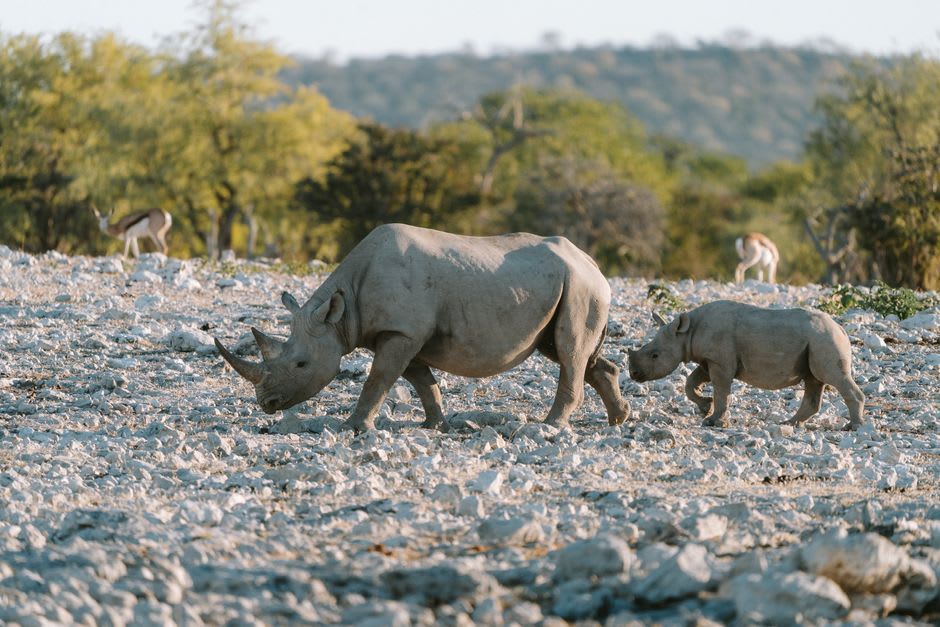
We stayed two nights at a small lodge at the base, and our guide, a Namibian named Erasmus who’d worked the reserve for over a decade, walked us through why this place matters so much. Since the 1970s the plateau has been a breeding sanctuary for animals that were running out of room everywhere else — white and black rhino, sable and roan antelope, even Cape vulture colonies nesting in the cliff faces. Erasmus pointed out a black rhino grazing near a spring one early morning, and he told us flatly that without places like Waterberg, isolated enough to keep poachers and predators out, that animal probably wouldn’t exist anymore. It wasn’t dramatic the way he said it. Just fact.
What stayed with me longer, though, was standing at a lookout point Erasmus took us to on our second day, where he explained that this same plateau was the site of the 1904 Battle of Waterberg — the crushing, deliberate defeat of the Herero people by German colonial forces, an event that still sits at the center of Namibia’s national memory. He didn’t dress it up. He just let the silence of the place carry it. Lia and I stood there a long time not saying much, looking out over the same bush where it happened, and it changed how I saw everything else on the plateau — the springs, the rhino, even the light.
Because there is real beauty here too, and it’s strange, unexpected beauty for this part of the world. The perennial springs feed pockets of green — thick trees, ferns, plants you don’t expect after days of dry acacia scrub — clinging to the base of the cliffs like the plateau kept a small forest for itself. We ate breakfast one morning at a table looking straight up at the red rock catching the first light, and neither of us said much because there wasn’t much to add.
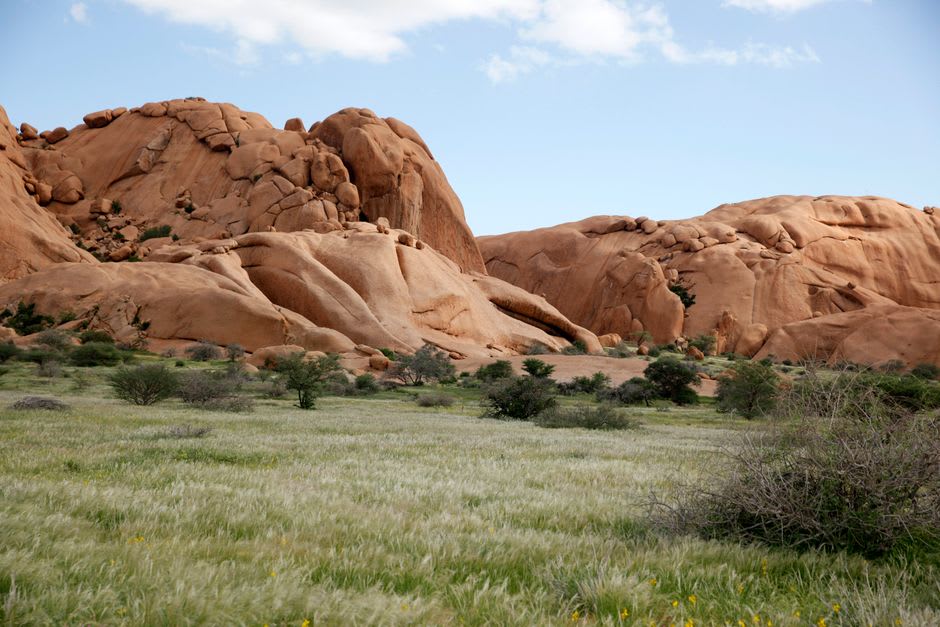
When to go: We went in July, deep in the dry season, and it made all the difference — thinner bush meant we actually saw wildlife instead of just hearing it, and the plateau trails were dry and easy underfoot. Locals told us that from May to October is really the window; after that the rains close in and both the game viewing and the walking get a lot harder.
Keep exploring
More from Namibia
 namibia
 Zambezi Region
A thin panhandle of subtropical Africa grafted onto the northeast corner of Namibia, where the Chobe and Zambezi rivers meet and the landscape bears no resemblance to the country it belongs to.
Explore namibia
 Damaraland
Ancient Bushman rock art at Twyfelfontein, desert-adapted elephants, and the volcanic drama of Brandberg.
Explore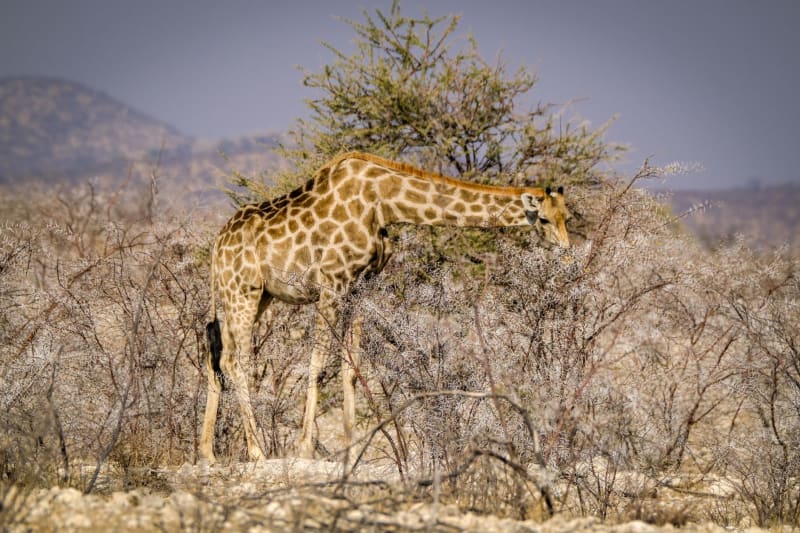 namibia
 Epupa Falls
The Kunene River tumbles 37 meters into a basalt gorge on Namibia's remote Angolan border, surrounded by makalani palms and Himba villages that have been here longer than any road.
Explore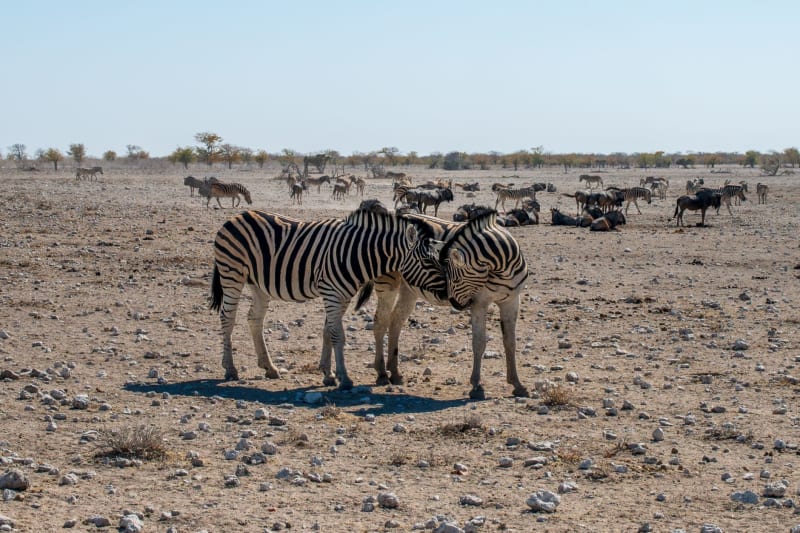 namibia
 Etosha Pan
A colossal salt pan visible from space, ringed by waterholes where predators and prey drink side by side.
Explore namibia
 Fish River Canyon
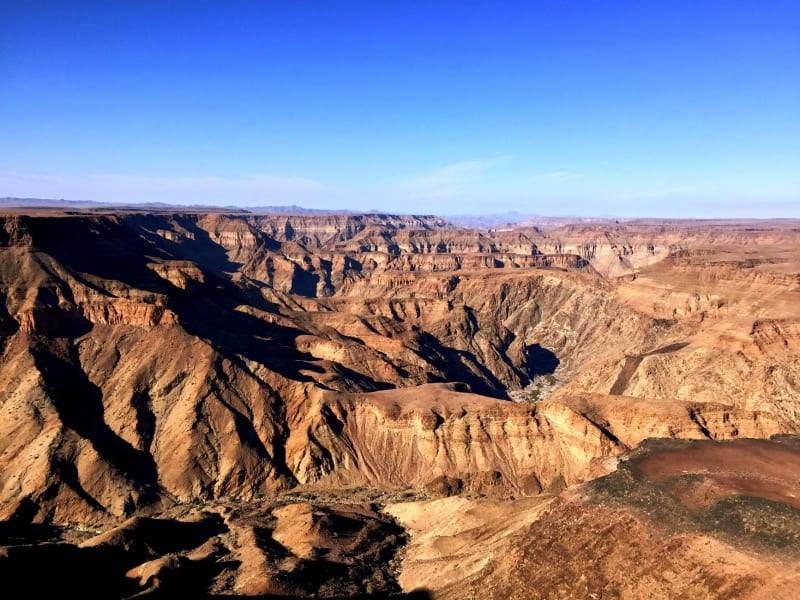
The second-largest canyon on earth sits in Namibia's far south, a five-day hiking route through 550 million years of exposed geology that most people only view from the rim.
Explore namibia
 Lüderitz
A Victorian diamond-rush port marooned on Namibia's southern coast, where Art Nouveau buildings face the Atlantic gales and a ghost town of collapsing houses slowly disappears into the dunes five kilometers away.
Explore