Kohima
"The war cemetery in Kohima stopped me cold. I had not expected to feel grief that sharp in a place I had never heard of."
I came into Kohima at dawn after a night of hairpin roads and the particular darkness that fills Indian mountain towns after ten. The driver dropped me near the old DC Bungalow and I stood there blinking in the pale light, the city still quiet, fog moving through the valley below like something thinking about where to go. I had no idea then that I was standing near ground zero of one of the most consequential battles of the Second World War — fought here, in 1944, across the tennis court of the Deputy Commissioner’s residence, where Allied and Japanese forces were so close they could hear each other breathe.
The Kohima War Cemetery occupies a hillside above the town centre and it is unlike any war memorial I have encountered. There are no grand arches, no triumphalist monuments. Just thousands of white headstones stepping down the hill in terraced rows, names and regimental numbers carved clean, the famous inscription running along the central memorial: When you go home, tell them of us and say, for your tomorrow we gave our today. I read that line three times. The valley spread below, school uniforms moving along the roads, roosters going off somewhere in the mist. The particular cruelty of the place is how alive it feels — how emphatically the world has moved on while the stones hold the names still.

The town itself has the rough, urgent energy of a hill capital still negotiating its modernity. The Naga Bazaar runs chaotic and fragrant — fresh ginger piled in heaps, sections of smoked pork hanging from hooks, vendors selling red raja chili peppers that are among the hottest on earth. The chili here is not a condiment, it is structural. A bowl of pork and bamboo shoot curry from one of the small restaurants near the market carried heat that built slowly, a molecular warmth that lingered through two hours of walking. I ordered it twice.
The Cathedral of Reconciliation, built to mark the site of the Deputy Commissioner’s bungalow, is worth an hour on any visit. The interior is plain but the stained glass work references the battle and the larger themes of forgiveness between enemies — Japan and Britain, the Naga peoples and the Indian state, the past and whatever is being built now. The city around it hums with church music most Sunday mornings; Christianity came to Nagaland through American Baptist missionaries in the nineteenth century and took hold with a thoroughness that still shapes everyday life here.

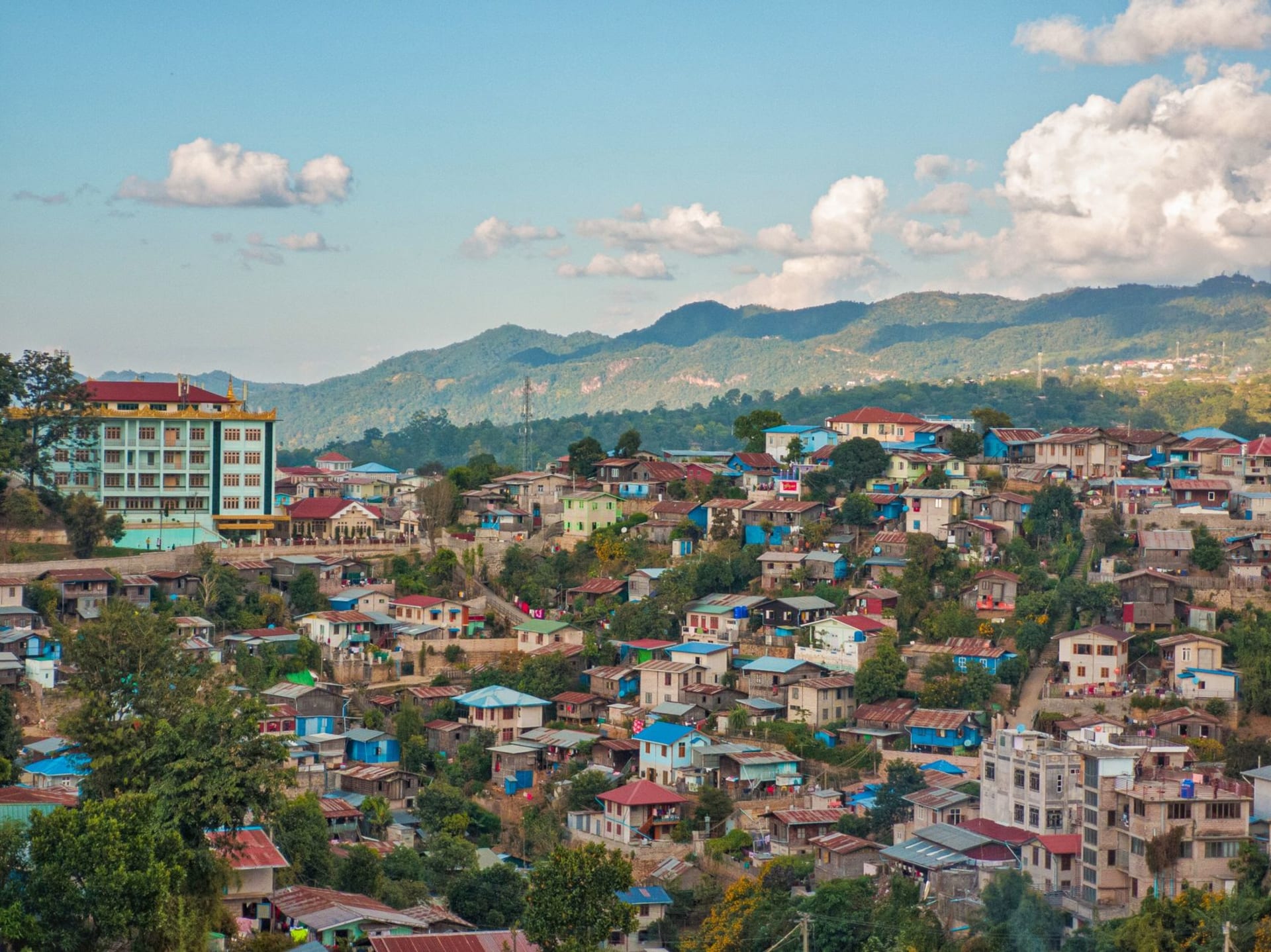
What surprised me most was the view. Kohima sits at roughly 1,500 metres and on clear days the ridges pile up endlessly in every direction, jungle green rolling to the horizon. The town clings to its ridge with a certain obstinate drama — roads narrow and steep, buildings stacked improbably, the whole place feeling like it might one day simply slide into the valley in a dignified heap. I liked it enormously. There is nothing approximate about Kohima. It knows what it is.
When to go: October through early December offers clear skies and cool temperatures — ideal for the war cemetery and market exploring. December brings Hornbill Festival crowds. Avoid June through August when the monsoon makes the approach roads genuinely treacherous.