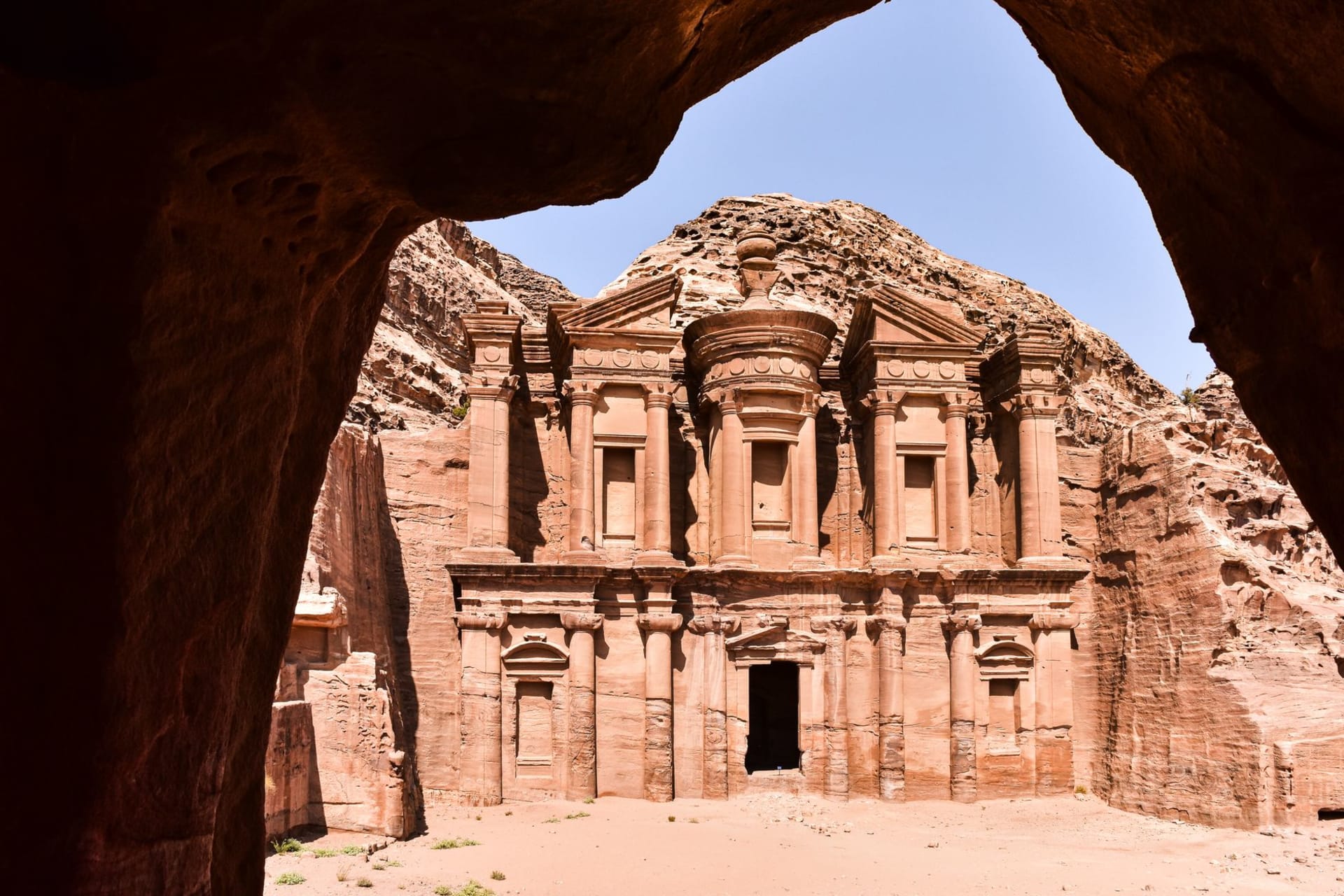
The Monastery — Ad-Deir
"The Treasury gets the famous photo. The Monastery gets the better view."
Nobody warned me about my thighs. The path to the Monastery — Ad-Deir in Arabic, which means the monastery, though it was probably never one — climbs 800 rock-cut steps from the floor of the wadi, and most guidebooks describe this as a “forty-minute hike” with the breezy confidence of people who have done it on fresh legs in October. I did it in late April in the wrong shoes, stopping four times to let loaded donkeys pass, and arrived at the top with a heart rate that felt medically significant. But then I turned around and saw the facade, and the thighs stopped mattering.

Ad-Deir is the largest monument in Petra. Its single-story facade is fifty meters wide and forty-five meters tall — taller than a fifteen-story building — and it was carved from a single mountain, the rock removed chip by chip to leave this enormous front standing. The urn at the top, the one that sets the scale for everything else, is nine meters tall. The columns are thick as tree trunks. The Treasury is more intricate, more photographed, more famous. But the Monastery is more overwhelming. Standing at its base, craning your neck to follow the carved pediment to the sky, you feel the same peculiar combination of awe and smallness that great architecture is supposed to produce but rarely does.
The tea vendors set up their gas burners on the rock ledges to the right of the facade. A Bedouin man in a red-checked keffiyeh poured me tea so sweet it made the roof of my mouth ache, and we stood in the shade looking at the carved door — three meters tall, cut into the rock, leading into a single unadorned chamber. Nobody knows exactly what it was built for. A royal tomb, most likely. The crosses scratched into the interior walls suggest it was used as a chapel during the Byzantine period, which is how the name stuck. I prefer the uncertainty. A building this old should get to keep some of its reasons private.

There is a rock ledge above and to the left of the Monastery, reachable by scrambling up a steep path behind the tea vendors. From up there you can see the whole facade in profile, and beyond it the Wadi Araba dropping away into haze, and on clear days the mountains of Saudi Arabia across the border. A man from the nearby Bdoul tribe told me his grandfather’s grandfather used to graze goats on this plateau. The Nabataean ruins were just the old stone things, he said. Just part of the landscape. There was something clarifying about that.
When to go: Start the climb before 8am to have the Monastery to yourself for an hour. The afternoon light (3pm to 5pm) hits the facade at a warm angle that the morning misses. Avoid midday in summer — the exposed steps have no shade and the heat rising from the stone is punishing. The round trip from the wadi floor takes three to four hours if you move at a reasonable pace.