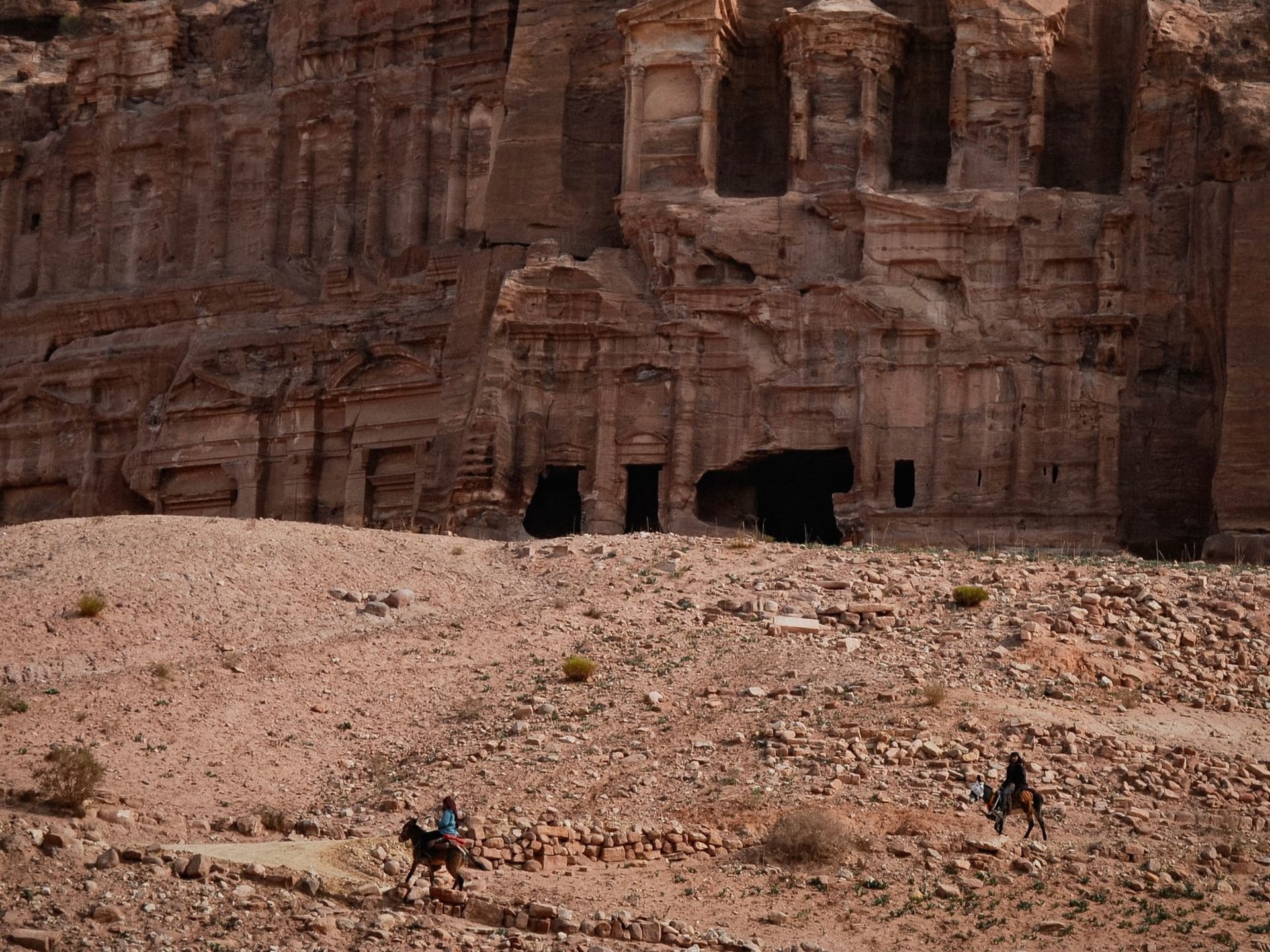
Hegra — Mada'in Salih
"Hegra is what Petra felt like before the buses started coming."
The first thing I noticed was the sky. Petra is a city built inside mountains, its monuments framed by canyon walls and the narrow strips of blue above. Hegra — ancient Hegra, modern Mada’in Salih — is built on a flat desert plain, and when I stepped out of the SUV at the first tomb cluster, the sky was 360 degrees of uninterrupted blue above me and the sandstone outcrops rose from the sand like islands in an orange sea. The scale relationship is completely different. Petra’s carved facades are embedded in the rock. Hegra’s are carved into freestanding boulders, exposed on all sides, surrounded by open desert, meeting the sky directly. You walk around them. They have backs. This simple geographical difference changes everything about how they feel.
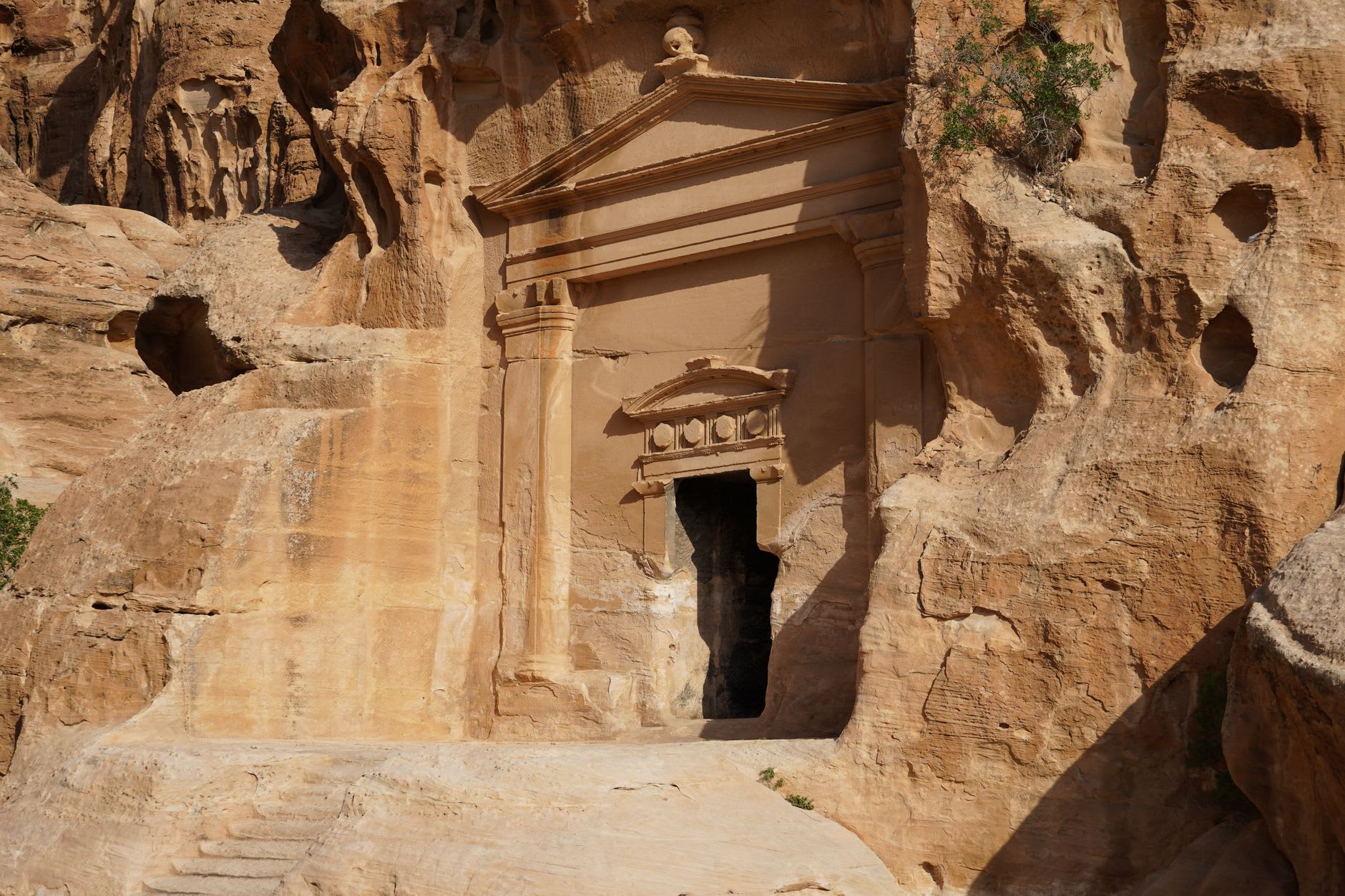
I came to AlUla — the modern town near Hegra — during the second year Saudi Arabia’s e-visa had been open to tourists, and the site still felt genuinely empty. I had a guide named Bassam from the AlUla Development Authority, a meticulous man in his forties who had grown up near the site and could recite the inscriptions from memory. He took me first to Qasr al-Farid, the unfinished tomb: a single massive boulder with a four-story facade carved into one face, the other three sides of the rock still raw and plain. The carving stopped before completion for reasons archaeologists have not resolved. Looking at the unfinished work, the way the decorative panels peter out into blank stone, you see something rare — the Nabataeans caught in the middle of the process rather than at the end. There is a vulnerability in that incompletion.
The inscriptions on the tomb facades at Hegra are more legible than those at Petra. Many of them are curses — detailed legal warnings against disturbing the tomb, naming the occupant, their family, the date of construction, and the penalty for violation (a fine to the gods, a fine to the king, a fine to the town council). They are, in their way, some of the most human things the Nabataeans left behind. People worried about the same things we worry about: that what they built would not be respected, that the future would not be careful.
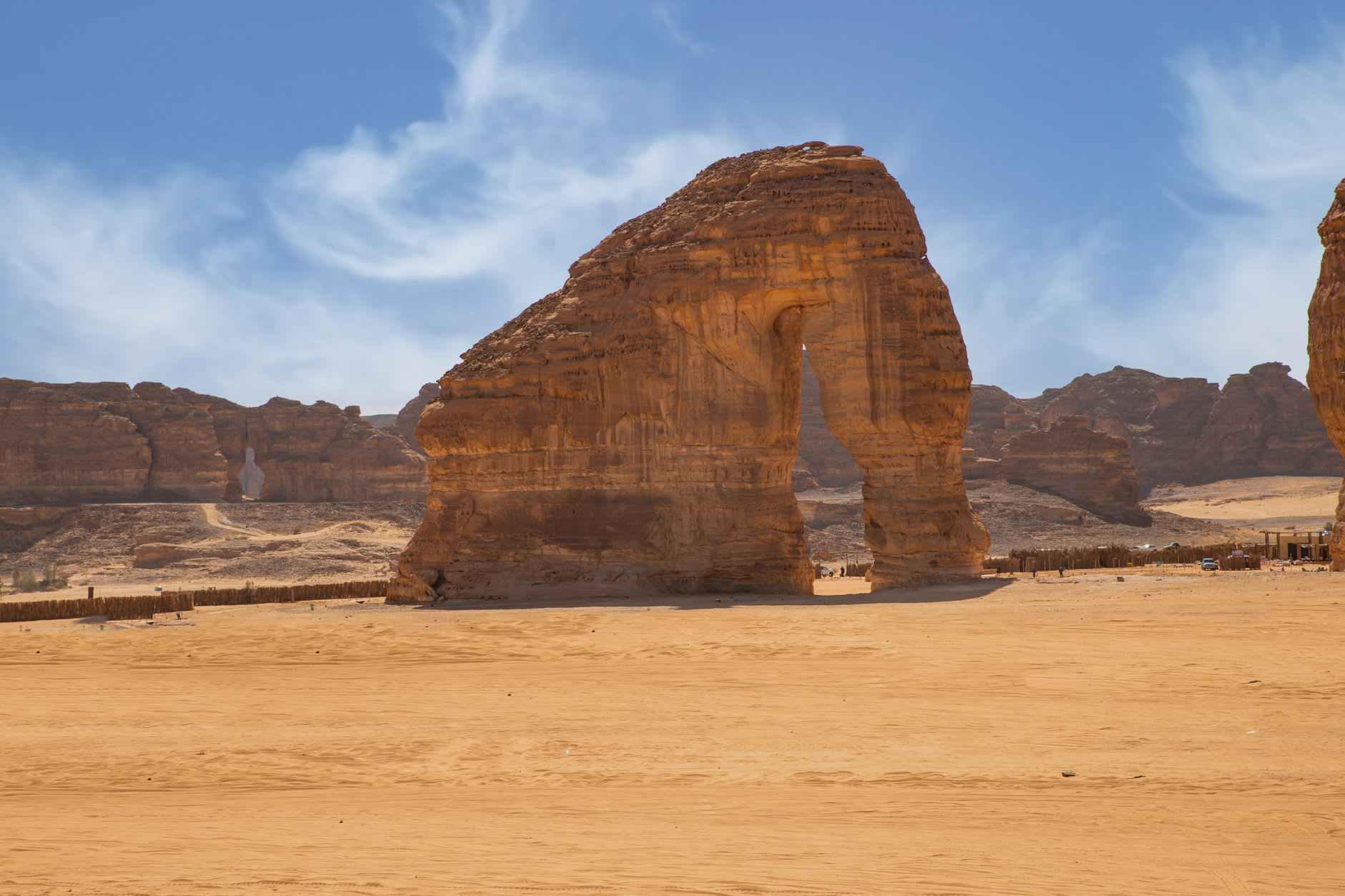
Hegra had been closed to tourists for decades — the Saudi government considered the Quranic references to Mada’in Salih as a cursed city of the prophet Salih to be a deterrent to visiting. That prohibition has shifted with the Vision 2030 tourism push, and the infrastructure around AlUla has been built up rapidly. There is something slightly strange about the architectural interventions — the visitor center is dramatically designed, there are luxury tented camps in the valley — but inside the tomb area, the site itself remains overwhelmingly, quietly ancient. The Nabataean stone does not care about the hospitality investment around it.
When to go: October through March is ideal — dry, warm in the day, cool at night. April and May are manageable but warming quickly. Summer in this part of Saudi Arabia is brutal and most tourist infrastructure operates on reduced hours or closes. Book a guided tour through the AlUla Royal Commission’s official site, as independent access to the tomb area requires pre-booking.