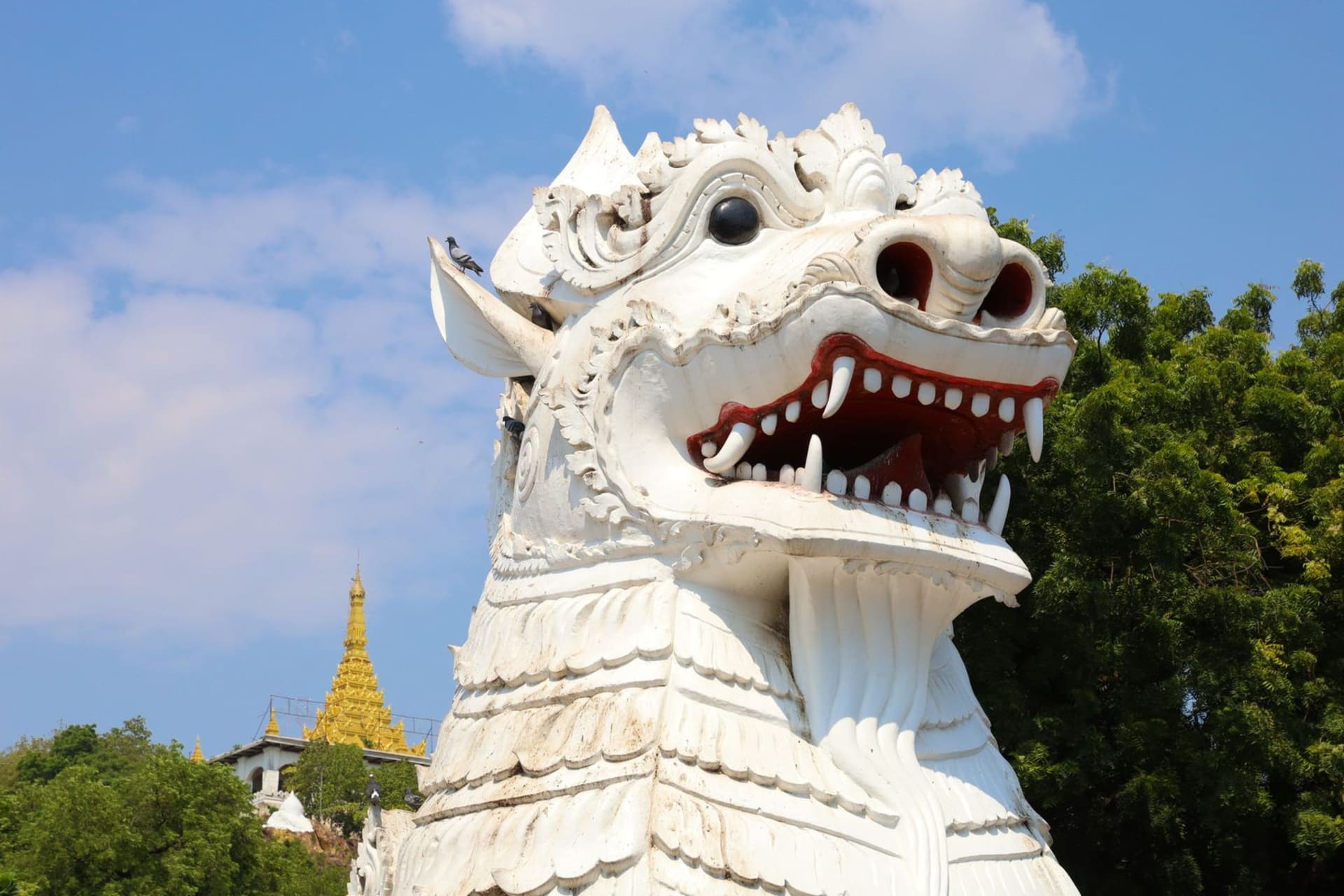
Mandalay
"Mandalay's U Bein Bridge turns monks into silhouettes at sunset, and every photograph taken there looks ancient."
The last royal capital of Burma, with the teak U Bein Bridge at sunset and gold-leaf workshops still running.
There is a particular quality to the light in Mandalay around four in the afternoon — amber, almost solid, the kind that makes everything look as though it is already a memory. I noticed it the first time walking up 84th Street toward the Zegyo Market, past stalls selling thanaka bark and dried shrimp and bolts of silk, the dust rising in slow, luminous columns between the wooden shopfronts. The city smells of teak and incense and something fried I could never quite identify, though Lia was convinced it was mohinga reheated over charcoal.
U Bein at the Hour It Was Made For
Everyone comes to U Bein Bridge. Everyone takes the same photograph. And still the bridge undoes you.
It stretches nearly a mile across Taungthaman Lake — 1,086 teak pillars driven into the lakebed in 1850, still holding, still groaning faintly under foot traffic. We arrived an hour before sunset and hired a small wooden rowboat from the southern bank, a teenage boy navigating us out into the shallows with a single oar, indifferent to the dozen other photographers jostling for the same angle. When the monks began crossing — a procession of young novices in wine-dark robes, barefoot, eyes forward — the scene collapsed into pure silhouette. Flat, dark shapes against a sky that had turned the color of old brass. I stopped trying to photograph it and just watched.
Gold Leaf and the Workshops of Goldbeaters’ Quarter
What surprised me was the sound. Before I saw anything in the goldbeating workshops along 36th Street, I heard it — a dense, rhythmic hammering, four men working in synchrony, striking bundles of paper-wrapped gold with wooden mallets. The gold arrives in small ingots and leaves in squares so thin they float on breath. The workshops are open-fronted, hot, and utterly focused. A man named Ko Naing let me hold a finished sheet between two pieces of paper — it weighed nothing. It felt like holding light.
The gold goes onto temple spires and onto Buddha images all across the country. Every surface in Mandalay that glitters began here, hammered flat by hand.
The Palace and What Remains
Mandalay Palace is vast and largely reconstructed — the original burned in 1945 — but the moat surrounding it is genuinely beautiful, a square of water nearly two kilometers per side, reflecting the white walls at dusk. We walked part of it in the early morning when the air still held some coolness and a monk was fishing from the bank with a line and no apparent urgency. That unhurried quality lives all over Mandalay, underneath the traffic and the noise.
When to go: November through February is the most comfortable window, when temperatures sit in the mid-twenties and the sky stays clear. Avoid April, when the heat becomes genuinely punishing.