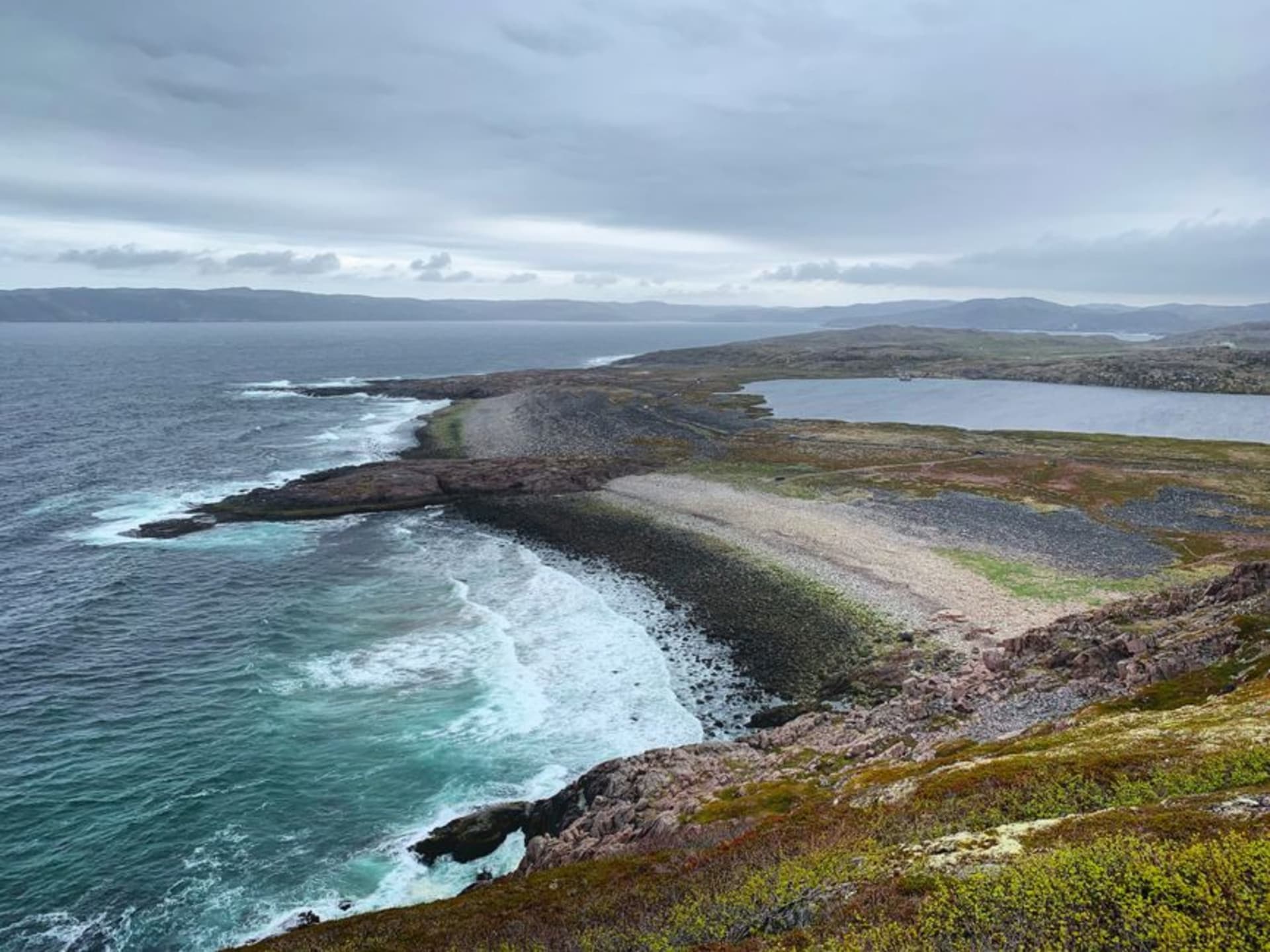
Rybachy Peninsula
"We drove three hours to reach a place with no trees, no signal, and no reason to be there except that it refused to fall."
A treeless, wind-scoured finger of tundra on the Barents Sea where wartime trenches outnumber roads and the silence feels older than the fighting.
I’d read about Rybachy for months before we actually went — the peninsula that never fell, tucked up against the Norwegian border where the Soviet Arctic front held for four straight years while everything around it burned. What I hadn’t understood, sitting in Mexico scrolling old maps, was how physically remote it still is. There’s no easy road in. We arranged a driver with a lifted UAZ out of Murmansk, and the “highway” lasted maybe forty minutes before it dissolved into a track of mud, rock, and standing water that the Sredny isthmus barely holds together. Lia spent most of the ride gripping the door handle and laughing at how absurd it was that this narrow strip of gravel was the only thing connecting the peninsula to the rest of Russia.
What struck me first wasn’t the war history, it was the total absence of trees. I’ve stood on plenty of coastlines, but Rybachy is tundra all the way to the cliff edge — low grass, lichen, rock, then a straight drop into the Barents Sea. The wind never really stopped. We got out near one of the old defensive lines and just started walking, and within ten minutes we were stepping around a collapsed bunker half-swallowed by moss, its firing slit still aimed out at the water like someone might come back.
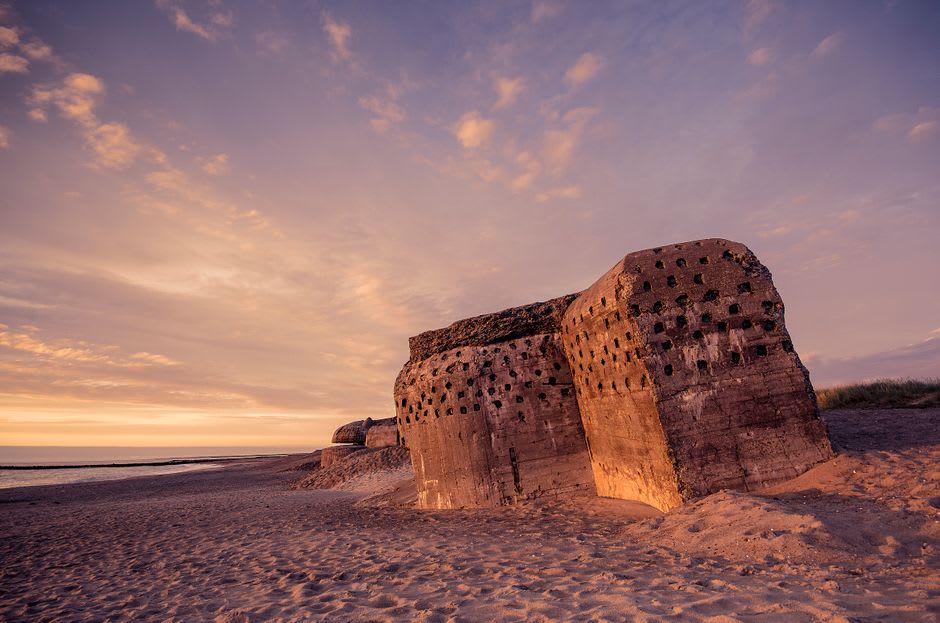
There are dozens of these scattered across the peninsula — trenches, gun emplacements, a few rusted memorials with faded Cyrillic plaques — and almost none of it is fenced off or explained. Our driver, who’d grown up in Murmansk, told us his grandfather had served somewhere along this exact line, and he said it plainly, without much ceremony, the way you’d mention a relative’s old job. It hit me harder than any museum display would have. Lia found a shard of rusted metal near one trench and just looked at it for a long moment before setting it back down exactly where it was.
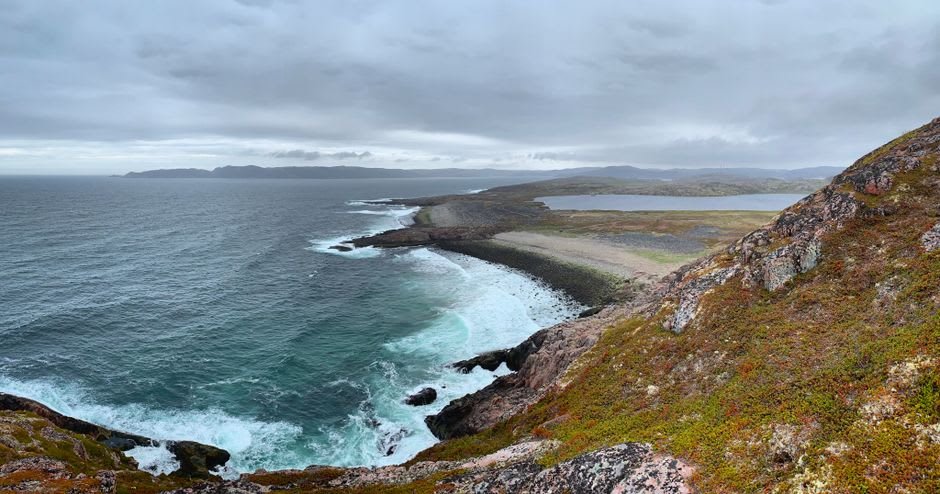
We also passed a couple of Sami-associated sites our driver pointed out — old seasonal camp markers that predate any of the fortifications by centuries, a reminder that this stretch of coast belonged to people long before it became a front line. By the time we turned back toward Murmansk, the light hadn’t really changed at all, which is its own kind of disorienting up there. I don’t think I’ve felt that specific mix of exposure and stillness anywhere else — the sense of being somewhere genuinely hard to reach, and glad of it.
When to go: Aim for July or August — that’s the narrow window when the dirt track across Sredny is dry enough for a vehicle to actually make it, and the tundra itself is at its most walkable rather than half-frozen bog.