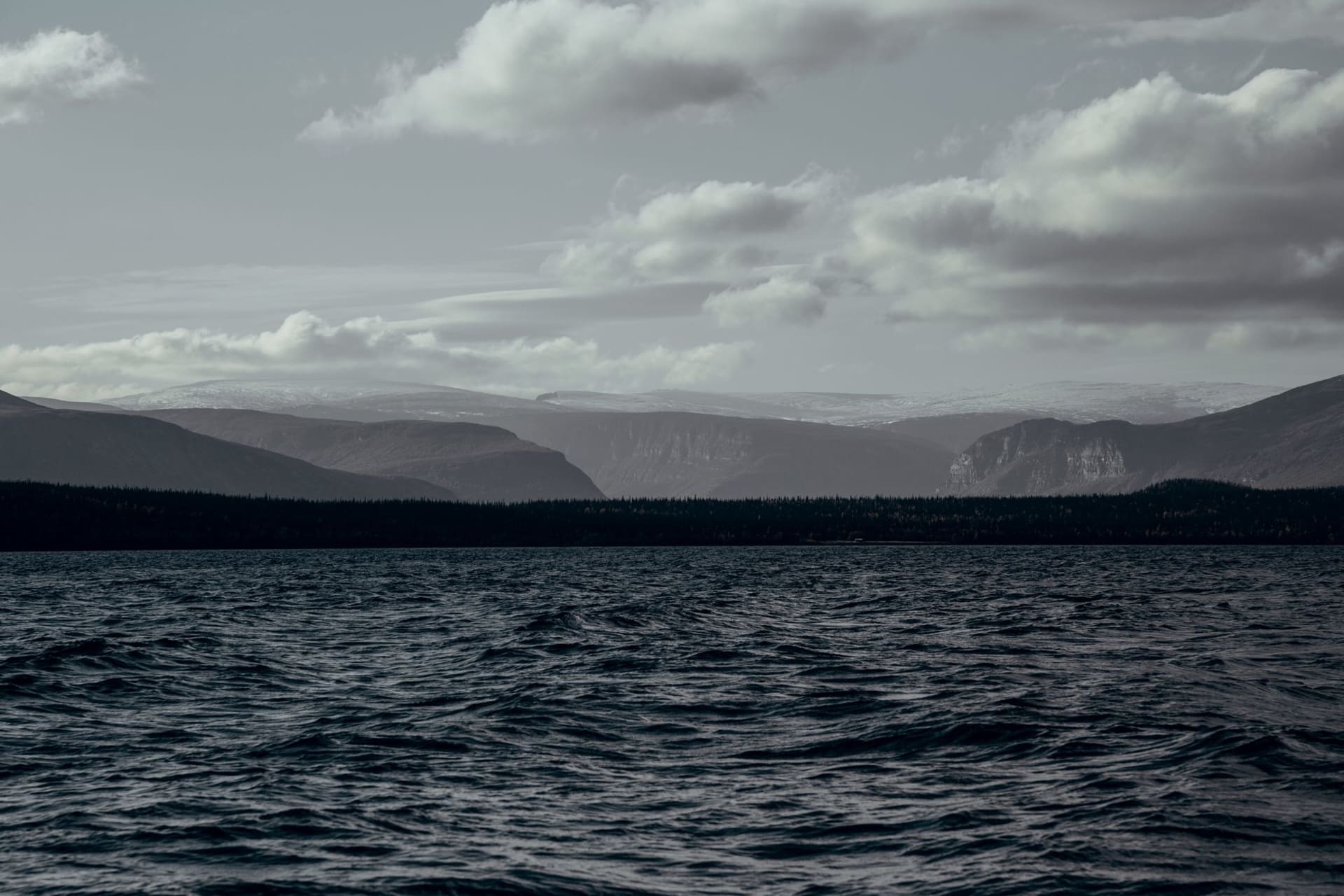
Kola
"Murmansk gets all the attention but Kola has the history. Seven hundred years on this riverbank and it's still here."
Everyone drives through Kola without stopping. It sits just twelve kilometres south of Murmansk, at the point where the Kola River and the Tuloma River join before flowing into the head of the bay — a geographical fact that made it a significant trading post as far back as the thirteenth century — and now it serves primarily as the place you pass through on the way in or out of the city. The main Murmansk road goes right through it. I stopped because I had time and because the old church visible from the road had a quality of solitude that seemed like an invitation.
Kola is one of the oldest Russian settlements in the far north. A fortress was built here in the sixteenth century as part of the defensive system protecting the monastery at Pechenga and the trade routes of the northern coast, and the town that grew around it was, for two centuries, the most significant settlement on the Kola Peninsula. Murmansk didn’t exist until 1916. Before that, Kola was the place. It was attacked by British naval forces during the Crimean War — which is a sentence that manages to compress several surprising historical facts into a single clause — and the old fortress was largely destroyed. What remains from those centuries is fragmentary: a few surviving wooden buildings of the nineteenth century, a small local museum, and the church.
The church — the Resurrection Church, built in the nineteenth century on an older foundation — occupies a rise above the river confluence and is the architectural statement the town still makes. It is wooden, painted white in a way that the snow renders almost invisible from certain angles, and its interior has the particular quality of Orthodox churches in small northern communities: intimate rather than grand, candles burning in front of icons whose gold has darkened with age, a smell of wax and incense that seems to have been accumulating for generations. An elderly woman was praying when I came in and didn’t acknowledge my arrival, which was the correct response. I sat in the back for a while and looked at the light coming through the small windows and felt the specific silence that exists inside functioning devotional spaces.
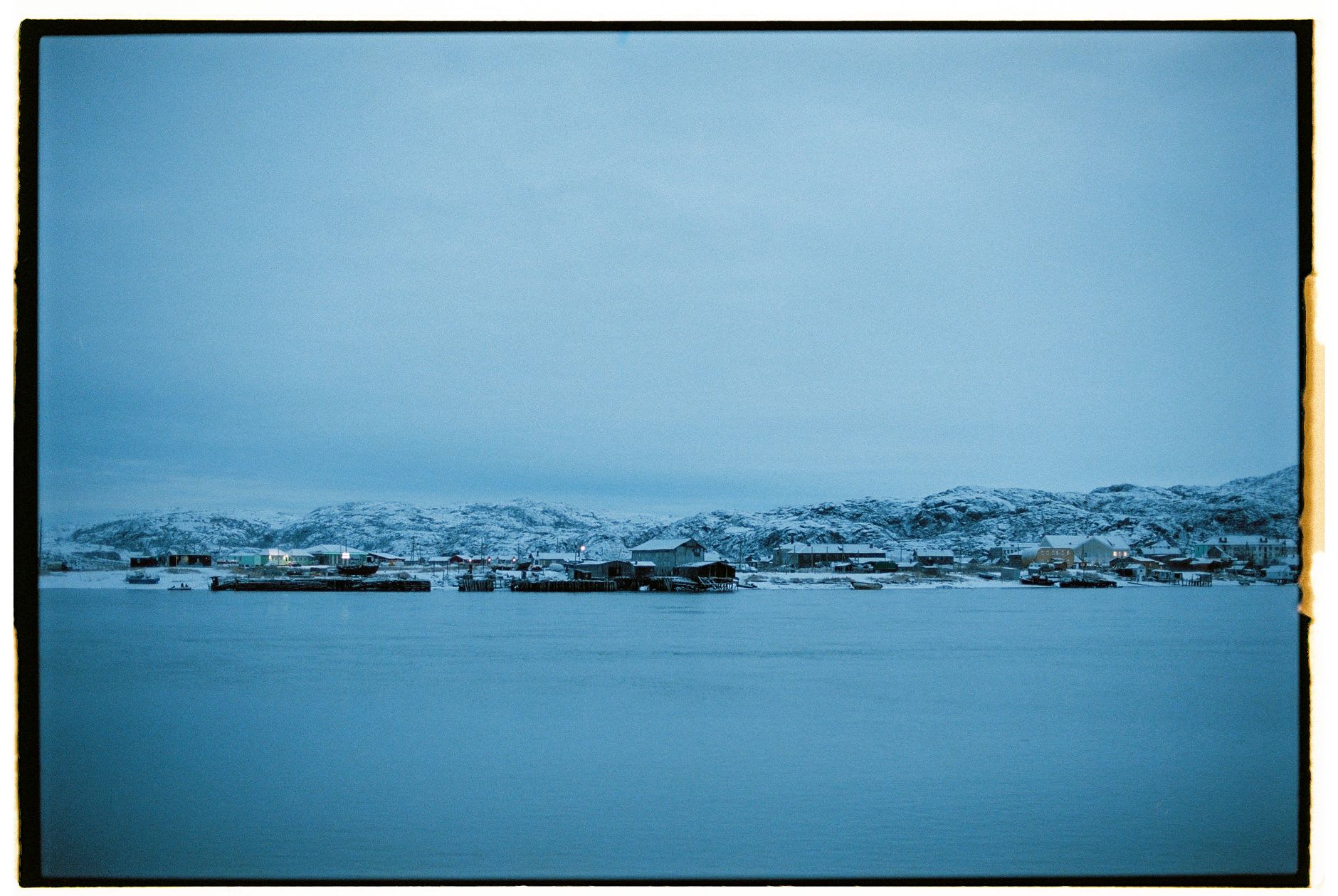
The confluence itself, visible from the church’s raised position, is striking in winter: two frozen rivers arriving from different directions and meeting in a flat expanse of white, the geometry of their junction clear from above. I spent time trying to identify exactly where one river became the other, which is the kind of thing the Arctic encourages you to do — pay attention to transitions, edges, the places where one thing becomes another. The ice at the confluence was visibly different from each river arm: different thicknesses, different surface textures, different shades of blue-grey. A fisherman was working through a hole in the Tuloma side, seated on a folding stool with a small orange flame from a spirit lamp for warmth, and showed no interest in the confluence question or in me.
The local museum is small and curated with evident love by people who find their town’s history genuinely interesting, which is perhaps the best any local museum can aim for. The exhibition traces the settlement’s history from the earliest Sámi habitation through the Russian trading period, the fortress era, the Crimean War bombardment, and the Soviet absorption. There is a cannon recovered from the 1854 bombardment that takes up a disproportionate amount of floor space, which is the correct decision.
When to go: Kola is worth a morning at any time of year and particularly effective in winter when the river confluence is frozen and the church sits in snow. Combine with any Murmansk visit — it is twelve kilometres from the city centre. The local museum has irregular opening hours; go early in the day to maximise your chances of finding it open, and if it’s closed, the town and church are worth the stop regardless.