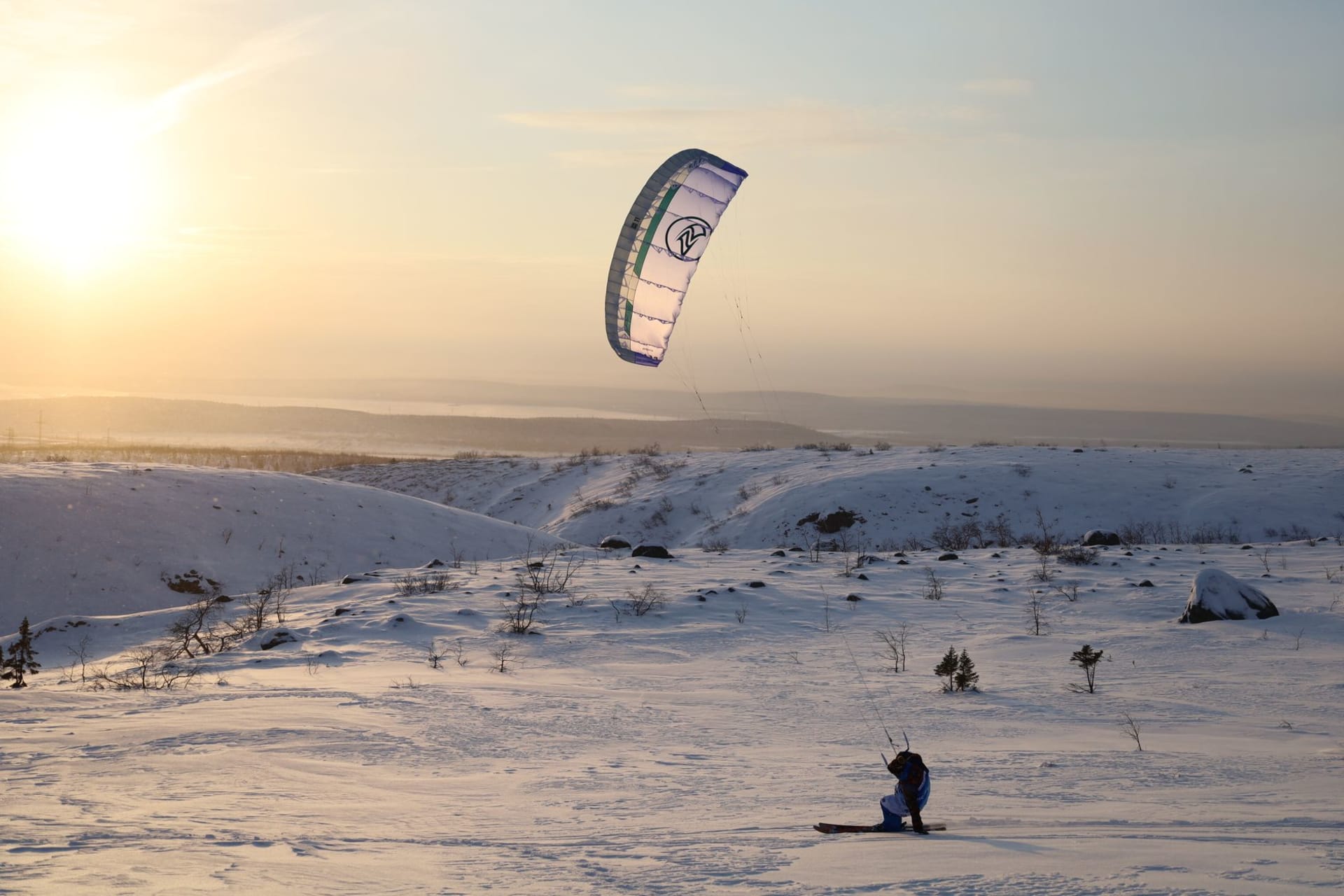
Kirovsk
"I have rarely been somewhere where the ground itself is the entire reason a town exists. Kirovsk is dug out of the mountain it leans against."
Kirovsk is not a place people drift through by accident. It sits in the Khibiny mountains south of Murmansk, at the end of a road that exists mainly to serve the apatite mine, and it was built in the 1930s by the Soviet state for the single purpose of pulling phosphate rock out of the ground to make fertilizer. I went because I have a weakness for towns that are honest about why they exist, and Kirovsk is brutally honest — the mine is right there, the spoil heaps are right there, and the whole place is laid out in the long valley like an argument made in concrete.
Lia, I’ll confess, took some persuading. The drive in from the rail town of Apatity is not what you’d call scenic in the conventional sense — pipelines, industrial gantries, the grey geometry of Soviet planning. But then the Khibiny rise around you, treeless and enormous, and the town stops being the point and becomes a small thing huddled at the foot of something much older and more indifferent.
A mountain you can ski and a winter that won’t quit
What surprised me is that Kirovsk has quietly become Russia’s most serious ski destination above the Arctic Circle. The Khibiny hold snow for an absurd portion of the year — you can ski here well into May, sometimes June — and the resort slopes on Aikuaivenchorr drop right toward the edge of town. We didn’t ski. We took the lift up anyway, into a wind that felt like it had crossed the entire polar sea to reach us, and stood at the top looking down at the town, the frozen Bolshoy Vudyavr lake, and the dark gash of the mine, all of it under a sky that in late winter barely commits to daylight.
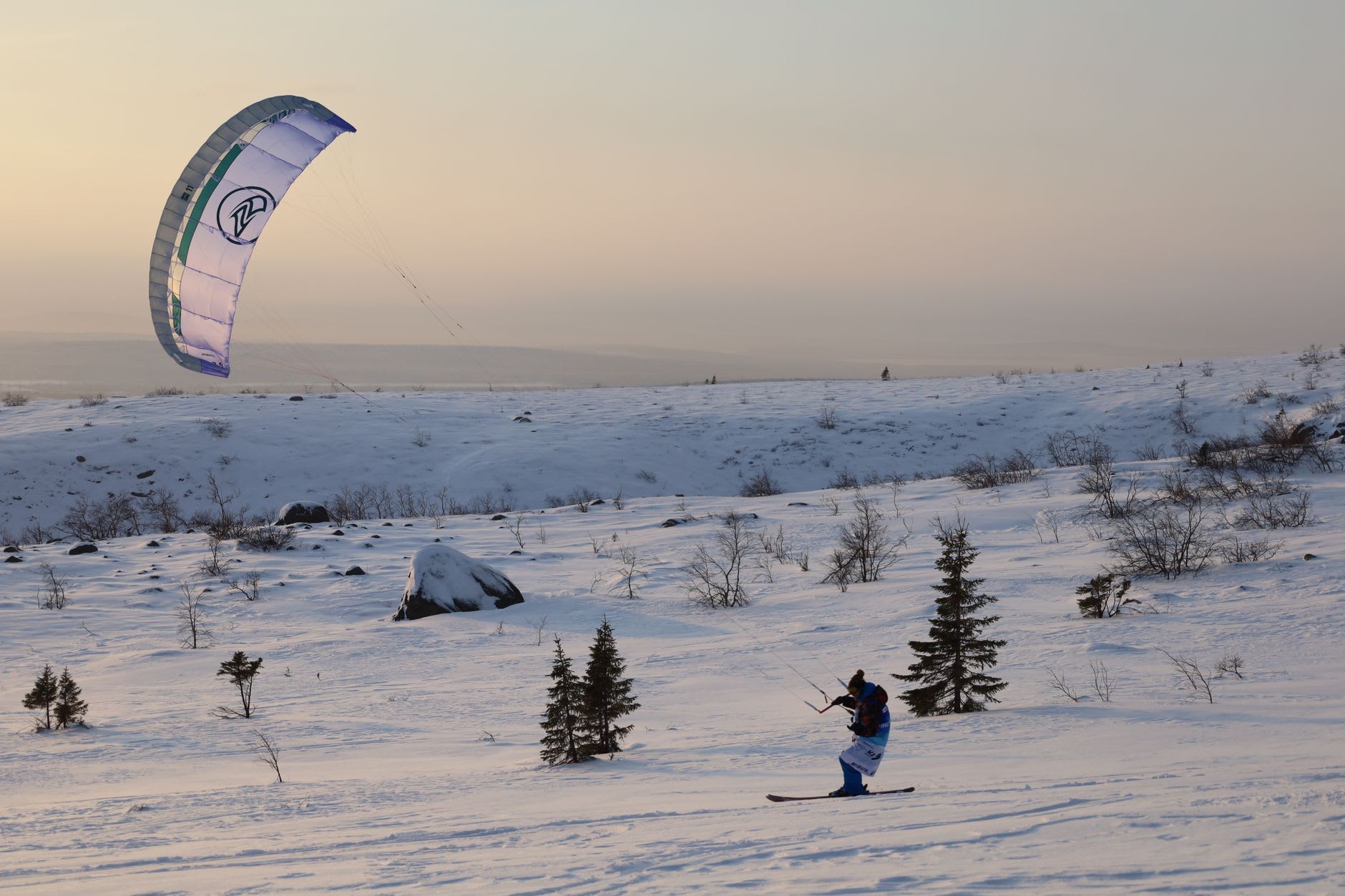
There’s a strange, austere beauty to the polar light here. For weeks in midwinter the sun never properly rises, and the whole valley exists in a long blue dusk that the locals have a hundred words for and I have none. We caught it in March, when the light was returning, and the snow on the peaks turned the color of weak rosé for about twenty minutes each afternoon before everything went grey again.
The Snow Village and the botanical garden that shouldn’t exist
Two things stuck with me. The first is the annual Snow Village just outside town — a complex of rooms, a chapel, even a café, all carved entirely from snow and ice and rebuilt every winter. It’s gloriously absurd, the kind of thing a town invents when it has more winter than it knows what to do with. The second is the Polar-Alpine Botanical Garden, the northernmost in Russia, where botanists have spent decades coaxing plants to survive at this latitude. Walking through a greenhouse of tropical leaves while a blizzard worked on the windows outside is an image I won’t lose.
We ate that night in a small canteen near the central square, the kind of place where the menu is laminated and the soup is the safest bet, and it was exactly right — borscht, black bread, hot tea, and the deep satisfaction of being warm in a building while the Khibiny did their worst outside.
When to go: February to April for skiing and the returning light — by March you get real daylight and still-deep snow, which is the best combination. The Snow Village is open through the cold months. Summer is brief, green, and good for hiking in the Khibiny, but the town shows its industrial bones more starkly without snow to soften them. Avoid the deep polar night of December and January unless the darkness itself is what you came for.