Tofo
"The whale shark was maybe eight meters. It passed under the boat like a thought passing through a mind — slow, enormous, complete."
I arrived at Tofo in the back of a chapa — the cramped minibus that serves as public transport on the southern coast — after forty minutes on a dirt road through cashew plantations, red dust rising behind every vehicle. The guesthouse I’d booked had a reed fence and a hammock and a view of the Indian Ocean over a low dune, and I put my bag down and stood there for a moment listening to the surf, which was heavier than I’d expected, the Atlantic energy of it, and thought: I am going to stay longer than I planned. I stayed four days longer than I planned. This is what Tofo does.
The whale sharks are the reason most people come, and the reason most people end up explaining to someone at home why they stayed so long. The dive operation I used ran boats out at six in the morning, before the sun had properly committed to the day, and the briefing on the wooden deck was conducted by a Mozambican divemaster named Felicidade who had been finding whale sharks in this channel for twelve years and had the quiet authority of someone who knows exactly what they’re doing. The entry into the water is not elegant — a backward roll off the side of the boat into water that’s warm even at dawn — and then you surface and float and wait.

When the shape materializes it does so gradually, from below. A pale blue and white pattern resolving out of the murk, growing larger longer than seems possible, until the full scale of the animal is apparent and your body produces a response that is different from any other underwater encounter I’ve had. Not fear — something closer to the feeling of standing beside a very old building. The whale shark was perhaps eight meters. It passed beneath us with an unhurriedness that seemed philosophical, the tail sweeping in slow arcs, and was gone back into the blue in under three minutes. The second dive was two hours later and we found two more.
The town itself is small enough that the dive shop functions as its social center — a covered deck with plastic chairs and a whiteboard menu of the day’s catch, where you end up talking to the same people over and over across a week until they start feeling like an accidental community. There are no banks. The ATM in Inhambane twenty kilometers away works intermittently. Guesthouses are cheap and run with varying degrees of competence. Some people find the lack of infrastructure charming; others find it frustrating. I found it exactly sufficient, which is its own kind of pleasure.

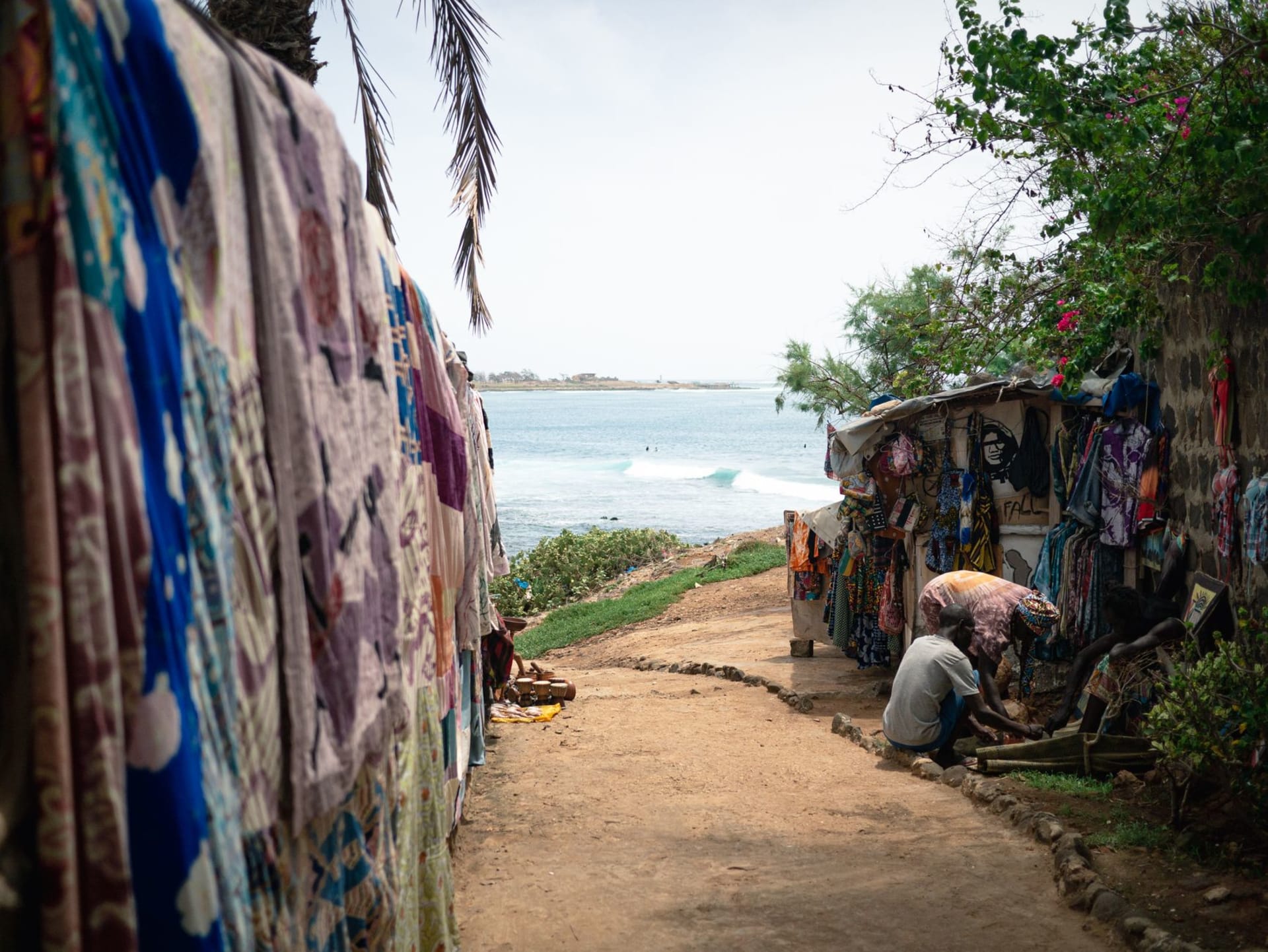
The beaches around Tofo carry a different energy from the lagoon of the Bazaruto islands — these are proper surf beaches, the Indian Ocean uninterrupted, the swell running from somewhere south of Madagascar. Body-surfing here is legitimate, the kind where you get dragged and tumbled and walk back up the beach grinning. At the cliff bar at the northern end, cold beer comes in a bag of ice and the view at sunset is the sort that resolves arguments about whether you chose the right place to come.
When to go: October through February for the highest whale shark concentrations — the water is warmest and the plankton blooms that attract them peak in this window. May through September the whale sharks thin but manta rays become more reliable. Avoid Tofo in March and April when rain and cyclone risk make the road in genuinely difficult.