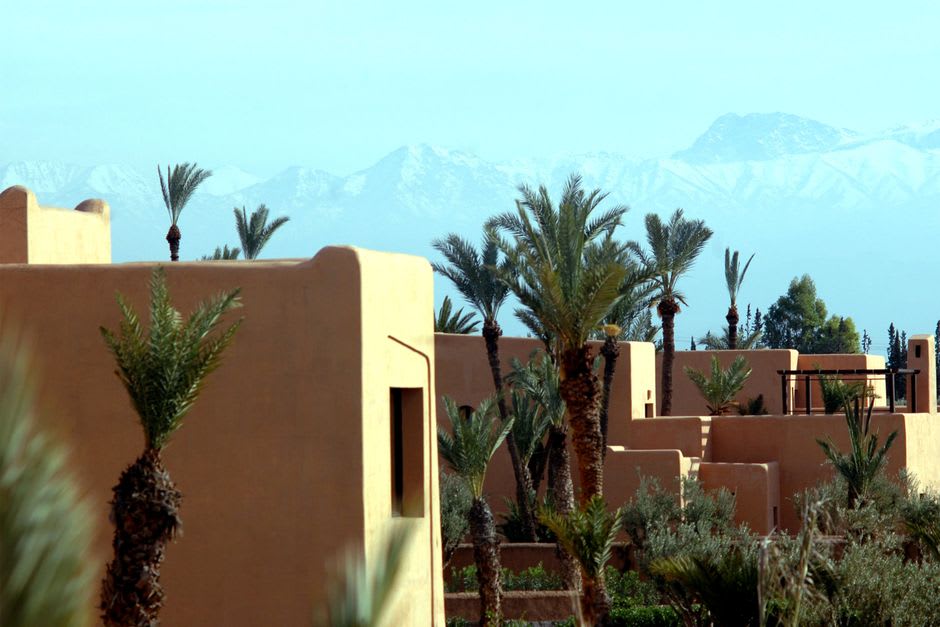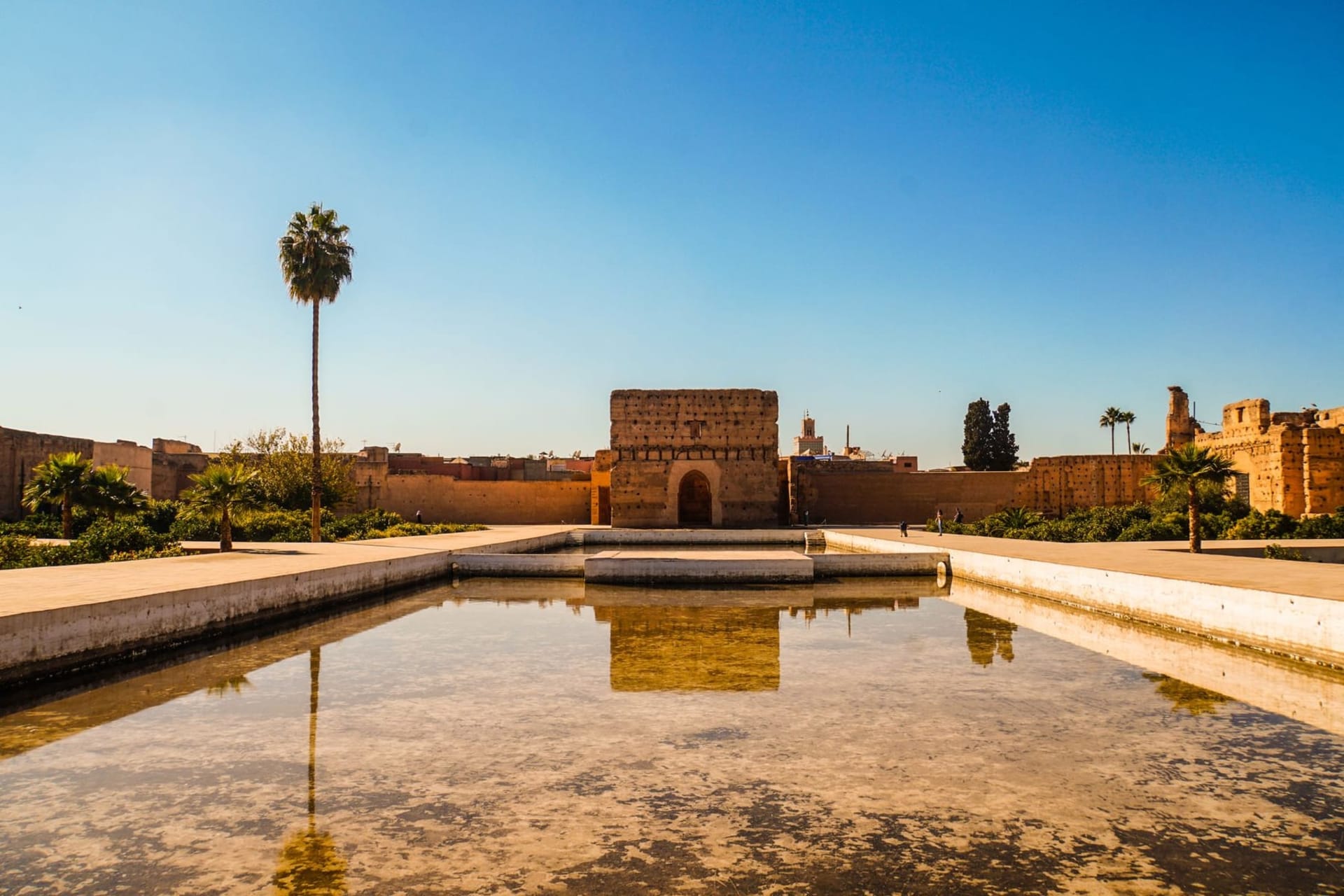
A lush oasis of ancient palms on the edge of Marrakech, where camel tracks cross the golden haze at dusk.
The Palmeraie begins where the city stops pretending to be orderly. You follow the Route de Fès north out of Marrakech, past the last cluster of riads and the dust-caked petits taxis turning back, and then the road opens into something ancient: a hundred thousand date palms stretching across the Haouz plain, their fronds catching the late afternoon light in a constant, low shiver. The Atlas is a blue smear to the south. The city behind you is all minaret and noise. Here, there is the creak of palm fronds and the occasional bellow of a camel making its opinion known.
The Hour Before Dusk
I came here first by bicycle — rented from a shop off the Djemaa el-Fna for forty dirhams — and immediately got turned around on the sandy tracks that thread between the palms and the high walls of private estates. That disorientation was, I later understood, the point. The Palmeraie is not organized for visiting. It exists alongside tourism rather than for it, and the contrast with the curated chaos of the medina is startling. I found Lia an hour later, sitting beneath a cluster of palms near the Borj Bikri ruins, sketching the light. She said she had stopped trying to navigate and just followed the sound of a boy calling to his goats. Sound navigation. That works here.
The quality of the light in the Palmeraie at around five in the afternoon is something I have not seen replicated anywhere. It comes through the high canopy at an angle that turns the sandy ground pale gold, picks up the dust raised by the camel caravans still working the tourist track near the Route de Beni Mellal, and hangs in the air like something solid. You breathe it. It tastes faintly of woodsmoke and animal warmth.
What Nobody Mentions
The surprise was the irrigation channels. I had expected a dry oasis, postcard palms and bleached sand, but the Palmeraie is laced with a network of seguias — earthen irrigation canals built by the Almoravids nearly a thousand years ago, still functional, still feeding the gardens of the estates and the allotments of families who have farmed here for generations. I stumbled across one running clear and fast through a kitchen garden planted with mint, coriander, and aubergines so dark they were almost black. An old man was working the rows. He did not look up, but he did not seem to mind, either.
Later, at a small café near the Palmeraie Golf Course, I ate a tagine of kefta and eggs that arrived in a glazed clay pot still bubbling from the fire, the eggs barely set, the tomato sauce fragrant with cumin and preserved lemon. No menu, no English, a glass of mint tea so sweet it made my back teeth sing. The kind of meal that makes you embarrassed you almost skipped lunch.
Getting There and Moving Through It
The Palmeraie covers roughly thirteen thousand hectares, which means any attempt at systematic exploration on foot is a fantasy. The bicycle works well on the main tracks; camels are slower and more theatrical. The calèches — horse-drawn carriages — that leave from near the Bab Doukkala are the most practical for covering ground, and the drivers know which tracks are passable after rain. Most of the Palmeraie’s interior is private, but the public paths that run along the seguias and between the larger estates are enough. Follow the water and you will not get entirely lost.
When to go: October through April, when the heat drops to something humane and the afternoon light comes in low and long. Avoid July and August — the Palmeraie at forty degrees Celsius is beautiful only in memory.