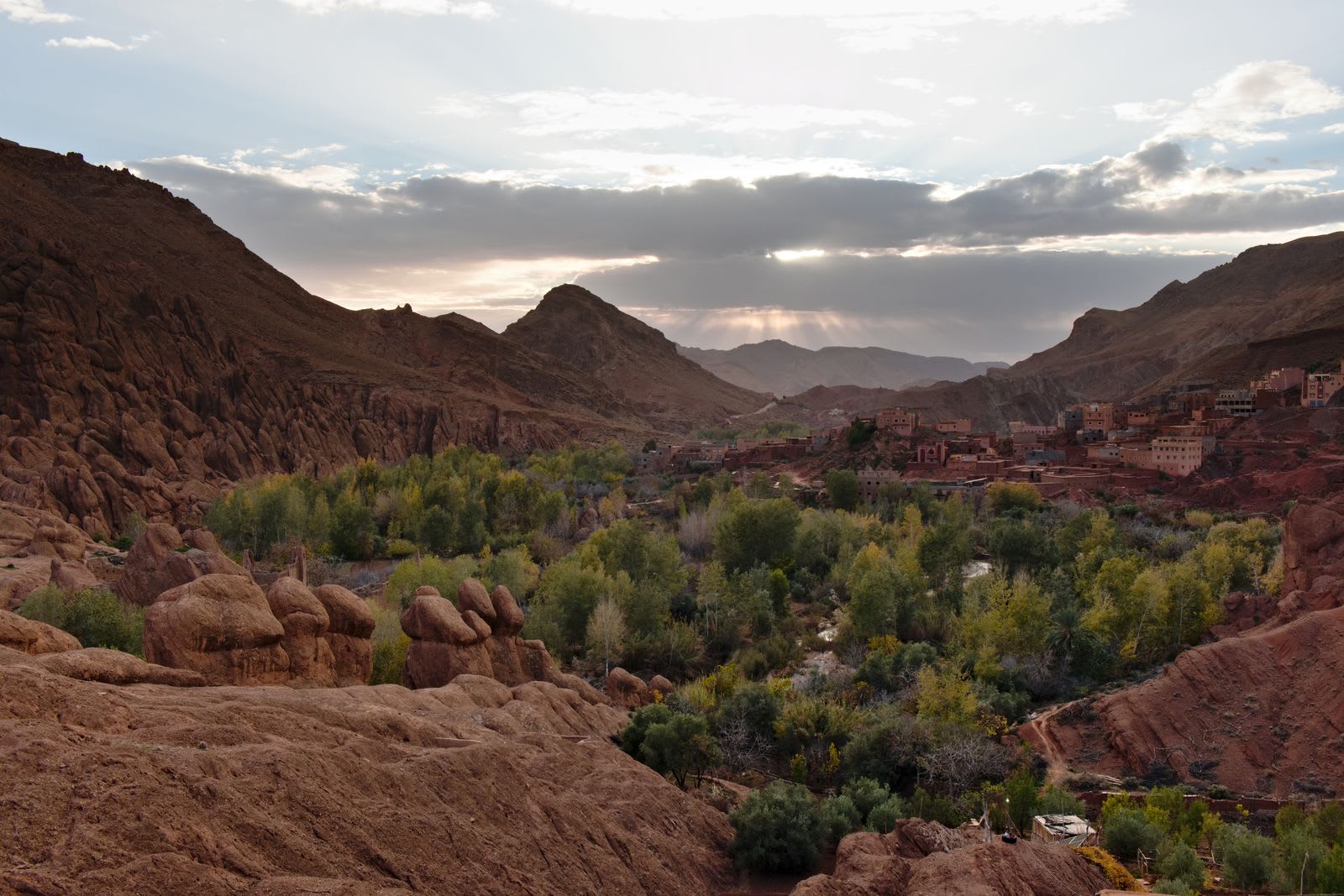
Dramatic red canyon walls carved by the Dades River, dotted with kasbahs and rose-scented villages.
We drove into Dades Gorge at the wrong hour — past two in the afternoon, when the sun drives itself flat against the canyon walls and the red rock stops being beautiful and starts being relentless. The road from Boumalne narrowed as the cliffs closed in, and I kept pulling over not to take photos but just to stand there with my hands at my sides, trying to hold the scale of it in my body rather than my phone.
The Road That Keeps Folding
The N10 becomes something else once you pass the first bend past Aït Arbi. It turns into one of those mountain roads that seems designed less for travel than for surrender — each curve revealing another curve, the canyon walls deepening from dusty ochre to a raw, bleeding red as the afternoon wears on. Lia had stopped talking somewhere around the third switchback, which is how I knew she was properly stunned. We’d seen gorges before, Todra just two days earlier, but this one has a different rhythm. Todra is a cathedral — vertical, sudden, meant to overwhelm. Dades is more like a long poem read in a low voice.
The kasbahs appear at irregular intervals, half-eaten by time. Some still have families living inside them; you can see laundry on the walls and satellite dishes perched on the mud-brick towers like awkward birds. At Aït Ouglif, we stopped at a terrace and ate harira so thick with lentils and tomato that the spoon stood up in it, and the man who brought it out told us — unprompted, in careful French — that his grandfather had built the kasbah across the road before the French protectorate. He said it like a fact he was still deciding what to do with.
The Roses Nobody Mentions
What caught me off guard was the roses. The villages in the lower gorge — particularly around the Msemrir side — grow Damask roses for the distilleries, and in late April the smell is everywhere: sweet but not cloying, more like the memory of sweetness than the thing itself. I’d read about the rose festival in El Kelaa M’Gouna down the valley, but nothing prepared me for the smell cutting through the mineral dust of the canyon at dusk, arriving without warning on a warm current of air. It shouldn’t work. Canyon rock and rose petals have no business sharing the same sentence. And yet there it is, one of those combinations that makes a place feel specific, like it couldn’t possibly exist anywhere else.
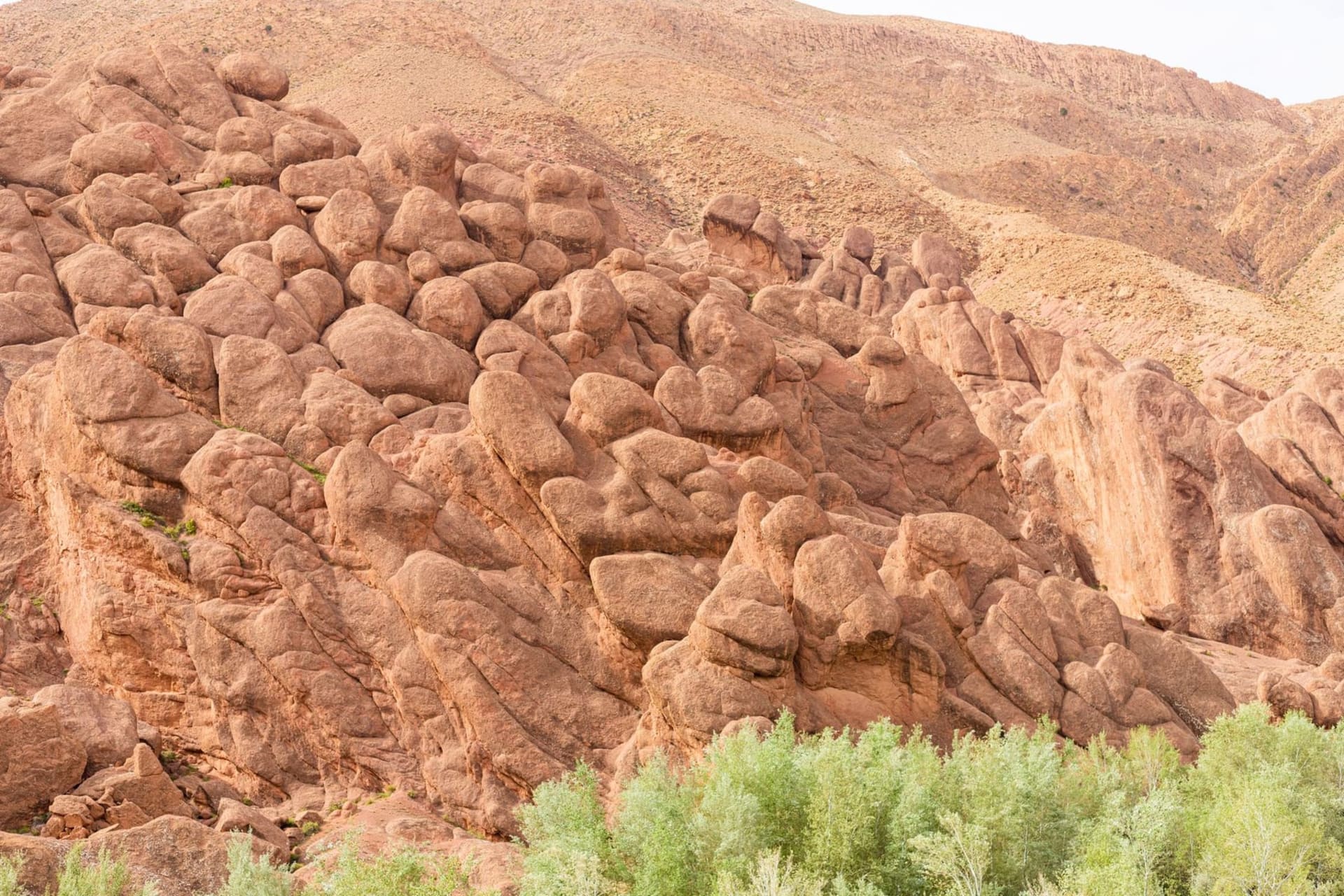
We spent the night at a gîte just past the famous monkey fingers rock formation, where the cliff-face splits into a row of round-knuckled columns that glow amber in the last light. Dinner was a lamb tagine with prunes and saffron, eaten on the roof terrace while the canyon walls went dark from the bottom up.
When to go: March through May for the rose bloom and bearable temperatures; late September and October for clear skies and golden afternoon light without the summer heat.