Chefchaouen Blue Quarter
"The Jews left but the blue stayed. The question of why is still debated."
The blue medina of the Rif Mountains where Jewish refugees painted the lanes indigo in the 1930s — and nobody ever repainted them.
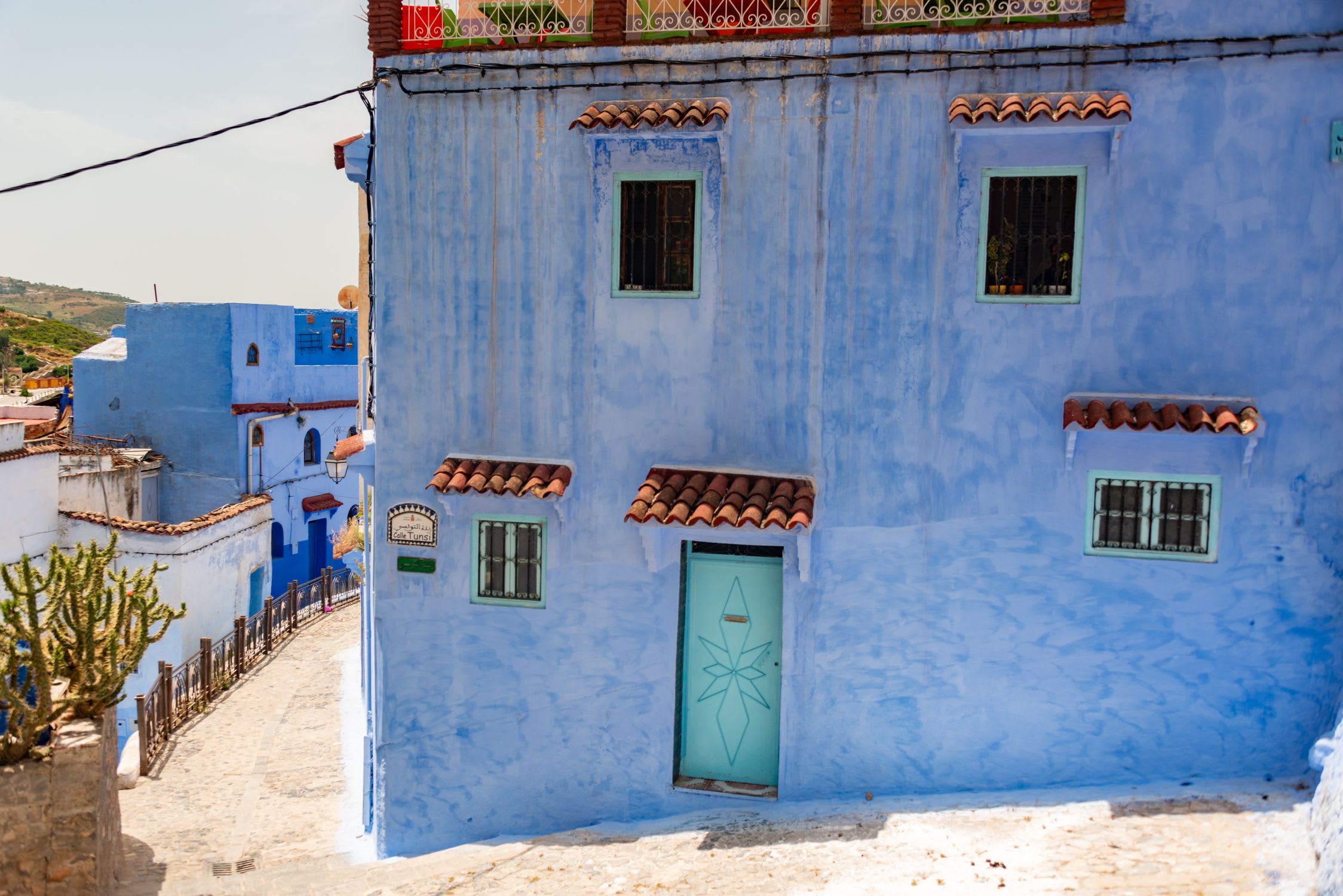
I have a photograph from Place Uta el-Hammam that I’ve returned to many times since leaving. Lia is leaning against a painted wall — not a feature wall, not an installation, just a wall — and the blue behind her is so saturated it looks like a cinema trick. Nobody touched it up. Nobody will. That is the central fact of Chefchaouen: the color is historical accident now treated as sacred inheritance.
The Origin of the Blue
The medina’s palette dates to the 1930s, when Jewish refugees fleeing European persecution settled in the Rif Mountains and began painting the lanes. The exact reasoning is still contested — some say the blue symbolized divinity and kept mosquitoes away, others that it simply echoed the color of prayer shawls. What nobody disputes is that the Jewish community eventually left, largely for Israel after 1948, and the Berber families who remained kept painting. The blue became Chefchaouen’s identity before anyone fully understood why it had started.
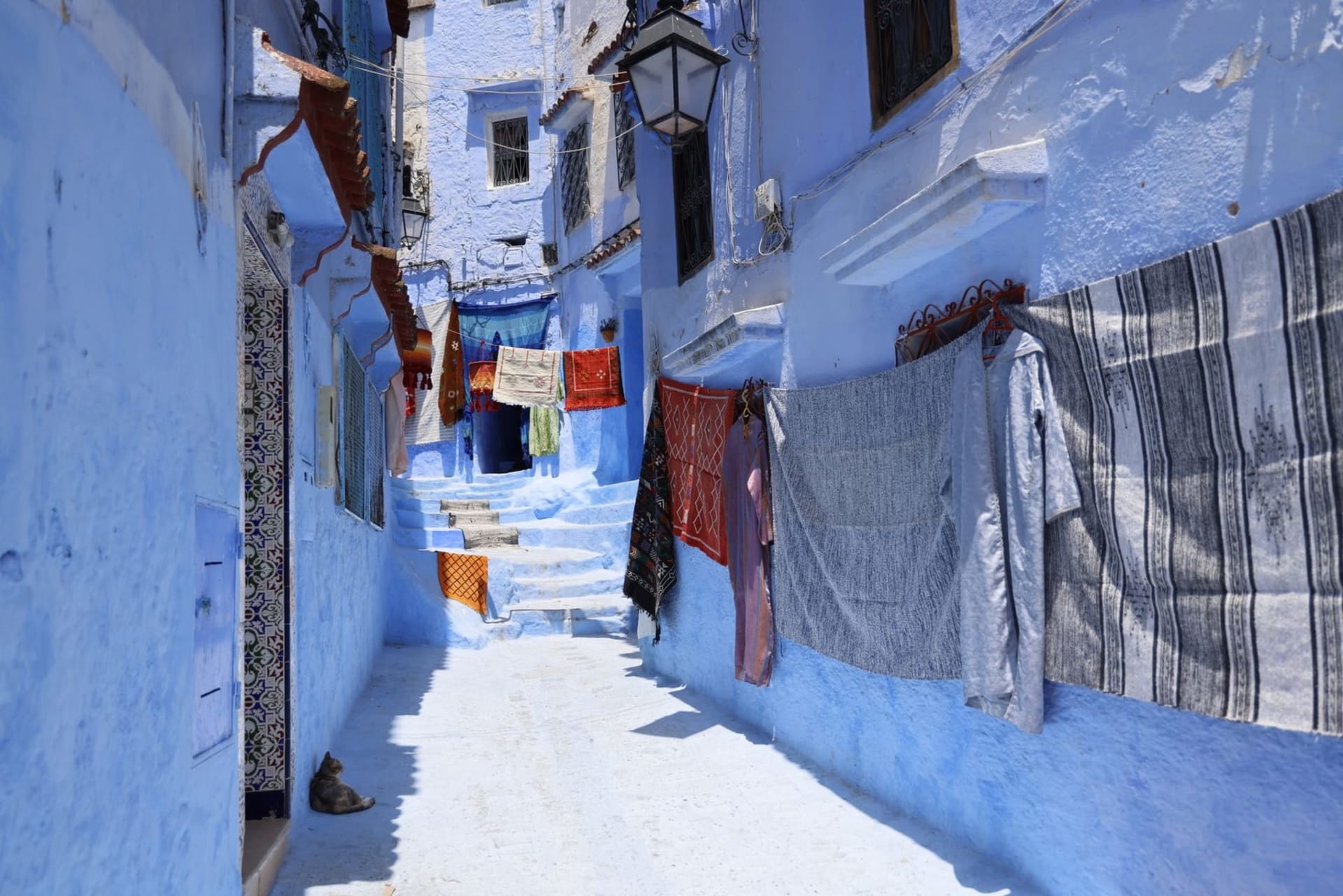
Walking the medina, I kept noticing the variation: cobalt on the lower sections of walls, a paler sky-blue at eye level, indigo in doorframes. The shades change by neighborhood and by decade, each new coat applied over the ghost of the last. On Derb Tazi — one of the narrower lanes where the buildings almost touch overhead — the combination of blue walls and harsh Rif light creates something that feels less like a street and more like the bottom of a swimming pool.
What Stopped Me Without Warning
I expected the color. What I did not expect was the cats.
There are dozens of them in the medina, maybe hundreds, all apparently unowned and collectively well-fed by the shopkeepers. They occupy every blue step and doorway with complete composure, as if they were placed there by a production designer. One afternoon, near the tanneries just off Derb el-Mellah, I came around a corner onto a woman making msemen — the flaky Moroccan flatbread — on a gas burner in the lane, completely unbothered by foot traffic, a cat watching the proceedings from atop a painted step. The smell of the bread mixing with cedar smoke from somewhere above us was better than anything I found in a restaurant that week.
Eating Above the Medina
The food is quieter here than in Marrakech — fewer spices performing at full volume. The tagines at Casa Perleta, up near the Spanish mosque, use vegetables from the Rif valleys and a restraint that lets the lamb taste like something specific rather than just cumin and heat. At night, the medina empties fast and the cafés around Place Uta el-Hammam become the whole social world: mint tea so sweet it works like dessert, and the call to prayer from the grand mosque bouncing off every painted surface.
Lia found a women-run cooperative near the waterfall at Ras el-Ma selling dried lavender and ras el-hanout blended to order. We carried the smell of it for two more countries.
When to go: March to May or September to November. Summer fills the medina with tour groups and heat that reflects off the blue walls with intensity. Spring brings cool mountain air and green on the surrounding Rif ridges — the contrast with the indigo lanes is unreasonable.