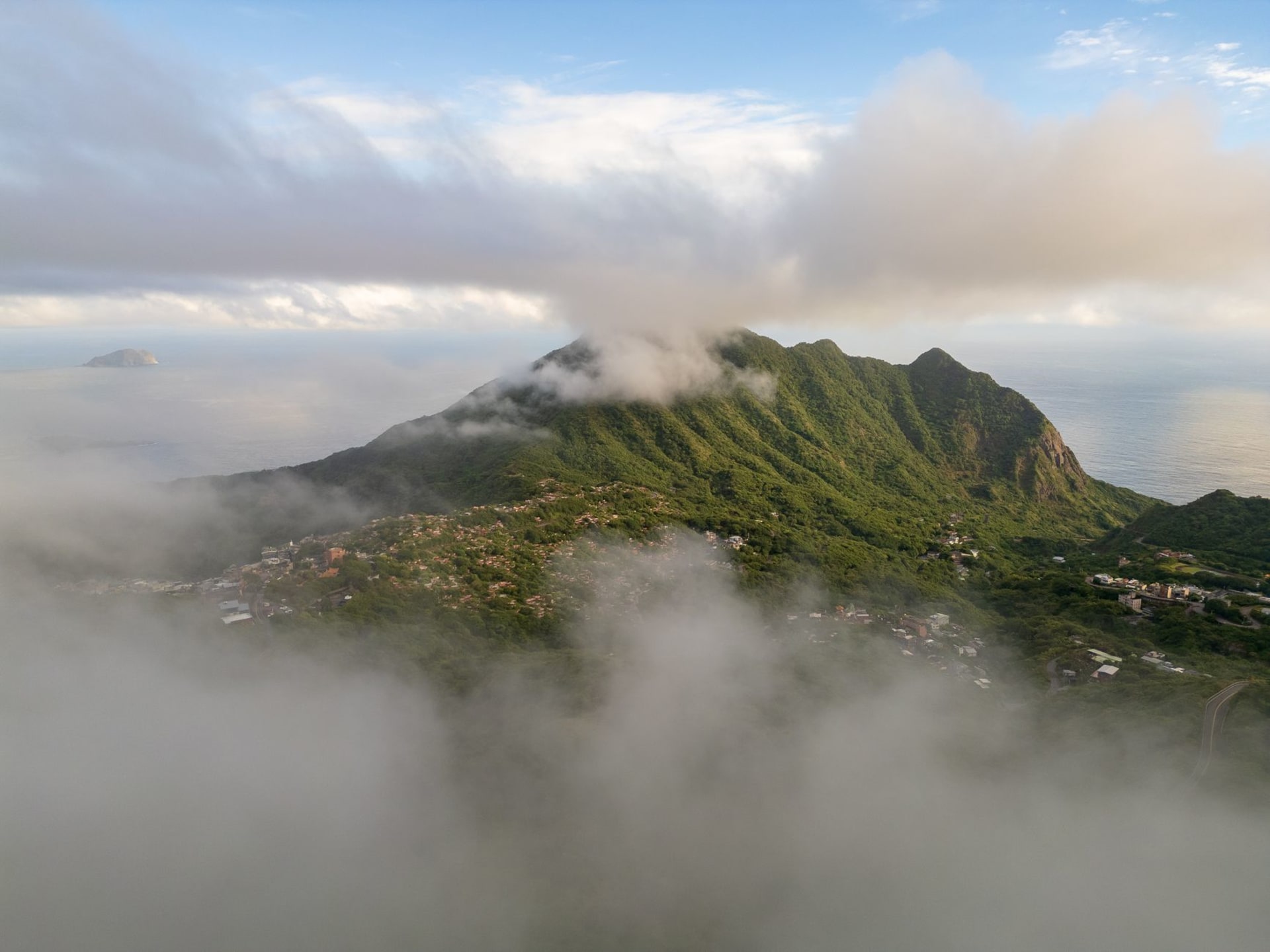
Soufrière Hills
"You watch the steam rise and realize the volcano isn't a past event. It's an ongoing one."
An active Caribbean volcano that has been erupting since 1995 and hasn't finished — the dome still building, the steam still rising, the story still open.

The steam was rising when I arrived at the Montserrat Volcano Observatory viewpoint, a thin white column that thickened where it hit the cooler air above the dome and spread into a flat anvil shape before the wind took it northeast toward the sea. This is not unusual. The steam has been rising in some form since July 1995, and the staff at the MVO who track the dome’s growth, the seismic activity, and the gas emissions have watched this particular column ascend on ten thousand mornings. For them it is data. For me, arriving on an ordinary afternoon with no special event scheduled, it was the first time I had been within sight of something that has been actively reshaping the Earth’s surface for three decades.
The Soufrière Hills volcano is not a single catastrophic event — it is an ongoing process that has moved through phases of intense activity and relative quiet since the first eruptions caught the island off guard in 1995. The lava dome in the summit crater has grown, collapsed, regrown, and partially collapsed again through multiple cycles. The largest collapse events — called pyroclastic density currents — sent superheated material racing down the flanks at speeds that left no time for anything in their path. Plymouth was buried by these flows. The sea floor around the southern coast was extended outward as material entered the water. The southern half of the island was remade by the mountain that anchors it.

From the observation points in the north, you can see the shape the volcano has imposed on the landscape — the grey tongue of pyroclastic material filling the old Tar River valley, the bare flanks above the exclusion zone where vegetation was stripped by surge clouds and has not recovered, the contrast between this grey-white zone and the vivid green of the north where the forest continues uninterrupted. The boundary between the two is not a gradual transition. It is a line, and standing above it you understand viscerally how close the safe zone and the unsafe zone come to each other.
What I was not prepared for was the smell. On days when the wind comes from the south, a faint sulfurous trace reaches the northern villages — not overwhelming, not constant, but unmistakeable. The geologists at the MVO have spent years monitoring the gas chemistry of the volcano, measuring sulfur dioxide emissions that provide one of the most reliable indicators of magma movement in the system below. The mountain communicates in compounds as much as in rock. The staff there read these signals with the confidence of people who know their subject intimately, and also with the humility of people who know it has surprised them before.

The MVO runs regular public open days and its scientists are generous with time and explanation. Visiting is not about witnessing drama — there may be nothing visible from the ground on any given day beyond the steam column. It is about standing within sight of a geological process that does not happen on human timescales, that preceded this island’s settlement and will outlast any settlement that follows. There is a specific quality of smallness you feel in the presence of something that vast and that indifferent, and it is not unpleasant. It is clarifying.
When to go: The volcano is viewable year-round from the observation points. The Montserrat Volcano Observatory publishes regular updates on activity levels and viewpoint accessibility. The best visibility is in the dry season (December through April) when haze is lower. Always check current exclusion zone boundaries before approaching viewpoints — they are adjusted as conditions change.
Keep exploring
More from Montserrat
 montserrat
Montserrat Volcano Observatory
A working observatory perched at a safe distance from a live volcano, where scientists watch the mountain that swallowed a capital city.
Explore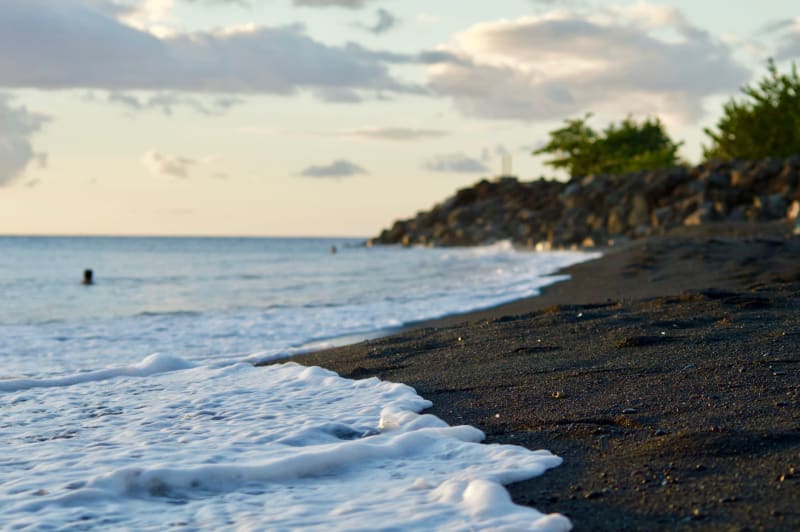 montserrat
Woodlands Beach
Dark volcanic sand, warm water, and a horizon with nothing between you and Portugal — one of the few Caribbean beaches where solitude is structurally guaranteed.
Explore montserrat
AIR Studios
George Martin's legendary Caribbean recording studio where the Stones, Elton John, and Sting made records — destroyed in 1989, silent for decades, and now being rebuilt.
Explore montserrat
Brades
Montserrat's quietly functioning administrative heart — government buildings, rum shops, cricket scores on the radio, and the daily hum of an island holding itself together.
Explore montserrat
Carr's Bay
A west coast fishing bay where boats return at dusk with catch and the seasoning pepper in the cook shops is reason enough to make the drive north.
Explore montserrat
Centre Hills
A protected rainforest reserve harbouring the Montserrat oriole, a bird that exists in no other forest on earth — and trails that earn the solitude.
Explore