Ostrog Monastery
"I have stood in a lot of churches out of curiosity. Ostrog is the first one that made me stop talking."
A white monastery pressed into a sheer cliff above the Bjelopavlići plain, where pilgrims of three faiths climb to touch the same rock.
Lia spotted it before I did — a smear of white on the cliff face, so high up and so improbable that I thought at first it was a patch of snow that had refused to melt. We were still forty minutes out on the switchback road up from the Bjelopavlići plain, gripping the door handles through hairpin turns, when she pointed and said “that’s it, that’s the monastery,” and I genuinely didn’t believe her until we got close enough to see windows. Ostrog doesn’t sit on the mountain. It’s built into it, wedged into the rock of Ostroška Greda at around 900 meters, and the road up feels like an argument you’re having with the elevation the whole way.
We parked at the lower monastery and walked the rest, past pilgrims moving at every pace from brisk to barely-there, some of them clearly having come a long way on foot. What struck me wasn’t the architecture — though the way the upper church is carved directly into the stone, no back wall except the mountain itself, is something I hadn’t seen before — it was the mix of people. I heard Serbian, but also what I’m fairly sure was Albanian, and a group of women in headscarves lighting candles alongside everyone else. The monastery holds the remains of Bishop Vasilije of Zahumlje-Herzegovina, who founded the place in the 17th century, and they’ve been venerated here since 1667 as miracle-working relics — venerated, it turns out, well beyond just Orthodox Christians.
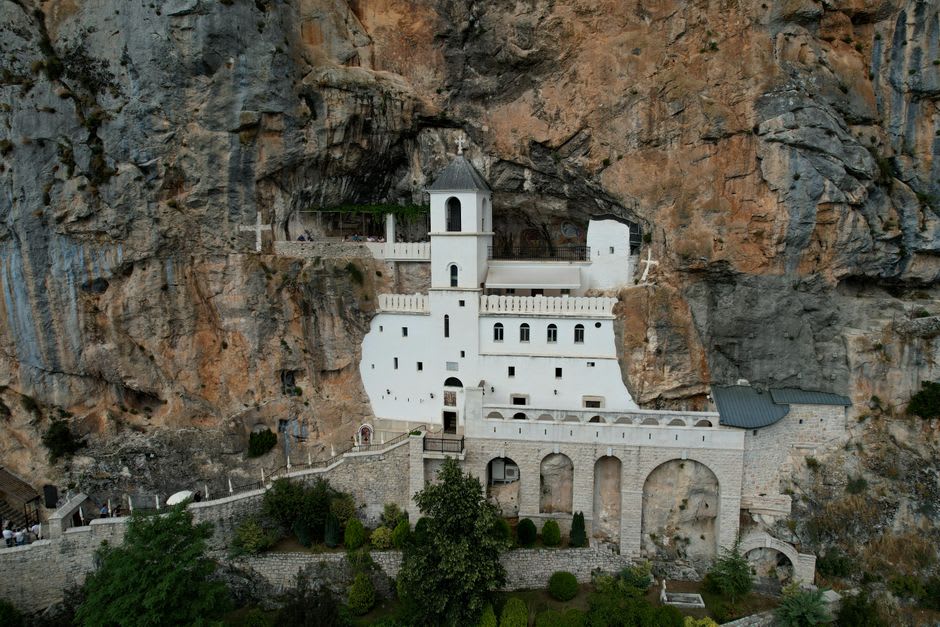
Inside the upper church it was cool and close and smelled like beeswax and stone dust. I’m not a religious man, and I said as much to Lia beforehand, half-joking that I’d probably just be the guy taking photos while everyone else prayed. That’s not quite how it went. There’s a stretch of the stairway, cut straight into the rock, where you’re pressed against the cliff on one side and looking at a long drop on the other, and something about that physical exposure — the mountain right there under your hand — quieted me down before I’d even reached the doors.
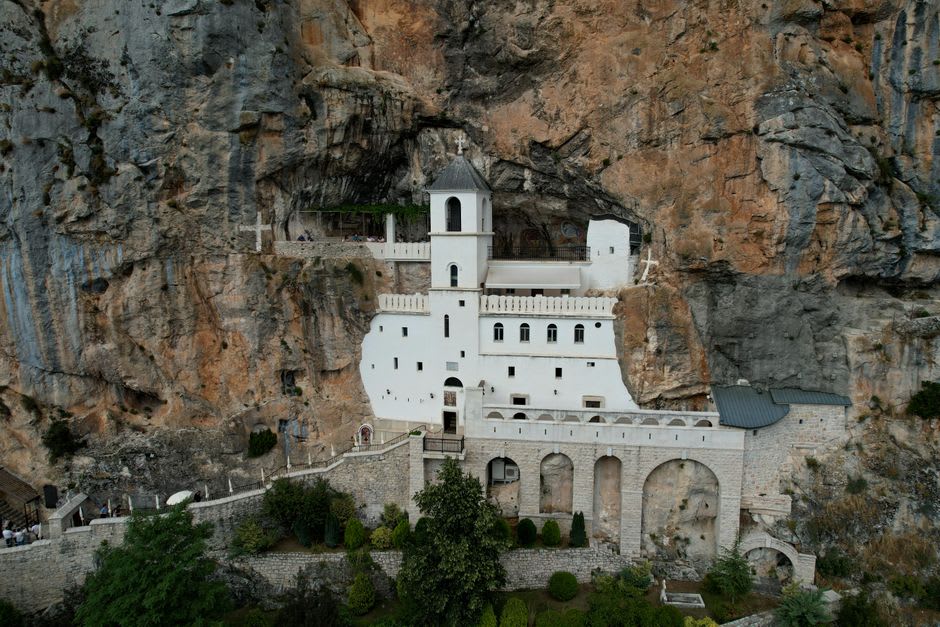
We sat outside afterward on a low wall with some bread and cheese we’d bought in Nikšić that morning, looking out over the plain while the light went gold, and I understood a bit better why this place survived the Ottomans and the wars of the last century largely intact — it’s half fortress by accident of geography. When to go: aim for May through October, when the mountain road is reliably clear of snow and ice; if you can manage a weekday, the upper monastery is far less crowded than on weekend pilgrimages.
Keep exploring
More from Montenegro
 montenegro
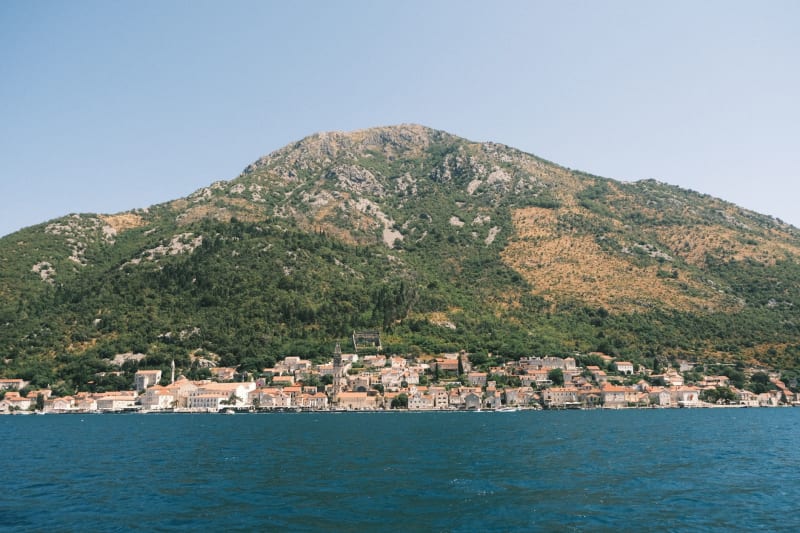
 Perast
A baroque ghost village of seventeen churches for four hundred people, afloat on the stillest water I've ever seen.
Explore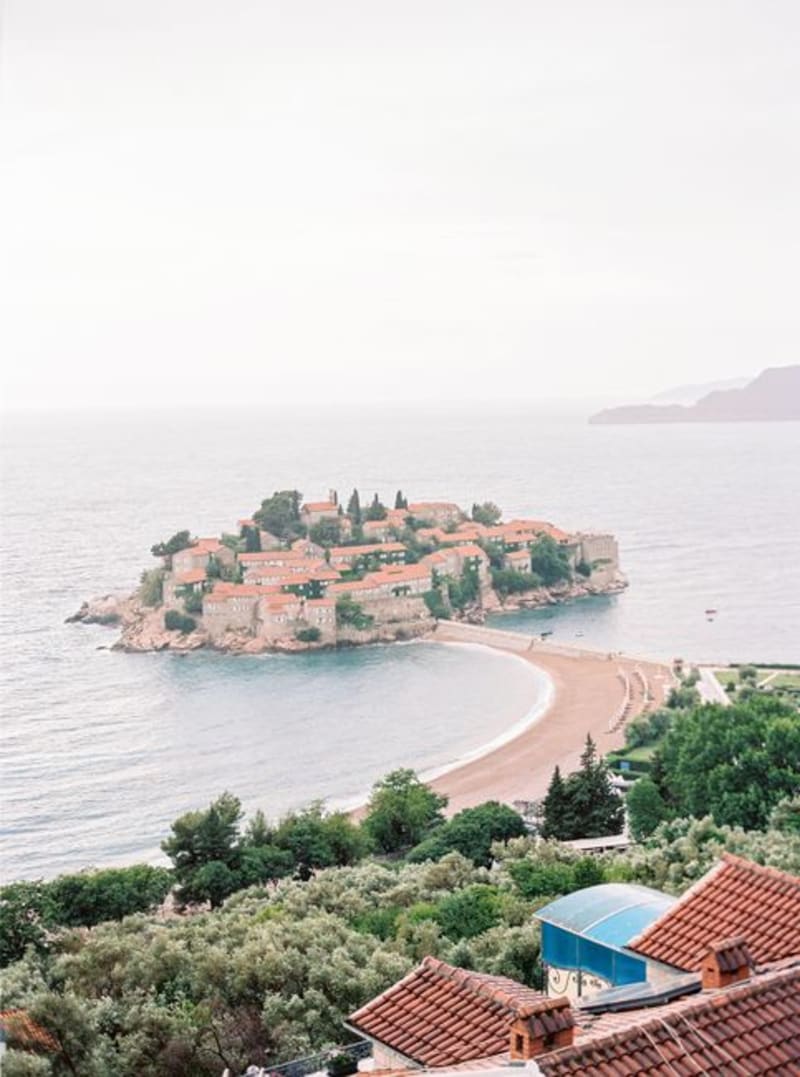 montenegro
 Sveti Stefan
A fortified fishing islet turned celebrity playground, tethered to the Budva Riviera by a thread of golden sand.
Explore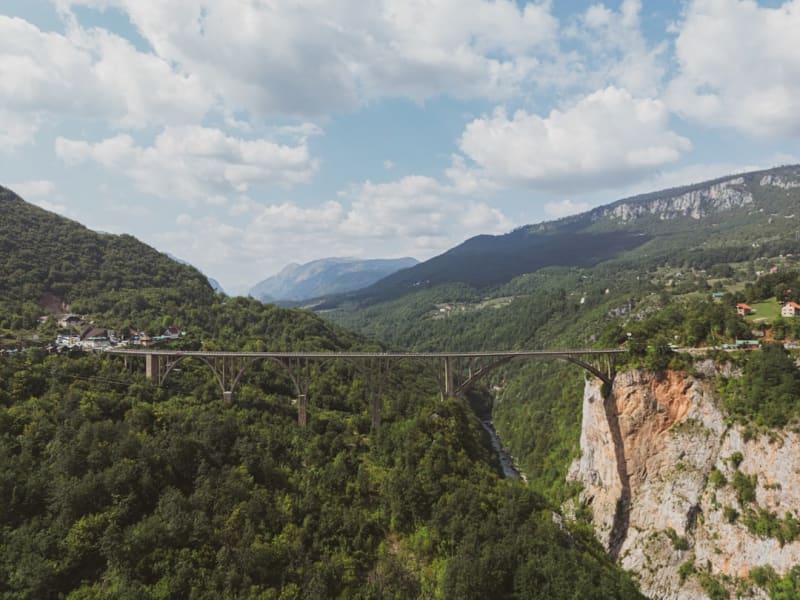 montenegro
 Tara Canyon
The deepest canyon in Europe, where the river runs green between walls of limestone that make you feel appropriately small.
Explore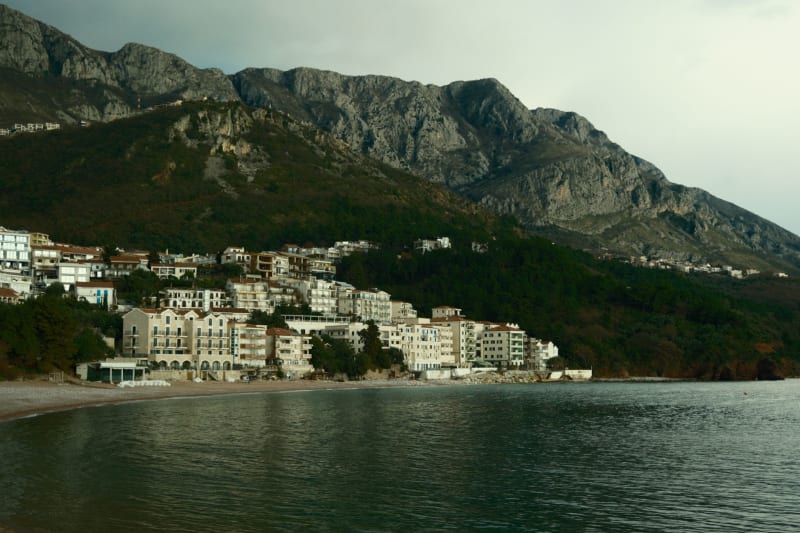 montenegro
 Ulcinj
Montenegro's southernmost city where Ottoman architecture, Albanian culture, and the Adriatic meet in a way that feels genuinely different.
Explore montenegro
 Biogradska Gora
One of the last virgin forests in Europe, wrapped around a glacial lake so quiet you can hear the trees breathing.
Explore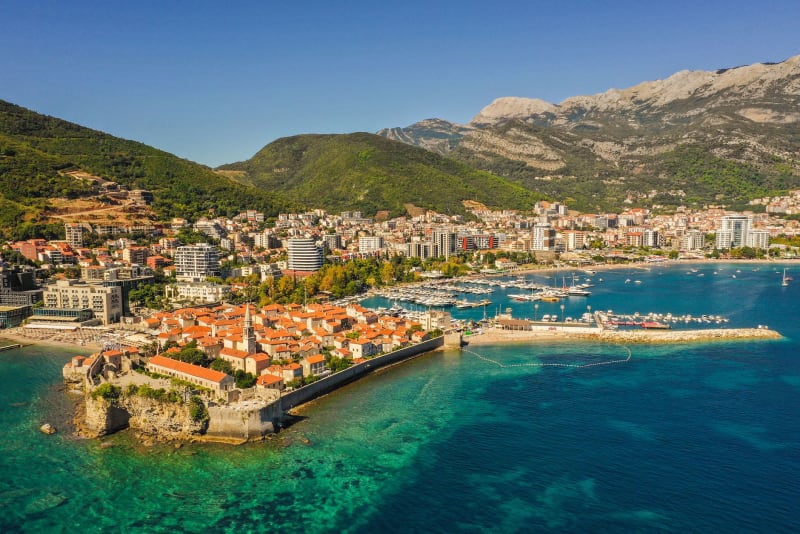 montenegro
 Budva
Montenegro's party coast with a secret: at six in the morning the old town belongs to you and the gulls.
Explore