
Herceg Novi
"Seven conquerors left their architecture and their recipes and Herceg Novi kept all of it."
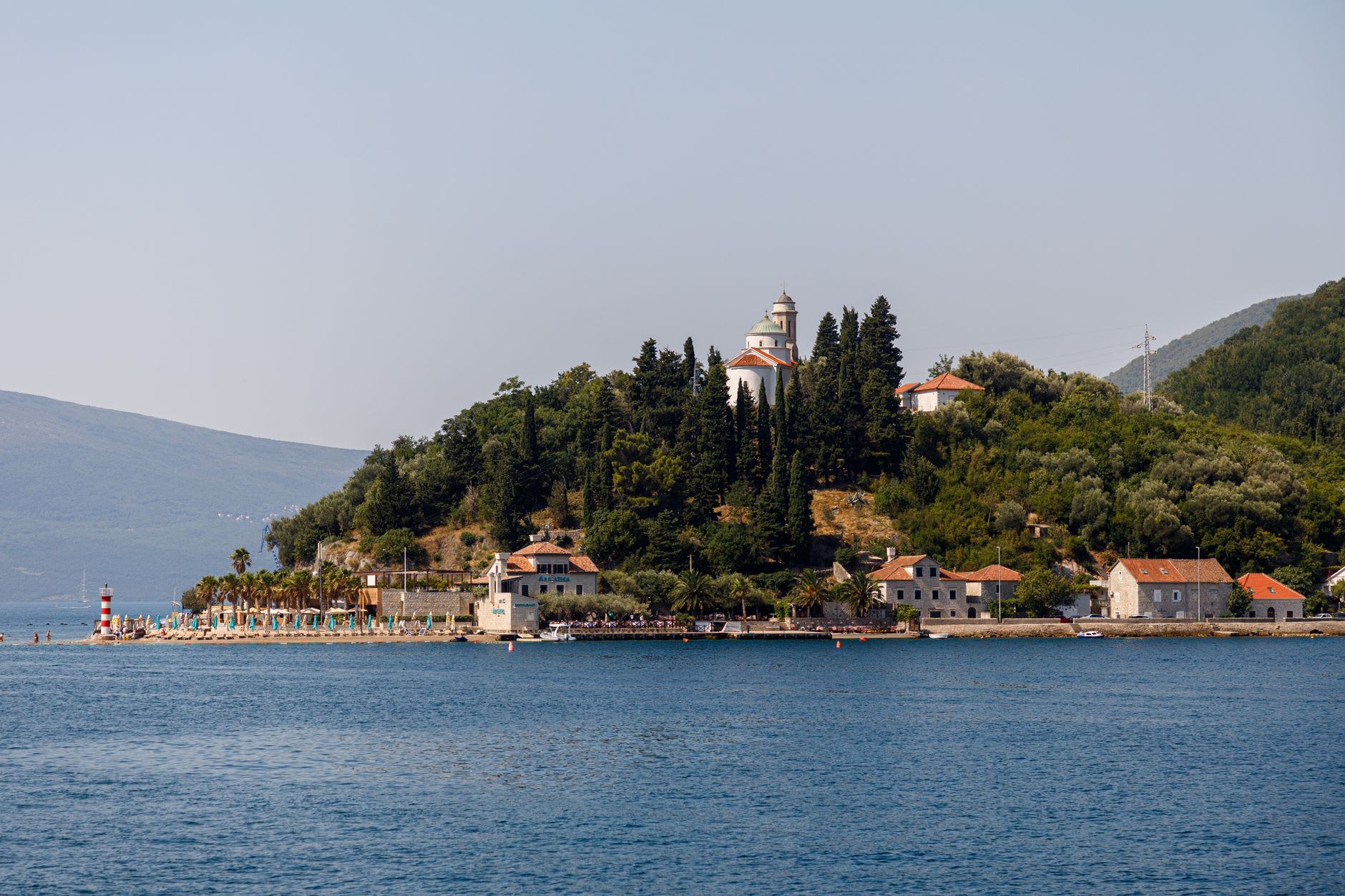
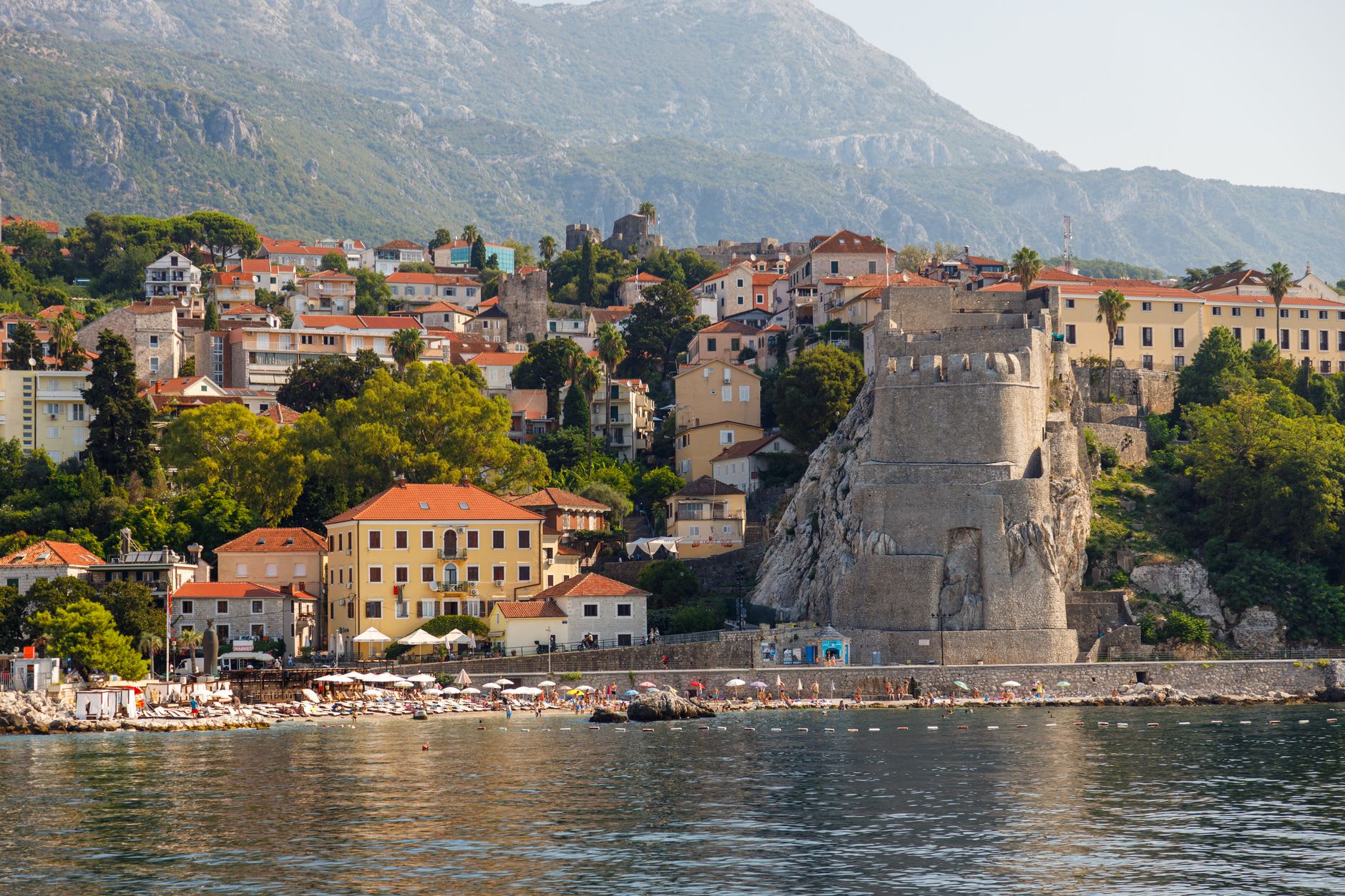
I arrived by ferry from Croatia, which is the old way to arrive at Herceg Novi and also the right way. The town appears from the water as a mass of white and terracotta climbing a hillside above the point where Kotor Bay meets the Adriatic — a jumble of towers and flowering walls and church domes, with the low dark shape of Mamula Island fortress in the channel to the southwest. The ferry slows and you have time to read the layers: a Venetian tower here, an Ottoman clock tower there, Habsburg facades below, Yugoslav concrete above. Herceg Novi has been Bosnian, Venetian, Spanish, Turkish, Russian, French, and Austro-Hungarian at various points in its history, and the old town wears this accumulation like a coat that’s been mended so many times the original fabric is mostly patches.
The town is built on a hillside and consequently organized entirely around steps — long flights of stone stairs connecting the seafront promenade to the old town above, and the old town to the upper residential districts above that. Walking here is a vertical exercise. The main square, Trg Herceg Stjepana, sits below the Sahat Kula — an Ottoman clock tower from the eighteenth century with a large clock that may or may not be accurate — and is ringed by cafés under plane trees. On the morning I arrived, an old man was playing chess alone at an outdoor table, moving both sides of the game with equal deliberateness. I ordered coffee and watched him for half an hour. He won, as both players must.
The Šetalište is Herceg Novi’s seafront promenade, a long walkway running along the waterfront from the old town toward Igalo. It’s lined with palm trees and flowering shrubs and passes several small beaches — rocky and clear-watered — and various mid-century buildings from the Yugoslav period when Herceg Novi was a favored destination for the Adriatic-minded citizens of a larger country. There is still something of that era in the promenade’s democratic quality: everyone uses it, all generations, at all hours.
The food was a pleasant surprise. A small restaurant in the upper old town made an octopus salad — the octopus slow-cooked until tender, then roughly cut and dressed with olive oil, lemon, capers, and red onion — that I’m still thinking about. The wine was local Vranac, poured too generously, and the evening stretched longer than I’d planned.
When to go: May and June are excellent, with the bougainvillea in full flower and the summer crowds not yet arrived. September is arguably better — warm enough for swimming, the promenade at a human pace, the restaurants no longer overwhelmed. Herceg Novi has a mimosa festival in February that draws visitors to a town that’s otherwise quiet in winter, and the flowers along the promenade make it worth the shoulder-season cold.