Browning
"The mountains here look different from the east side — less scenic, more like a wall at the edge of the world."
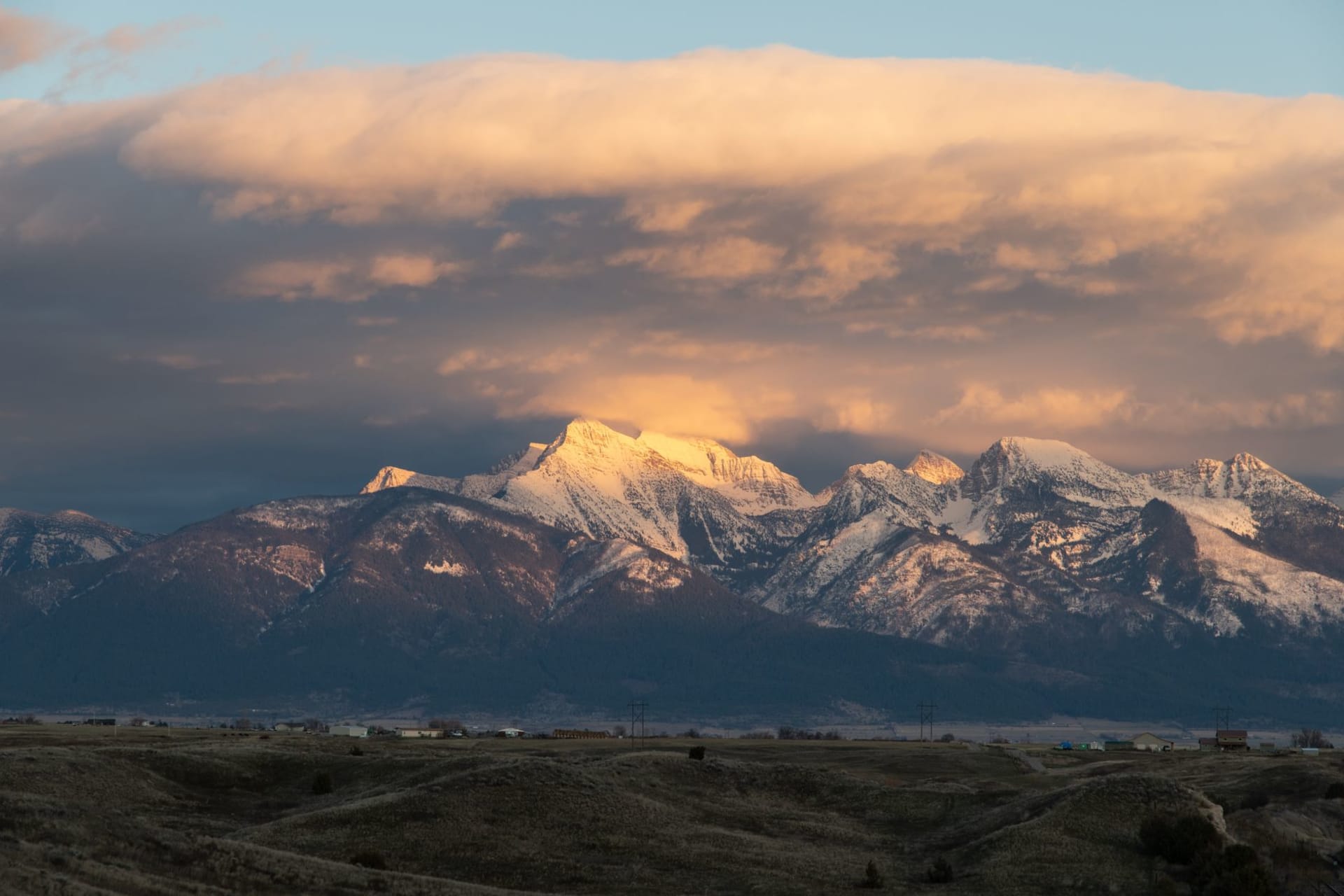
I came to Browning from the east, driving across the Blackfeet Reservation on a two-lane highway that runs straight for as long as you can see. The high plains here are not the emptiness people imagine when they imagine Montana — they are full of grass moving in wind, of prairie dogs working their towns, of red-tailed hawks sitting on fence posts at measured intervals, and suddenly, impossibly, of mountains. The eastern front of the Rockies rises here from the plains without foothills, without preamble, an abrupt limestone wall that appears on the horizon and grows until it fills half the sky.
Browning is the administrative center of the Blackfeet Nation, a town of around 1,000 people that does not cater to tourists and does not particularly need to. The Museum of the Plains Indian, operated by the Indian Arts and Crafts Board on the western edge of town, is one of the genuinely essential places in Montana — a small museum with permanent and rotating exhibitions of Northern Plains Indian culture that puts the landscape of Glacier National Park in a context the park’s own interpretation almost entirely avoids.

The permanent collection traces Blackfeet, Crow, Sioux, Assiniboine, Cheyenne, Arapaho, Shoshone, Bannock, and Flathead material culture through clothing, weapons, ceremonial objects, and daily tools. What moved me most was not the objects themselves but their density — how much knowledge, artistry, and practical intelligence lives in a single beaded robe or a carefully constructed bow. The interpretation here is written with the kind of authority that comes from community involvement rather than academic distance.
The North American Indian Days powwow happens each July on the powwow grounds at the edge of town, one of the largest traditional gatherings in North America. I was not there for it, but I talked to a woman in the café near the museum who described it the way my grandmother used to describe the village fete in Burgundy — as an event that exists first for the people who belong to it, not for the people who observe it, and that this is precisely what makes it worth attending with the right disposition.

The drive from Browning into Glacier on US 89 is one of those stretches of American highway that changes what you understand about a landscape. The road climbs from prairie into mountain foothills and then into the park itself in the space of twenty minutes, and the transition encodes something about how the Blackfeet experienced this territory — the plains as home, the mountains as something that required different knowledge, different preparation, different reverence. The park’s east entrance at St. Mary is where the crowds thin and the real Glacier begins for me.
The Blackfeet Reservation covers roughly 600,000 hectares and includes the eastern strip that buffers Glacier’s eastern boundary. Visiting respectfully means understanding that you’re on sovereign land with its own laws, its own history, and its own terms.
When to go: July for North American Indian Days — plan well ahead, as lodging fills quickly. Spring and fall for the wide-open landscape and the dramatic light that sweeps across the plains before the mountains catch it. Winters are severe and beautiful in a harsh way, with wind that comes off the Divide with nothing to stop it for 500 miles.