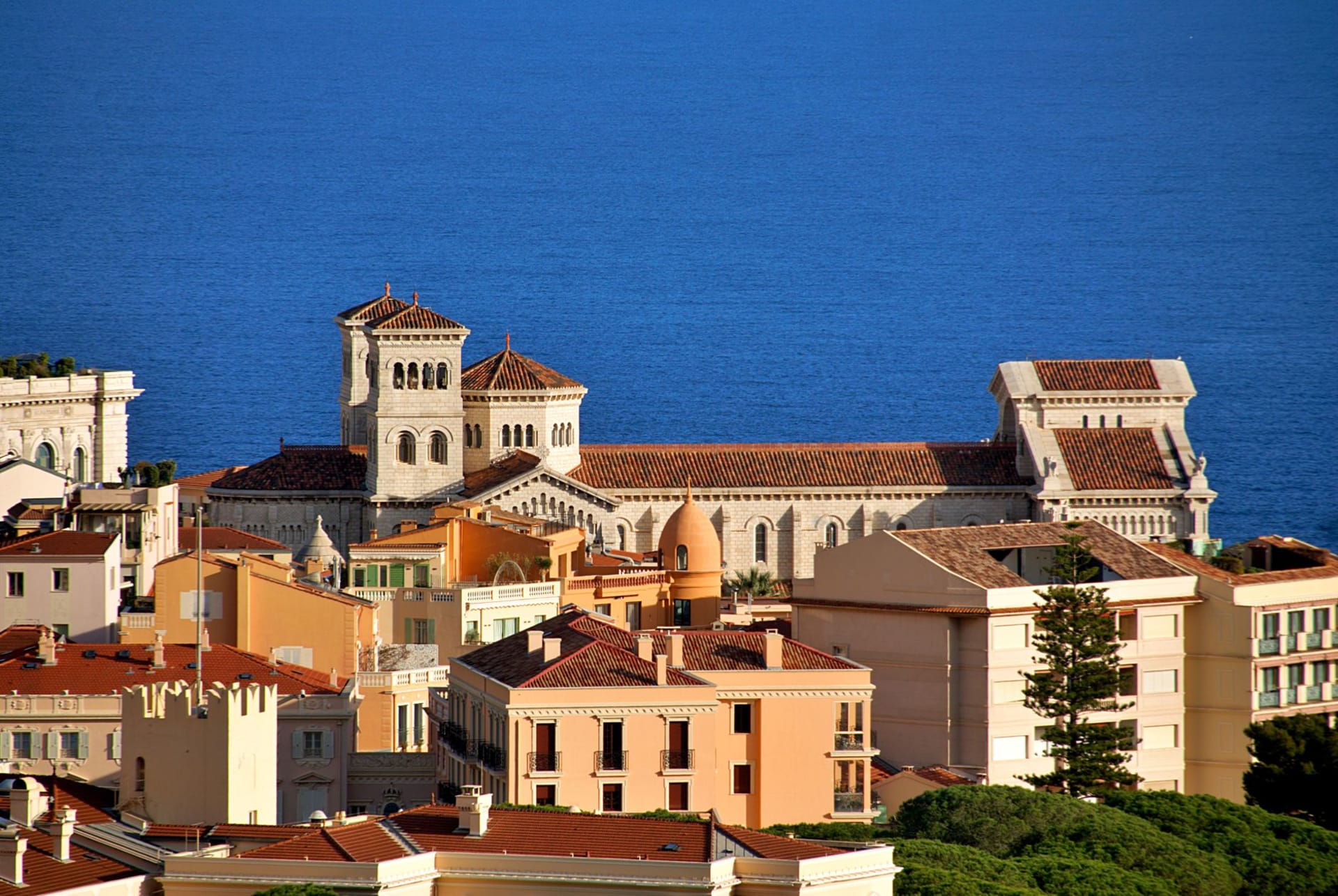
Jardin Exotique
"There is a cactus here that has been growing since the First World War. It has seen things."
The Jardin Exotique clings to the steep western cliff above Fontvieille, visible from much of Monaco as a vertical smudge of green on the rock face, and reaching it involves either a long uphill walk or the kind of negotiation with Monaco’s public elevator system that teaches you that the principality takes its vertical geography seriously. I walked up on a November morning, arriving slightly damp from the effort, and stood at the garden entrance looking back down at Monaco spread below — the towers, the harbor, the Rocher jutting into the sea — and understood why someone decided this particular cliff should be a garden and not just a cliff.
The collection is extraordinary and slightly uncanny. Prince Albert I began acquiring cacti and succulents here in 1913, and what has grown in the intervening century is a garden of specimens that exist on the frontier between plant and sculpture. There are cereus columns that rise eight or nine meters and have been growing since before the Second World War, their ribbed surfaces gathering the light in the early morning in a way that makes them look architectural. There are agave rosettes as wide across as a small car, slowly building toward the single reproduction they will ever achieve. There are aloes from South Africa, echeverias from Mexico, euphorbias from Madagascar that look like they arrived from another planet and decided the Mediterranean suited them. In November, when most flowers are done, the garden is still extraordinary because it grows on time scales that make seasons irrelevant.
The entrance ticket to the garden also includes access to the Grotte de l’Observatoire, a prehistoric cave beneath the cliff that was occupied by humans for something like three hundred thousand years. The guide takes small groups down into a series of chambers where stalactites and stalagmites have been forming since before Monaco existed as a concept, and where the bones of Homo sapiens and Neanderthals have been found in the same sedimentary layers. Emerging from the cave back into the garden, with the massive cacti silhouetted against the sea and the city far below, produces a particular kind of vertigo — temporal rather than physical, a sense of the improbable brevity of everything you have just walked through.
When to go: The garden is open year-round and the cacti look spectacular in every season — but the combination of low winter light and the emptied garden in November or December is something special. Spring brings some flowering if conditions are right. The cave tour runs at set times; check the schedule when you buy tickets at the entrance, as group sizes are limited and tours fill up in peak season.