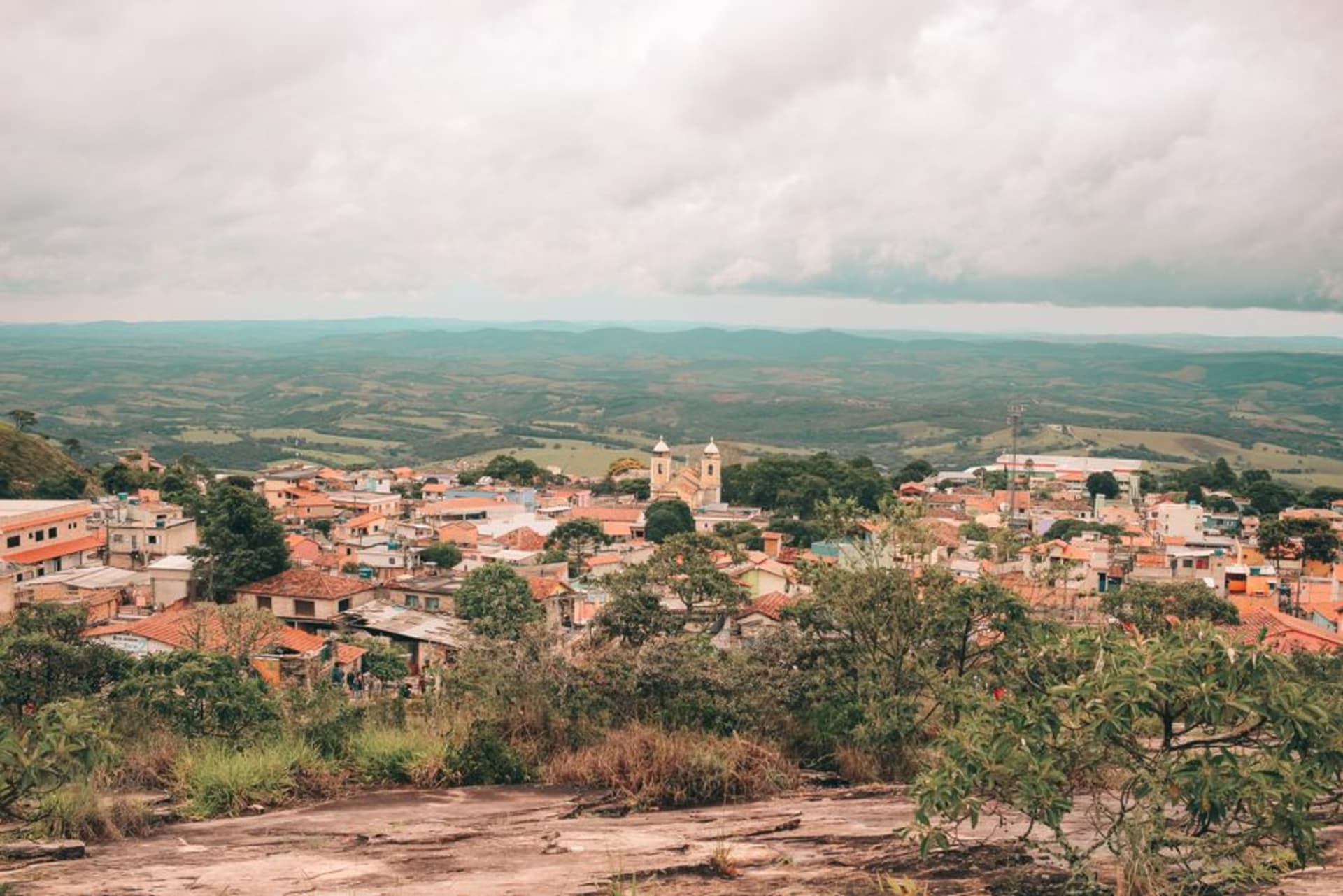
São Thomé das Letras
"Up here the air is thin, the stones are older than language, and nobody blinks when you mention the aliens."
A stone town on a quartzite plateau where UFO believers, hippies and miners have lived side by side since the 1970s.
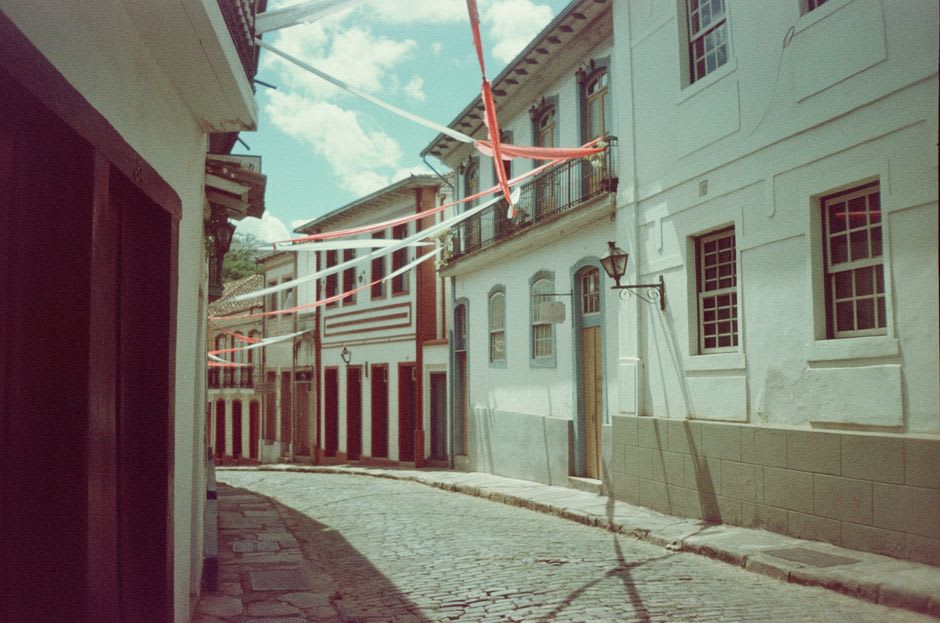
We drove up out of the valley heat and into something else entirely. By the time we hit 1,400 meters and the road turned to cobbles, Lia had rolled up her window and I’d pulled a sweater from the back seat — a strange thing to need in Minas Gerais in July. São Thomé das Letras announces itself in stone: the houses are stone, the church steps are stone, the sidewalks are slabs of the same pale quartzite that miners have been cutting out of this plateau for generations. It felt less like arriving in a town and more like arriving on top of a rock.
What I didn’t expect was the mood. People here talk about energy vortexes the way people in Oaxaca talk about mezcal — casually, with total conviction, over breakfast. Since the 1970s the town has pulled in mystics, dropouts, and UFO watchers who never left, and their shops and murals now sit next to the stonecutters’ yards like two economies that agreed to share a sidewalk. I bought a crystal I didn’t need from a woman who told me, without irony, that the town was a “spiritual antenna.” I still think about that.
The Pirâmide is the reason most people make the trip, and it earns it. It’s a squat stone hut built right into a rock outcrop above town, with window-like gaps carved through the walls that frame the highlands beyond. We got there an hour before sunset, found a ledge, and watched the light go orange and then bruise-purple over ridge after ridge of nothing but rock and scrub. Lia said it looked like the edge of somewhere. I didn’t argue.
The next morning we went underground instead of up, into the Gruta do Carimbado, a cave complex that runs beneath the town itself — cool, dripping, lit only by our phone flashlights until a local guide showed up with a proper lamp. Between the caves and the waterfalls scattered around the plateau, it’s clear this whole place was carved as much as it was built.
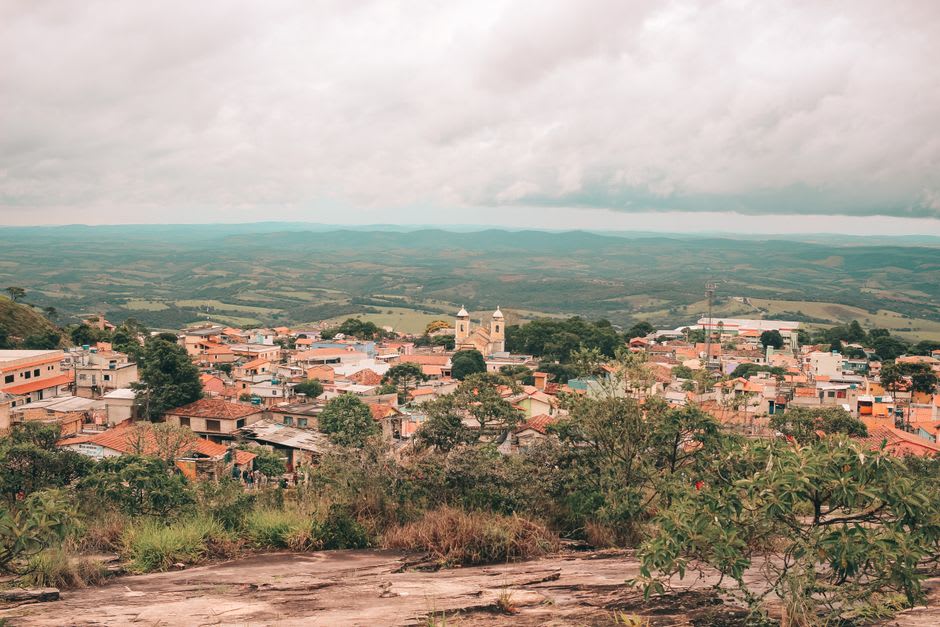
When to go: aim for April to September — the dry season keeps the trails to the Pirâmide and the caves in good shape, and the viewpoints actually deliver, without the mud and cloud cover that roll in the rest of the year.