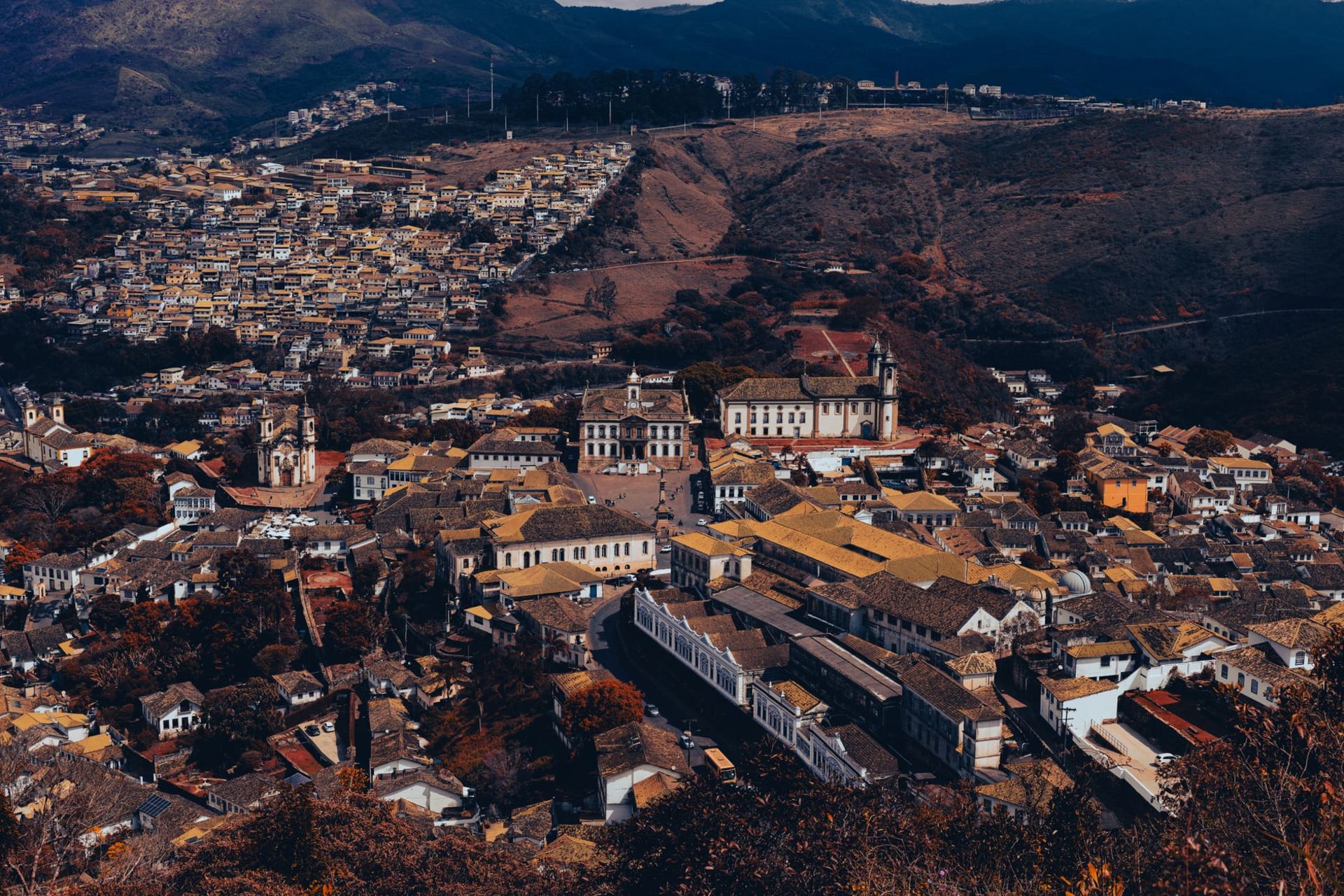
Diamantina
"Diamantina feels like a place that happened in a hurry and then stopped, and decided it was fine like that."
Everything about getting to Diamantina tells you something about the place. There is no train. The bus from Belo Horizonte takes five hours north, climbing out of the green coffee country into drier, rockier terrain — the Serra do Espinhaço, a spine of quartzite mountains running up the center of Brazil that the Portuguese crossed in the 1720s following rumors of diamonds. The scenery turns austere. The vegetation thins. By the time the bus deposits you in the rodoviária, you are in a different Brazil entirely: colder, more vertical, more weathered, with something of the mining frontier still visible in its posture.
The town that exists now is compact and audibly colonial — the overhang balconies, the painted wooden jalousies in blue and yellow and green, the churches that appear at every turning of the lanes. Diamantina sits in a crease of the mountain, the streets plunging and climbing at angles that make walking a form of exercise. The diamond rush of the eighteenth century brought enough wealth for architecture and not quite enough for the wealth to outlast itself, which is why the place feels genuine rather than preserved — it was never rich enough to replace itself with something shinier.

Juscelino Kubitschek — JK, the president who built Brasília — was born here, in a small house on the Rua São Francisco that is now a museum. The house is deliberately modest: a single room where his mother slept, a kitchen where she took in laundry to support the family. There is something instructive about the gap between that room and the capital city he later conjured from empty cerrado. Diamantina gave him a particular relationship with ambition — what it takes to leave a place like this, what you carry with you when you do.
The Mercado Municipal, a covered market from 1835 with wooden pillars and a smell of dried herbs and fresh-cut meat, is the best place to understand the town’s daily rhythms. Old men drink coffee standing at a counter. A woman sells queijo minas in rounds stacked on a cloth. A stall of guaraná sweets and paçoca peanut brittle fills the air with a sweetness that mixes with something sharper, animal. On Friday and Saturday nights the rua da quitanda fills with serenata — a local tradition of impromptu serenade that the town still practices, musicians moving through the lanes in the dark, and the sound drifting up the hillsides.

The countryside around Diamantina is wild and largely untracked: waterfalls, cerrado plateau, fields of wild orchids, the Rio Jequitinhonha running north toward Bahia. Day hikes into the Parque Estadual do Biribiri, six kilometers out of town, pass through mining ruins and swimming holes in water the color of strong tea — stained by the iron in the quartzite, cold enough to take your breath, entirely unsignposted. You pick your way through because you feel like you should, because the quiet is that good.
When to go: May through August for dry, clear skies and cooler temperatures — Diamantina sits at nearly 1,300 meters and can be genuinely cold at night. The Vesperata, a weekend serenade festival held on balconies throughout the historic center, takes place on select dates between April and December and is worth planning around.