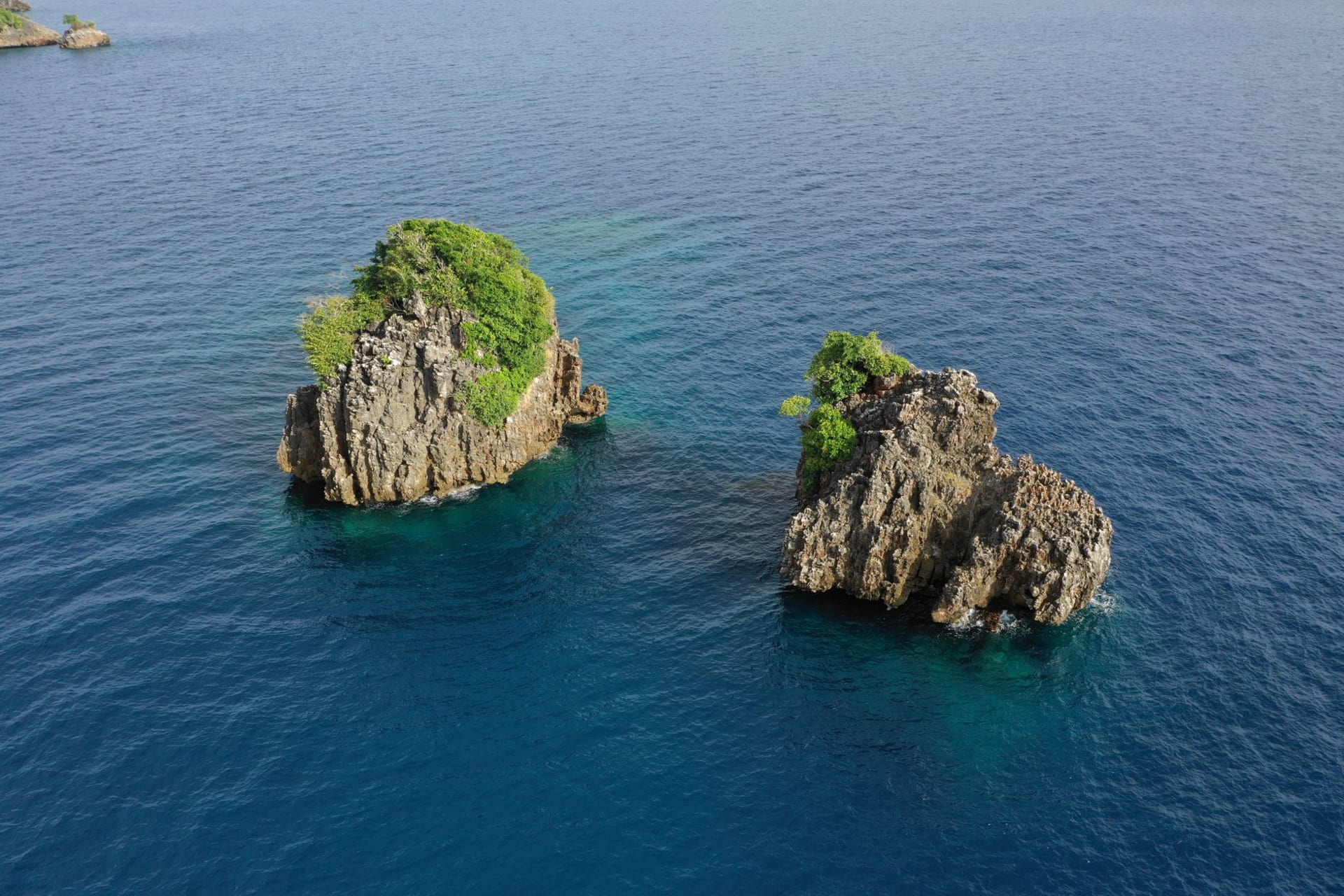
You understand the Rock Islands from a kayak, not from a speedboat. A speedboat gives you the panorama — the jungle-capped limestone mounds rising from turquoise water in every direction, the channels opening between them, the frigate birds circling overhead. But the kayak gets you to the waterline, where the limestone has been eroded by wave action and tidal salt into hollow overhangs, caves, passages barely wide enough to slip through, and the visual grammar of the place becomes suddenly legible. The islands float. Or they appear to float — each limestone mound undercut at the water’s edge until only a narrow base connects the jungle-covered crown to the reef below. The effect, from water level in a kayak, is something between architecture and geology, and it is not something you stop noticing.

The Rock Islands Southern Lagoon — a UNESCO World Heritage Site since 2012 — covers about 100,000 hectares and contains 52 marine lakes in addition to the ocean passages between the islands. The marine lakes range from accessible pockets you can swim into from the open water to landlocked basins you reach only on foot over the ridge. Each lake is its own evolutionary experiment, isolated long enough to develop endemic species: particular jellyfish, particular shrimp, fauna visible nowhere else. I snorkeled in one lake where the water had a faint bronze tinge from tannins leaching through the limestone, and the fish species were entirely different from the reef fifty meters away on the other side of the ridge. It felt like cheating on the ocean with something more private.
The beaches of the Rock Islands are mostly pocket strands of pulverized white coral, accessible only by boat, protected from swell by the outer reef. Long Beach — accessible by a short kayak from the main touring area — is one of those Pacific beaches that makes everything you have previously described as a beach seem like a category error. The sand is white and deep and the water transitions from pale green to cobalt in a series of distinct bands. On weekdays in the off-season, it is empty. I walked the length of it twice and sat at the far end eating crackers from my dry bag with a view that I won’t be able to explain to anyone who hasn’t been there.

The diving and snorkeling here requires no superlatives borrowed from somewhere else — the Rock Islands reef system runs to Palau’s famous Blue Corner and Ulong Channel dive sites, where the current-driven walls carry eagle rays, grey reef sharks, Napoleon wrasse, and soft coral so dense it seems physically impossible that so much living material occupies the same space. I did three dives on a day trip from Koror and came back each time with the same blank expression that the dive master, who had seen it many thousands of times, recognized and didn’t comment on.
When to go: October through April brings calmer seas and better visibility. The Rock Islands are heavily regulated — permits required, restricted camping areas, no anchoring on reef. Day trips depart from Koror daily; multi-day kayaking expeditions should be arranged with licensed operators.