Jalpa
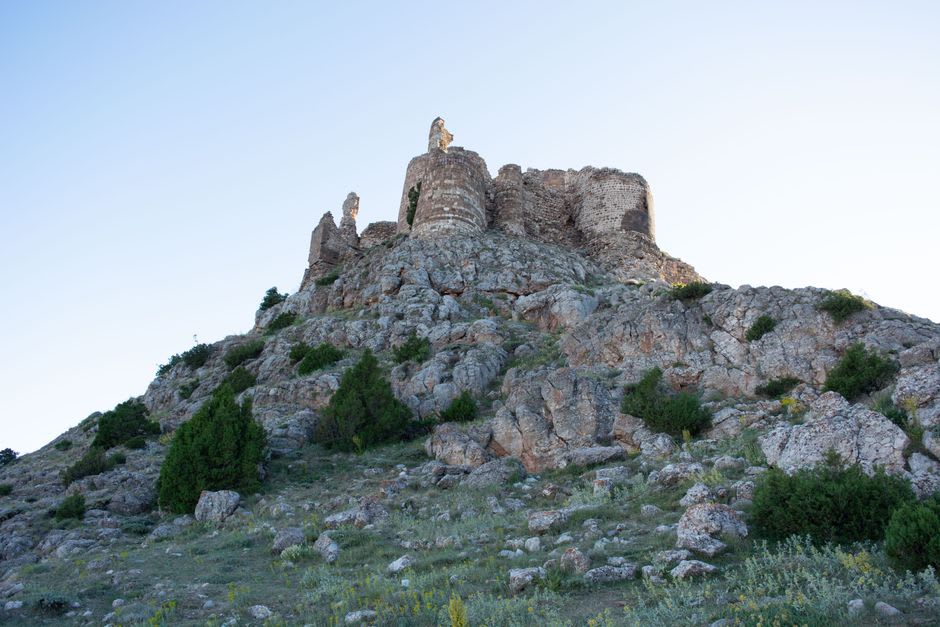
"The castle is mostly rubble now but rubble with a view — the valley spreads out below you and the town looks impossibly small and impossibly old, which is the feeling I came to Mexico for in the first place."
I spotted the castle from the highway before I spotted the town. A crumbled silhouette on the ridge above the valley, visible for a few kilometers before the road descended and Jalpa came into view below it — orange rooftops, the pale tower of the parish church, the green press of trees around the plaza. I stopped here because I needed somewhere to sleep before continuing south toward Aguascalientes. I stayed an extra night, which is the only honest measure of whether a town has something to it.
Castillo de Jalpa
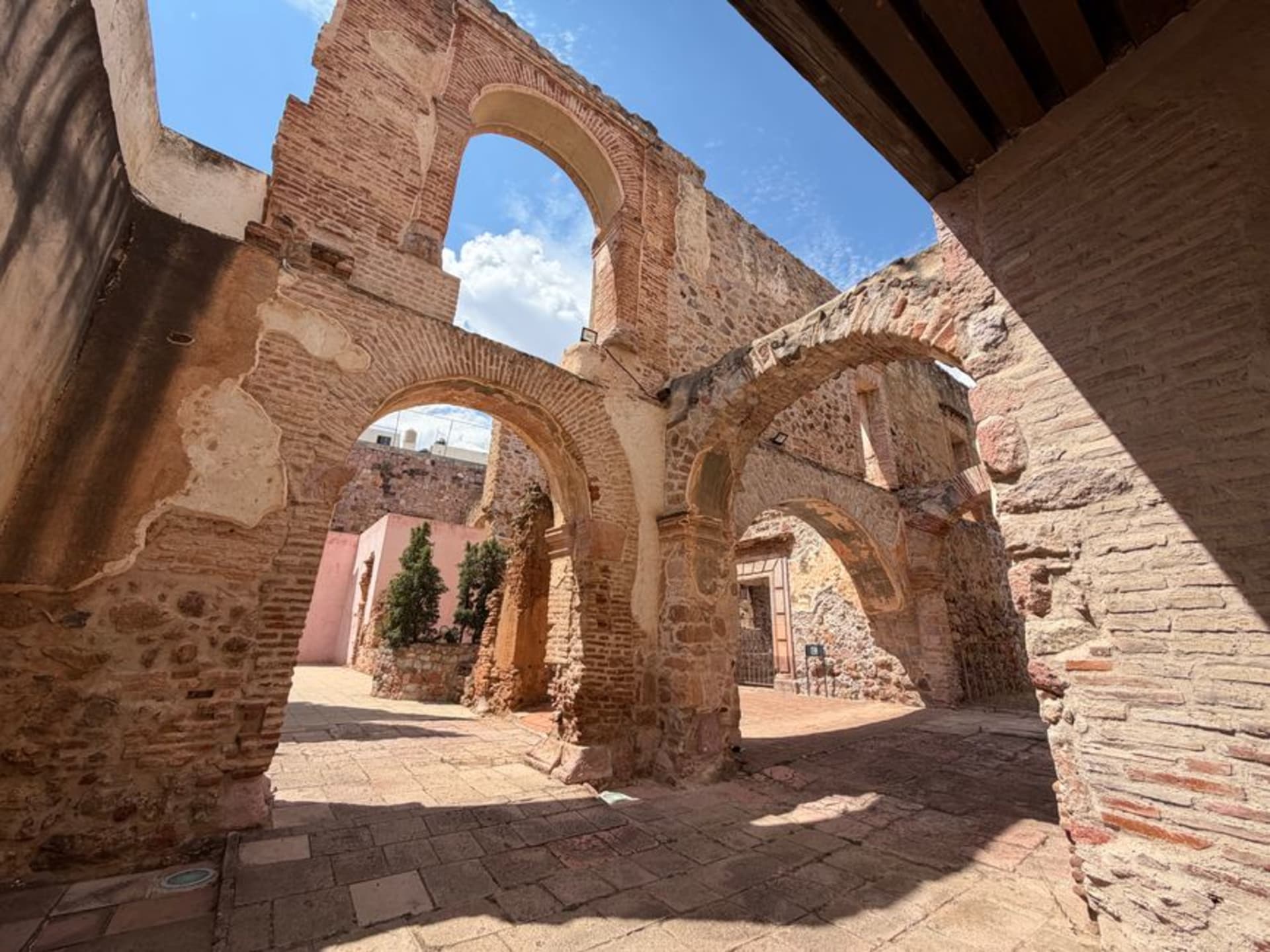
The castle dates to the 16th century, built in the years when the Spanish were still trying to establish authority over this part of New Galicia, and it has been deteriorating peacefully ever since. The climb from the zócalo takes about twenty minutes on a path that threads through dry scrub and loose volcanic stone. What survives is substantial: sections of wall that still stand head-high, an archway or two that hasn’t collapsed, a courtyard you can cross and think about who crossed it before you. But the reason to make the climb isn’t the masonry. It’s the view. The valley opens in every direction below — the town reduced to a compact cluster, the highway a thin line disappearing south, the surrounding hills rolling in that semi-arid Zacatecan way that always looks more like a landscape painting than a real place. I stayed up there longer than I had any practical reason to, eating an orange I’d brought from the market and not thinking about much.
The Plaza and What to Eat
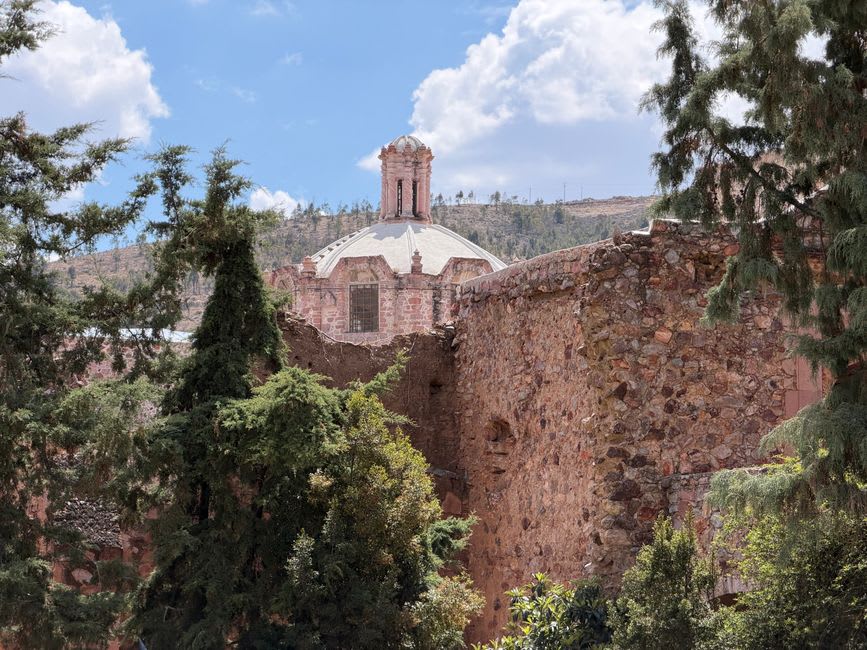
The main plaza at Jalpa runs at a pace that suits an afternoon with no particular agenda. The parish church of San Cayetano closes off one end — its facade catches the late sun in that honey-colored way specific to Zacatecan stonework, the kind of light that makes you reach for a camera and then put it away because you know the photo won’t be right. I ate dinner at a fonda on the north side of the square, a table plastic-topped and clean, and ordered enchiladas zacatecanas — the chiles carrying real heat, queso fresco crumbled over everything in a way that felt both simple and completely correct. A flan de cajeta appeared at the end unrequested. I paid perhaps sixty pesos for the whole thing. The woman running the place was watching a telenovela on a phone propped against the salt shaker and barely looked up when I left, which felt about right.
Where to Stay and When to Go
Jalpa is not set up for tourism in any organized way, which is part of the point. There are a couple of posadas near the center; the one I used had a second-floor room with a window toward the hill. I woke early enough to see the castle catch the first light before the town had started moving, and that alone made the detour worthwhile. Come on a weekday if you can — the plaza is quieter, the fondas less crowded at lunch. Avoid arriving after dark; the access road from the highway is poorly signed.
Getting There
Jalpa sits on MEX-54 roughly midway between Zacatecas city and Aguascalientes, about two hours south of Zacatecas city by car. Second-class buses running the Zacatecas–Aguascalientes route pass through regularly; ask to be let off in Jalpa rather than continuing to Tlaltenango. There is no bus terminal — the stop is on the highway, a ten-minute walk from the plaza.