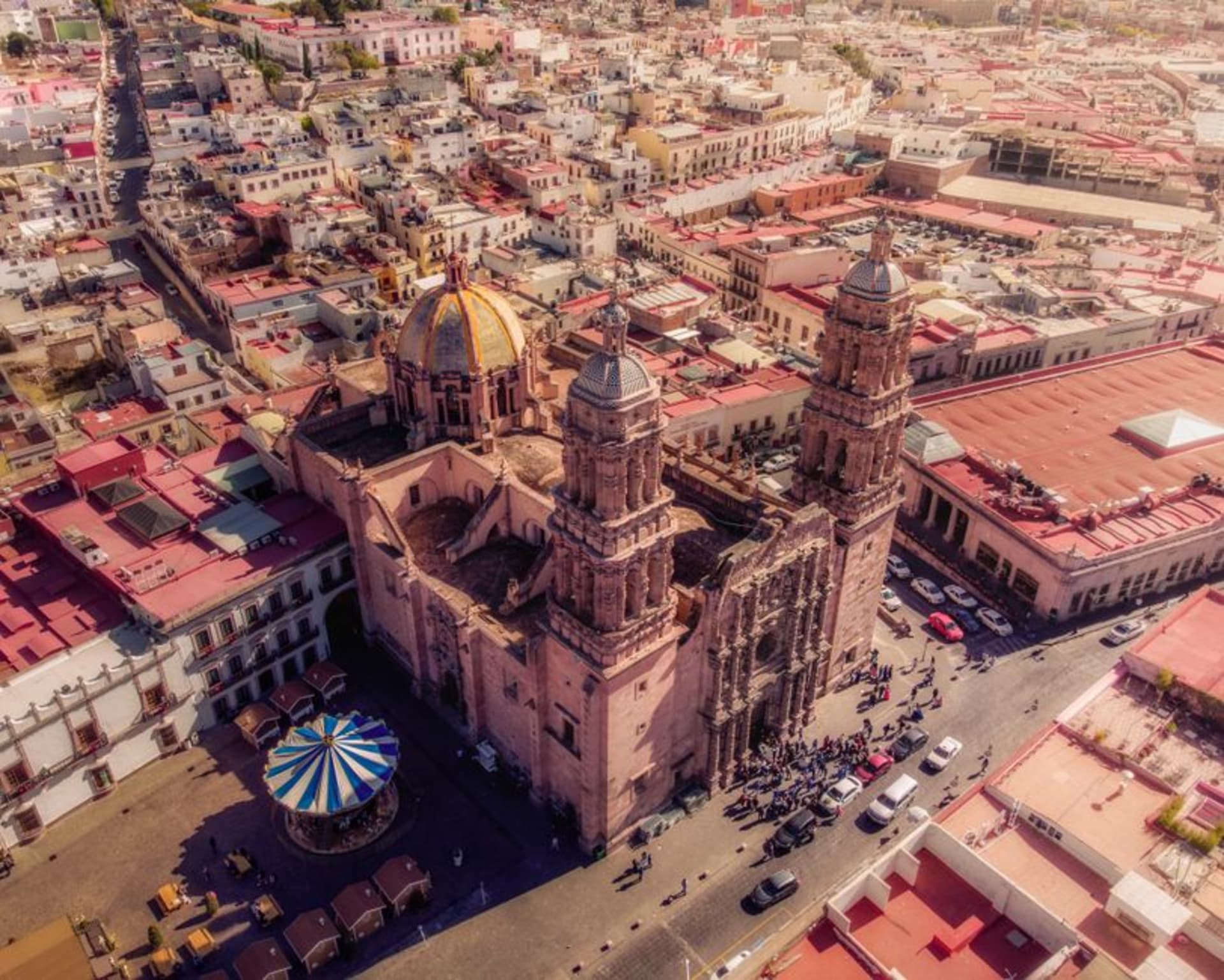
Guadalupe
"Most people drive past Guadalupe in ten minutes. I spent three hours inside the ex-convent and still felt like I hadn't seen half of it."
The taxi driver from Zacatecas looked at me in the rearview mirror when I gave him the destination. Not Guadalupe, the neighborhood — Guadalupe, the municipality, seven kilometers east. He said something about the convent and waved vaguely toward the highway. I got dropped at the main plaza on a Wednesday morning, the market stalls half-assembled around the church steps, and walked directly into the ex-convent before anyone could tell me what I was about to see. The place announces itself only once you’re already inside. The facade is understated enough that you could mistake it for a decent provincial church and nothing more.
What the Franciscans Left Behind
The Museo de Arte Virreinal de Guadalupe occupies the full body of the ex-convent — cloister, choir, sacristy, a sequence of galleries that open onto each other with a logic that feels residential rather than institutional. The collection runs from the 17th century to the early 19th, and the centerpiece is a series of enormous canvases by Cristóbal de Villalpando, a Mexico City painter whose work fills the walls at a scale that would read as excess if it didn’t also read as technically extraordinary. There are pieces here by Miguel Cabrera too — the most prolific and sought-after painter of New Spain — along with works by José de Ibarra and Luis Juárez that you’d stand in front of for twenty minutes in any European museum. Admission is something like 90 pesos. I kept expecting more visitors. There were four of us on a Wednesday, moving around each other politely in galleries full of world-class colonial painting, the kind of encounter that doesn’t quite translate when you try to explain it later.
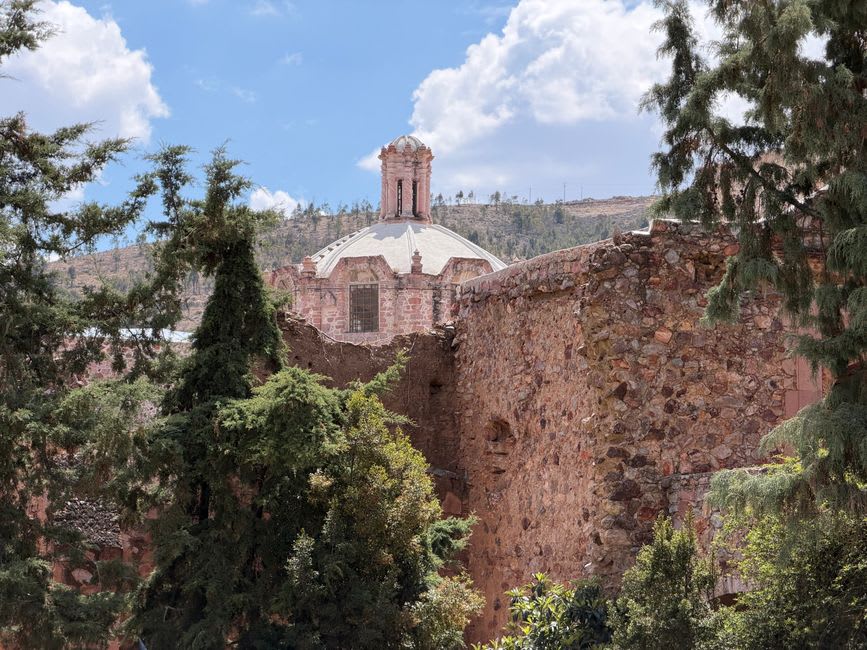
The Market by the Atrium
The market that runs along the north side of the atrium sells gorditas the way Zacatecas state has always made them: thick masa patties cooked on a comal, split open and filled with frijoles negros, chicharrón prensado, or picadillo, then drizzled with salsa verde from a clay pot that has been sitting on the burner long enough to concentrate into something properly serious. My table was a plastic chair beside a señora who asked if I had come for the museum or the town, and seemed satisfied when I said both. The plaza itself is modest — a fountain, a row of laureles de India trimmed into columns, a few benches where the afternoon light hits well around four o’clock. Guadalupe has the tempo of a place that doesn’t need tourism because it already functions without it, which makes the whole visit feel less like sightseeing and more like arriving somewhere.
A Few Things Worth Knowing
If you have any interest in colonial art, rent the audio guide at the museum entrance — the INAH version. The contextual notes on Villalpando’s technique alone make the difference between standing in front of a large painting and actually reading one. Beyond the main galleries, the upper cloister walkway is worth the climb: the view down into the courtyard from the second level gives you a sense of the convent’s original dimensions that the ground floor obscures. I’d also suggest resisting the impulse to rush back to Zacatecas for lunch. The gordita market runs until around two-thirty, and eating in the plaza after the museum is the right rhythm for the day. Trying to compress Guadalupe into less than two hours is the main mistake.
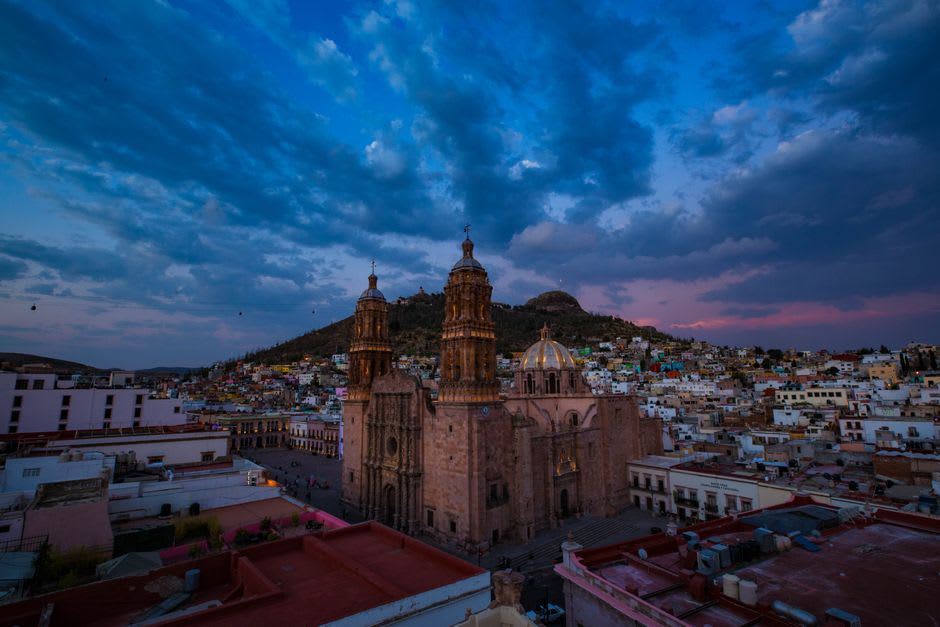
Getting There
Guadalupe sits seven kilometers east of Zacatecas city center. Colectivos run from the corner of López Velarde and González Ortega in Zacatecas for around ten pesos; taxis ask between 80 and 120. The museum is closed Mondays. Visiting between October and April avoids the rainy season and keeps the highland cold manageable — bring a layer regardless of the month. Budget a minimum of two hours, three if you read the paintings carefully.