Tizimín
"A ranching town with a church that could fit half of Paris — classic Mexico overachiever, and I mean that as the highest compliment."
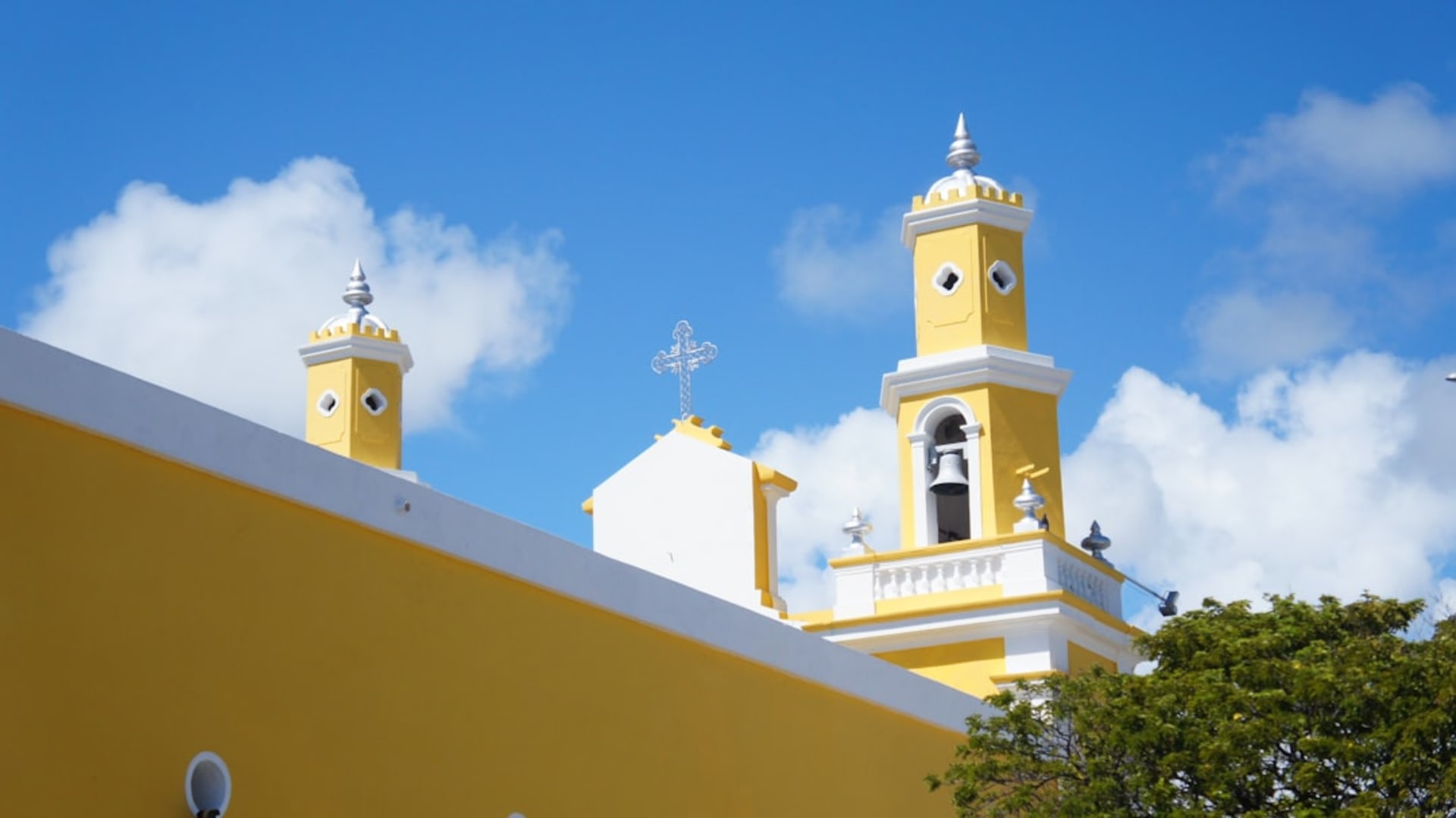
I stopped in Tizimín on the way to the coast and walked straight into the main square without knowing what was there. The convent stopped me cold. You round a corner expecting a pleasant colonial church, the kind every Yucatecan town has, and instead you get this — a Franciscan fortress of honey-colored stone, walls three meters thick, an atrium wide enough to park buses in, belltowers that read as a joke about ambition until you realize the joke is entirely serious. I stood in the square for longer than I planned, eating a panucho from a cart near the portal, trying to work out what this building is doing in a cattle town of sixty thousand people.
The Convent of the Three Wise Kings
The Convento de los Tres Reyes Magos was built in the second half of the 16th century, part of the Franciscan campaign to plant enormous monuments of faith across a peninsula they had just violently reorganized. The scale was always the point — it was meant to impress, to overwhelm, to replace one cosmology with another through sheer architectural insistence. Walking through the arched entrance into the atrium, that logic still works on you even when you know it’s happening. The church interior is cool and dim and smells of candle wax and something older. The retablo behind the altar holds the Three Kings in carved and gilded wood, the original reason for the town’s name and the center of a January festival that draws pilgrims from across the peninsula for more than a week. Outside the church walls, the former convent cloister has been partially converted into a regional museum with modest but carefully labeled pre-Hispanic ceramics and colonial documents. Worth an hour of your afternoon even if you arrive, as I did, knowing nothing about the place.
Cattle Country at the Table
Tizimín is the commercial hub of the eastern Yucatecan livestock region, and that fact does interesting things to the food. The Mercado Municipal on Calle 50 is fully functional in the way markets are when they serve working people rather than tourists — chaotic, loud, and worth pushing through. I ate at a lunch counter near the back where a woman served queso relleno, the Yucatecan stuffed Dutch-cheese dish that takes most of a morning to prepare and tastes like it. The pork was from somewhere nearby, which mattered. The panuchos at the cart in the main square held together better than most I’ve had in Mérida — crisper, less oily, with habanero salsa that arrived without being requested, which is the correct way to handle that. The town also supports a handful of decent mariscos spots, which seems improbable until you remember the coast is forty-five minutes north and the supply chain is short.

North to the Flamingos
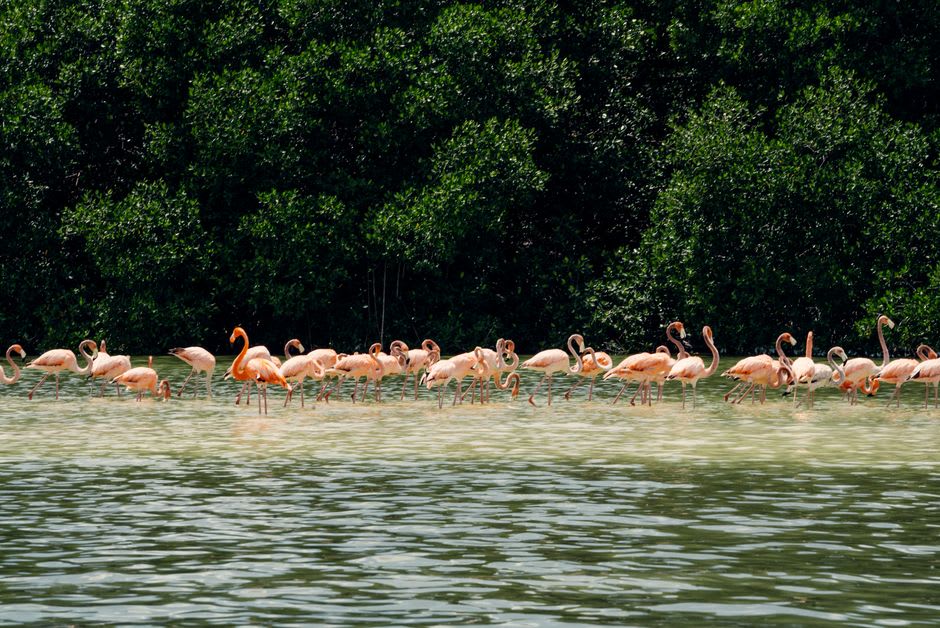
The real reason to use Tizimín as a base rather than a brief stop is Río Lagartos, fifty kilometers north on a flat road through scrub and sisal fields. The biosphere reserve there protects a brackish estuary where thousands of American flamingos congregate in the shallows, their color so improbable at that scale that it takes a moment to register as real. Local lanchas leave from the town dock in the early morning — go before eight if you want the birds calm and the light useful. Las Coloradas, the lagoon that runs pink from halophilic algae, is another twenty kilometers east along the coast road and takes perhaps twenty minutes to absorb. Neither place requires much planning. They reward showing up early and leaving the itinerary loose.
Getting There
ADO buses connect Tizimín to Mérida (roughly two and a half hours, several departures daily) and to Valladolid (about an hour), which makes it an easy addition to a broader Yucatán circuit. There is no direct bus to Río Lagartos from Mérida — Tizimín is the transfer point, with local colectivos departing from near the market most mornings. Having a car simplifies the coastal stretch considerably.