
Motul
"I ordered three rounds of huevos motuleños without apology, and the woman running the comedor looked genuinely pleased with me."
Every Mexican I have ever met claims their mother makes huevos motuleños. I had eaten the dish in a dozen places before I finally made it to Motul itself — a forty-five-minute colectivo ride northeast of Mérida through flat agave country — and I will tell you plainly: the versions I had eaten before tasted like approximate memories of something I had not yet had. I arrived on a Tuesday, sat down at a plastic table in a comedor off the covered market, and understood immediately that geography is an ingredient.
The Dish That Made the Town Famous
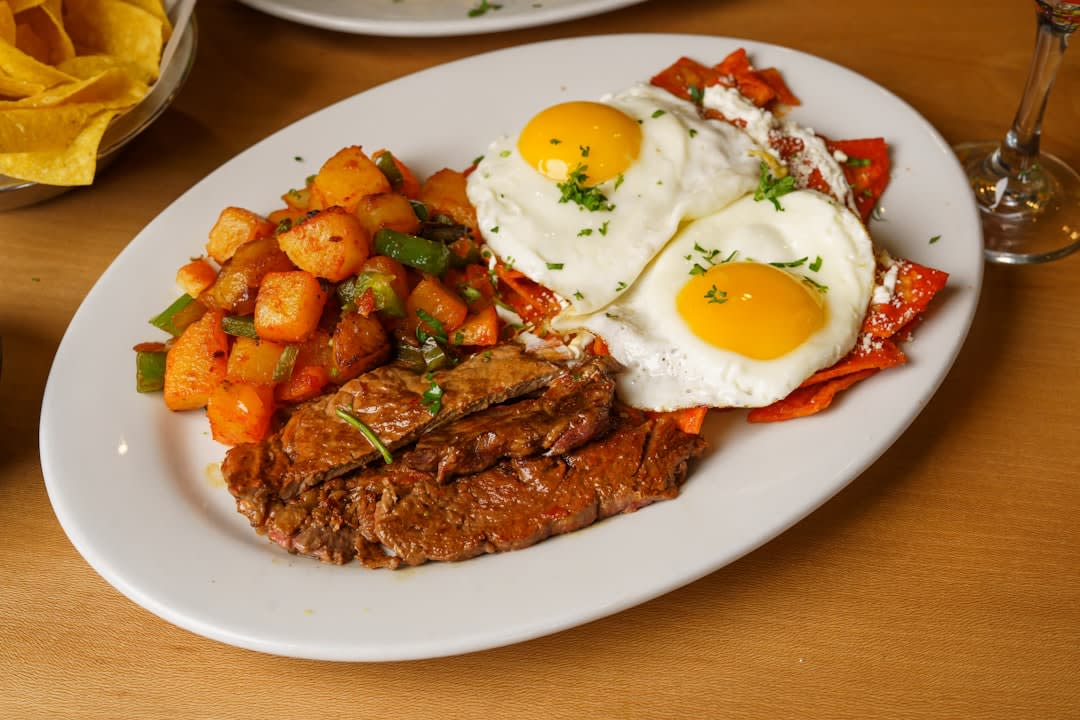
The huevos motuleños at Doña Chelo’s — a small operation tucked inside the Mercado Municipal, look for the hand-lettered sign and follow the smell — arrive on a tostada that has been fried to a specific density I have not encountered elsewhere: rigid enough to support the architecture above it but not so brittle that the first cut causes a collapse. Below the fried eggs goes a layer of black beans seasoned with epazote; above them, shredded ham and a spoonful of tomato sauce; to the side, two slices of fried plantain and a scatter of petit pois that have no business tasting as good as they do. The combination sounds assembled rather than composed, and in lesser hands it is. Here it arrives as something coherent. I ate three full plates across two sittings and felt no shame about it. The woman who runs the counter refilled my coffee each time without being asked, which I take as a sign of professional respect.
The Convent and the Market
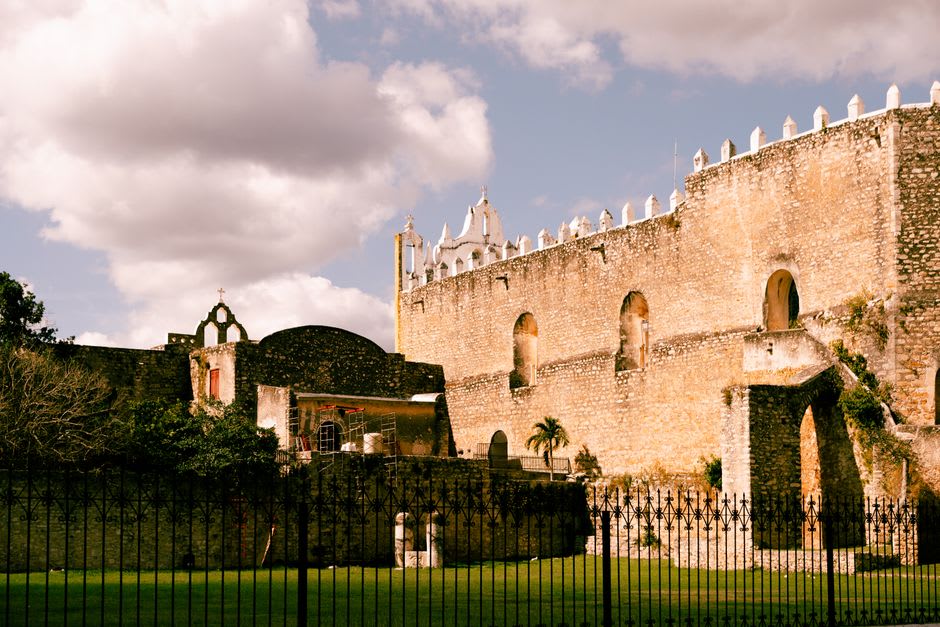
The Convento de San Juan Bautista sits at the edge of the central plaza and dates to the 1550s, which means it was already old when the henequen boom arrived and made this corner of Yucatán briefly wealthy. The facade is restrained compared to the baroque extravagances you find further south — pale stone, a quiet atrium, a small garden where a few men sat reading newspapers when I passed through. The interior is cool and dim in the way of all proper colonial churches, and there is a calm here that has nothing to do with tourism and everything to do with the fact that Motul is simply not on any particular itinerary. The covered market a short walk away operates on similar principles: stalls selling hammocks, huaraches, and medicinal herbs alongside the usual produce; no particular urgency; a man selling agua de chaya from a plastic cooler near the entrance who told me, unprompted, that I had come on a good day.
How to Spend a Day Here
Motul rewards a slow morning more than a packed itinerary. Arrive early — by seven or eight — when the market is at its most active and the comedores are in full breakfast swing. After eating, walk the perimeter of the plaza, duck into the convent, and wander north toward the old henequen warehouses along Calle 26, where the scale of the fiber industry that once moved through this town becomes suddenly legible. By noon the heat settles over everything and the sensible response is a hammock, either in your guesthouse or strung somewhere in the shade. The Hostal Casa Ceferino, two blocks from the plaza, has a courtyard that works well for this purpose.
Getting There
Motul is approximately 45 kilometers northeast of Mérida. Colectivos depart frequently from the Noreste terminal on Calle 67 in Mérida and take about 45 minutes; the fare is minimal. There is no bus station in Motul proper — the colectivos drop you near the market, which is exactly where you want to be. A day trip from Mérida is entirely reasonable, though one night lets you catch the market at its early-morning best.