Izamal
"Every building the same yellow. The Franciscans built their church on top of the Mayan pyramid. The pyramid is still there underneath."
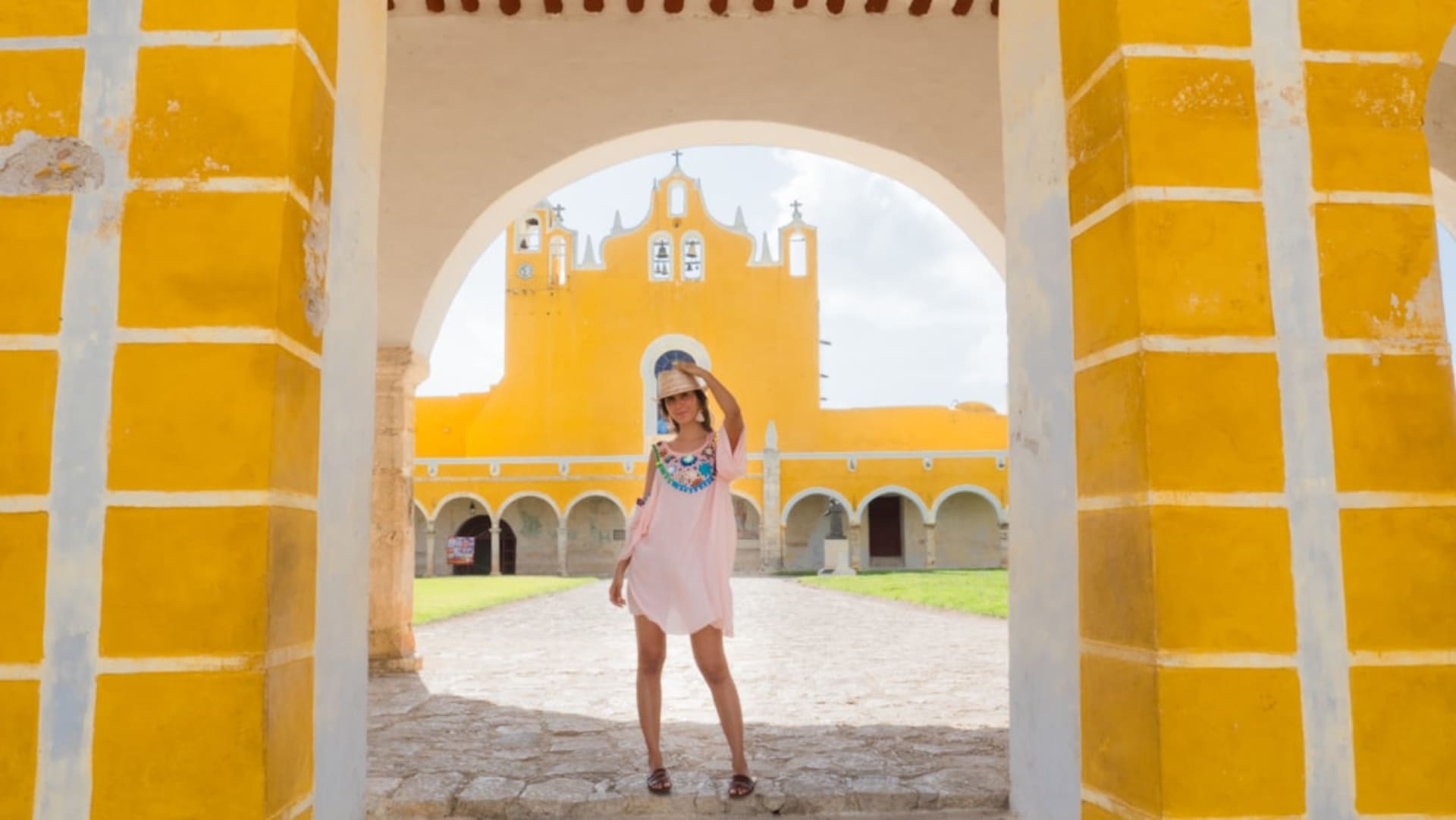
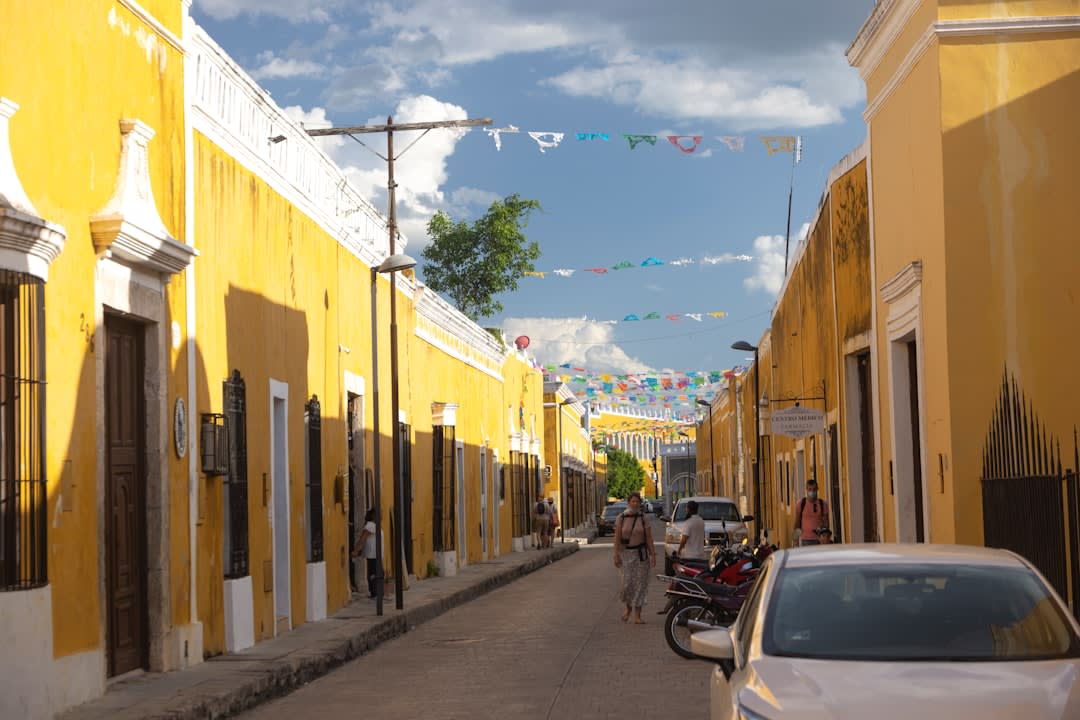
There is a single color in Izamal. Every building — the houses, the shops, the municipal palace, the convent walls — is painted the same shade of golden yellow, a specific ochre that belongs to this town the way a particular red belongs to a flag. The effect, arriving by bus from Mérida on a clear afternoon, is of driving into a monochrome painting in which the sky has been left its original blue.
The yellow is not recent. Izamal has been painted this color for at least several hundred years — some accounts say the tradition predates the conquest, that the Mayan city was built in a local stone that weathers to this ochre and the Spanish continued the color when they built over it. Whether this is accurate or not, the visual consistency across a town of fifteen thousand people is extraordinary. Even the Pemex station is yellow.
The Convent
The Convento de San Antonio de Padua, begun in 1553, is built on the foundation of a Mayan pyramid — specifically the pyramid of Ppapp-Hol-Chac, a Mayan sun deity whose temple stood at this location before the Spanish arrived. The Franciscans dismantled the pyramid and used its stones for the convent, as they did throughout the Yucatán. In this case the pyramid’s base platform is so large — the atrium is the second-largest enclosed atrium in the world after St. Peter’s Basilica in Rome — that it defines the scale of everything built above it.
The atrium, surrounded by 75 arches, could hold ten thousand people for outdoor Mass in the early missionary period when the permanent congregation was primarily indigenous converts. The Franciscan strategy in the Yucatán was mass conversion on this scale — bringing thousands together in open-air ceremonies before the churches were large enough to accommodate indoor worship.
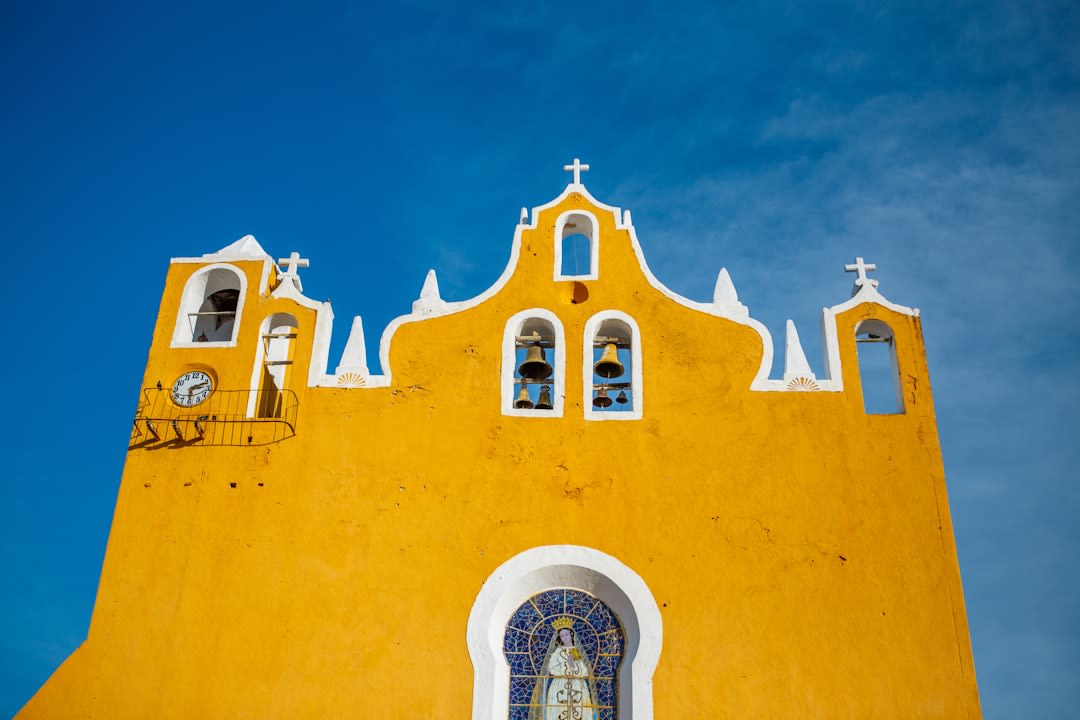
John Paul II visited Izamal in 1993 for a meeting with indigenous communities of the Americas, which is why the main plaza contains a permanent photo exhibition of his visit. The town was replainted for his arrival in the current golden-ochre tone and has been maintained that way since. The convent church contains a small image of the Virgin of Izamal — patroness of the Yucatán — which has been a pilgrimage destination for four centuries.
The Pyramids
Four of the original Mayan pyramids that made Izamal an important ceremonial center survive in various states of excavation. Kinich Kakmó — the largest — is a few blocks from the convent and free to enter. The base is several hundred meters on a side, making it one of the largest Mayan structures by volume, and the summit (a twenty-minute climb over loose stone) gives a view over the entirely yellow roofscape of the town below with the convent and the Yucatán flatlands extending beyond.
The contrast between the Mayan pyramid and the Spanish convent built on another Mayan pyramid, all of it in the same yellow, visible from a single viewpoint — this is the specific image of Izamal that stays.
The Town
Izamal is small enough — the historic center takes about twenty minutes to walk across — that it works as a morning excursion from Mérida rather than an overnight destination, though staying overnight changes the experience substantially. After the day-trippers leave in the afternoon, the town’s resident population reclaims the streets and the yellow buildings take on a different quality in the low light.
The calesas — horse-drawn carriages that circuit the town — are the traditional way to visit the pyramids and the convent. They operate from the main plaza and are both a tourist convenience and a functioning part of local transport. The horses are decorated in Yucatecan embroidery matching the carriage.
The town has a small but good craft market near the convent, specializing in Yucatecan embroidery (huipil blouses with floral designs), hammocks, and sisal products. The embroidery here is less expensive than in Mérida and made by women who are visible at work in the market stalls.
What to eat: The comedores around the main plaza serve Yucatecan standards — sopa de lima, poc chuc, cochinita pibil — at village prices. The Mercado Municipal on Calle 33 has the best papadzules (egg tacos in pumpkin-seed sauce) I have eaten outside of Mérida.
Getting there: Direct buses and colectivos from Mérida’s Terminal de Segunda Clase on Calle 50 depart regularly throughout the day and take approximately ninety minutes. The town can also be combined with Chichén Itzá on a day trip from Mérida by hiring a driver — the two sites are in opposite directions from Mérida but manageable in a long day.
When to go: Izamal is not a peak-season destination and can be visited year-round. December 8th, the feast of the Virgin of Izamal, brings a significant pilgrimage that fills the convent. The town’s size means even modest crowds change its character; weekday mornings year-round are the right time.