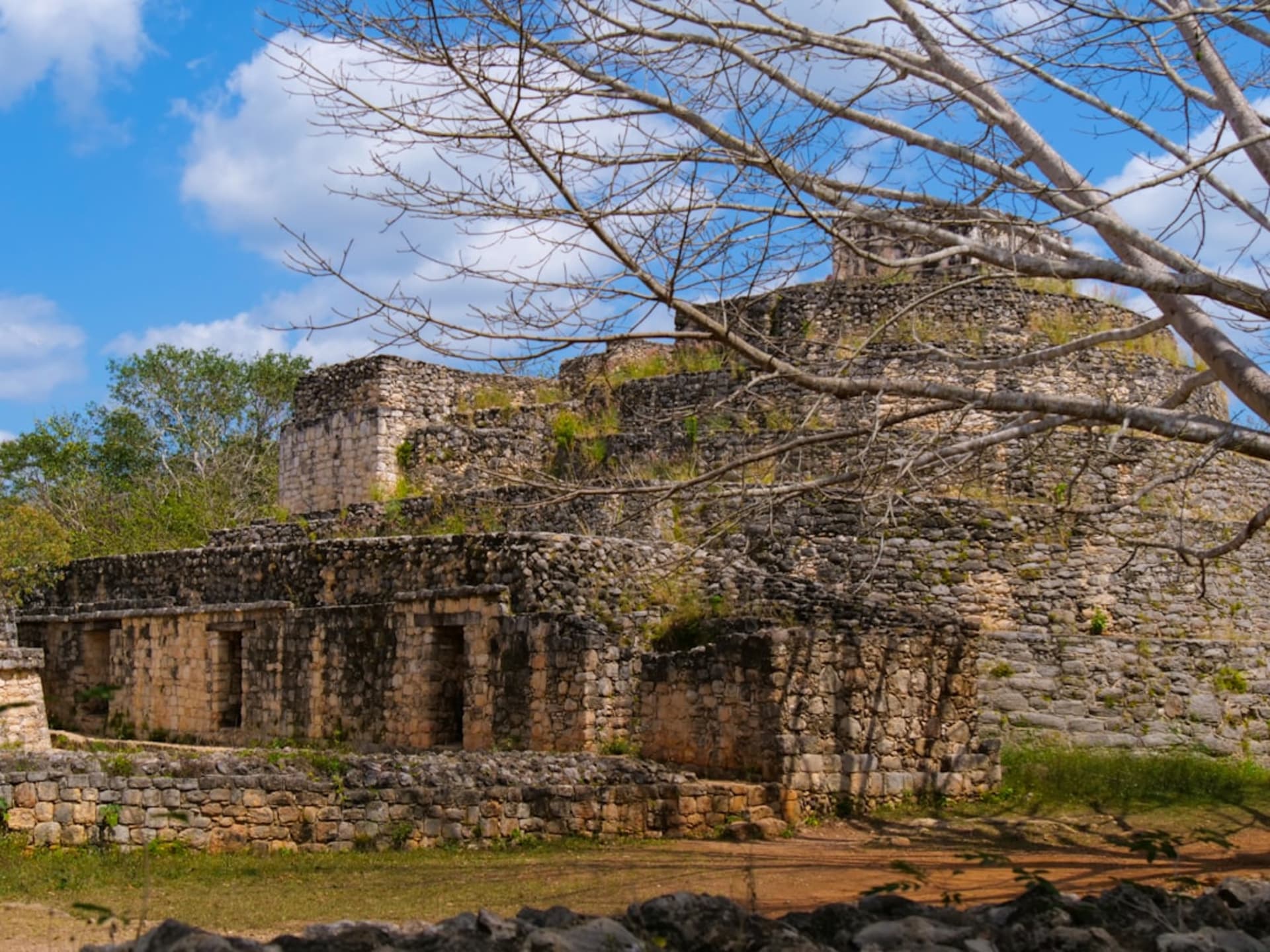
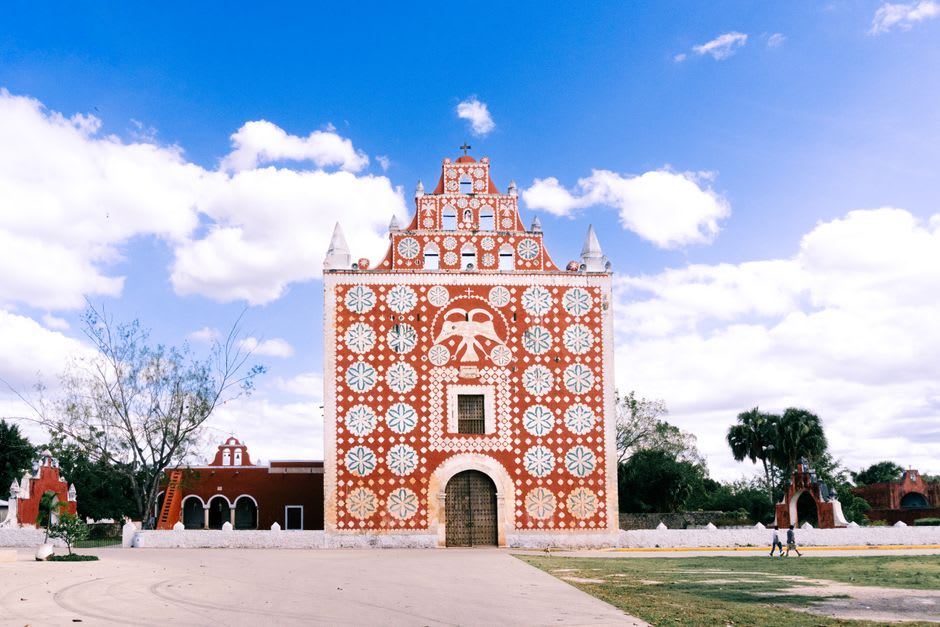
I turned off Federal Highway 180 on a Thursday morning because the road sign for Espita looked like it meant something, and I had nowhere particular to be. By the time I reached the central plaza and parked under a laurel tree, I’d passed exactly two other cars. A man swept the steps of the Iglesia de San Antonio de Padua with a long-handled broom. He didn’t look up. That indifference — unhurried, unbothered — is the first thing Espita teaches you. Nobody here is performing for an audience.
A Town That Stopped Caring About Its Own Grandeur
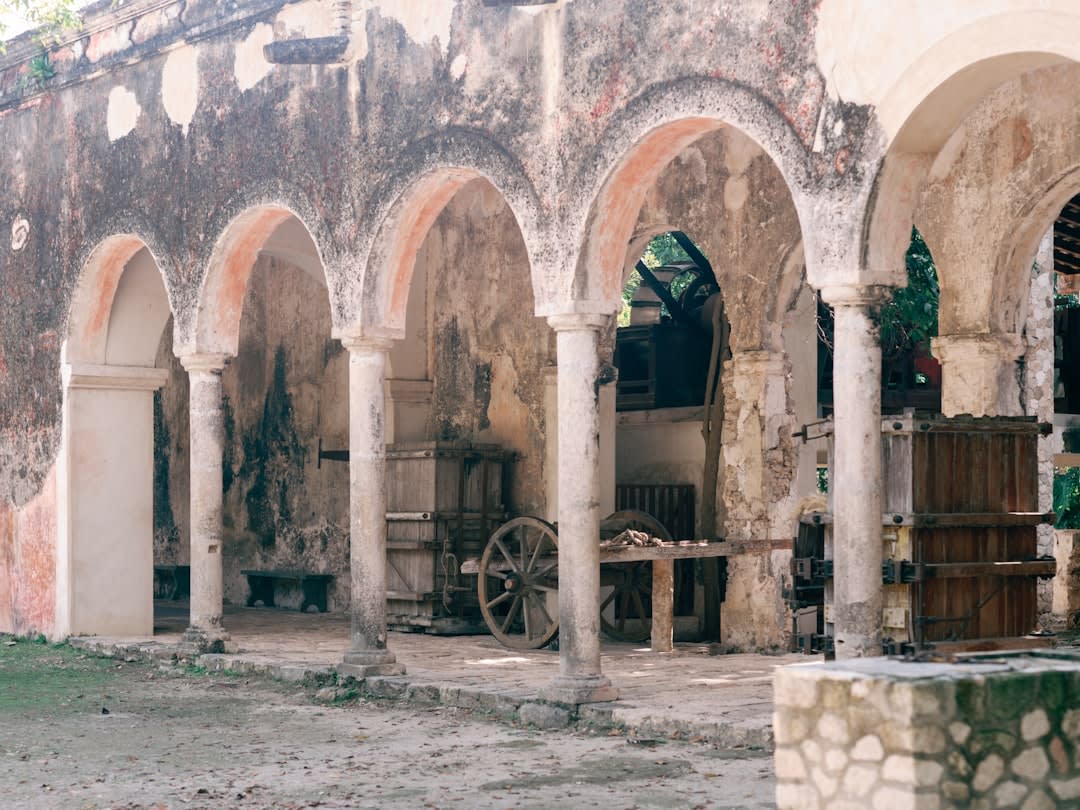
The mansions along Calle 24 and Calle 26 tell you everything about the henequen boom and what came after. Thick walls the color of old bone, carved stone doorframes, iron window grates oxidized to a deep rust. Most are still occupied — laundry dries behind wrought-iron gates, a television flickers in a dim sala — but the plaster peels without apology, and the gardens have gone native in the best possible way. What strikes me walking these blocks is how unembarrassed it all is. There’s no scaffolding, no heritage sign, no boutique hotel reclaiming the shell. Espita didn’t get the memo that ruins are marketable, and the result is something more honest than restoration: a town living inside its own history at its own pace, with cattle ranchers driving F-150s past doorways that were already old when Juárez was president.
The Market and the Afternoon Table
The Mercado Municipal is small enough to walk in two minutes and important enough to anchor the whole town. I ate at a plastic table near the back — poc chuc, the pork grilled over wood coals and finished with pickled red onion, served with a bowl of black beans and half a stack of handmade tortillas that arrived warm in a cloth. The woman running the stall, whose name I never caught, refilled my water glass without being asked and told me the afternoon rain would start around four. She was right to the minute. Espita’s market isn’t performing tradition; it’s just lunch.
The Plaza at Dusk
By five o’clock, the light in the Yucatán hits that particular angle where everything looks like it’s been painted in ochre. The plaza fills — slowly, without urgency — with teenagers on benches, older men in guayaberas circling the park, children running around the gazebo kiosk. The church facade goes amber. Someone sets up a cart selling marquesitas, the crispy rolled wafers filled with Edam cheese that you either love immediately or have to eat three times before you understand. I was the only non-local there. No one found this remarkable. I liked that.
Getting There
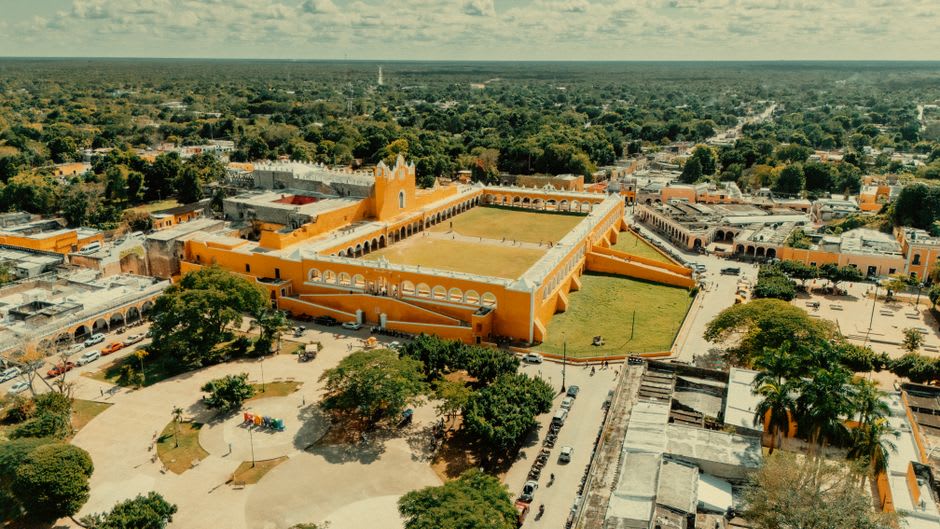
Espita sits about 120 kilometers east of Mérida, roughly two hours by car via Federal Highway 180 toward Valladolid, turning north at Calotmul. There is no direct ADO service; if you’re coming by bus, get off at Valladolid and take a colectivo north. A car makes more sense — the town rewards slow, unscheduled time.