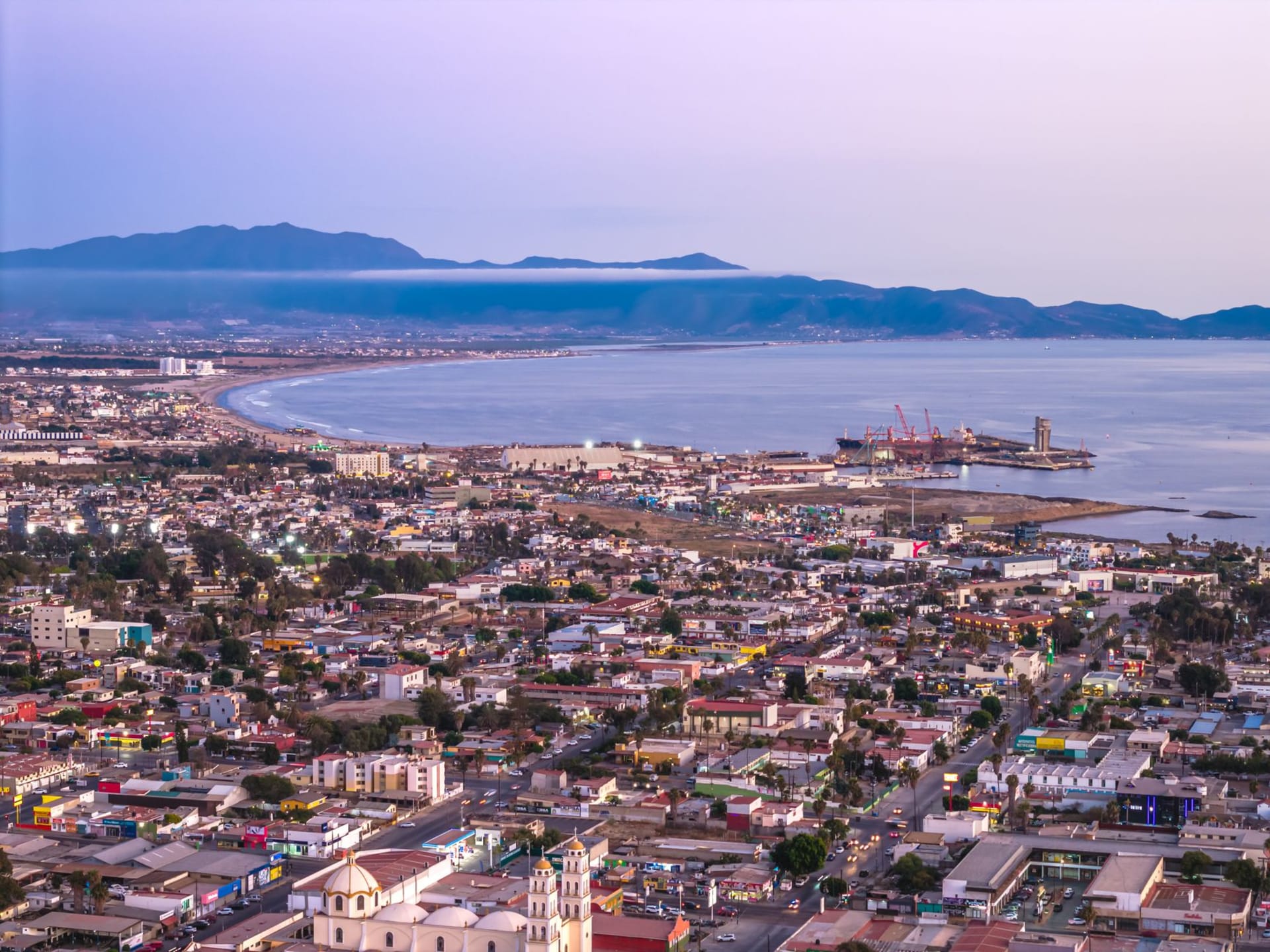
Veracruz City
"At some point I stopped pretending I was going to leave and ordered a third coffee. The marimba had been playing for four hours and showed no intention of stopping."
I have a bad habit of underestimating port cities. I’m not sure where this comes from — perhaps the French tendency to regard coastal industrial towns with mild condescension, to assume that the real culture is further inland, in Burgundy, in the mountains, in cities with pronounced identities. This is wrong as a general principle, and Veracruz proved it to me comprehensively and without apology.
Veracruz is the oldest continuously occupied European city in mainland Mexico — Cortés landed here in 1519, and the city has been a working port ever since. That continuity matters. It shows in the buildings, in the food, in the specific layering of cultures that a port accumulates over five centuries: Spanish colonial, Afro-Mexican (the slave trade moved through here), indigenous Totonac and Nahua, French (briefly, during the Second Mexican Empire), and whatever contemporary global commerce brings through. The city is not a preserved historical relic. It is an active port with container ships visible from the malecón. These facts coexist without apparent discomfort.
Four Hours in the Zócalo
I didn’t intend to stay four hours. I had a list.
The thing about Veracruz’s zócalo is that the marimba never stops. This is not a figure of speech or a tourism-brochure exaggeration — the city government funds marimba bands to play continuously in the main square from mid-morning until well past midnight, and the bands rotate through in a system so practiced that the music never actually pauses. You sit down to have a coffee under the portales and the marimba starts, and it is playing when you arrive and it is playing when you leave, and at some point the question of leaving becomes less pressing.
The marimba is an instrument I had mild feelings about before Veracruz and strong feelings about after. It has a resonance that is physically present in a way that most instruments are not — not loud, but body-level, a vibration you feel in your sternum if you sit close enough. The pieces the bands play are a mix of traditional son jarocho, boleros, and a few things that defy easy categorization. The musicians are uniformly excellent and uniformly unimpressed by this fact, in the way that craftspeople are when they have done a thing for twenty years.
While I was working through my second coffee (Lia had already gone to explore the Mercado Hidalgo and sent me photos of vegetables I didn’t recognize), a group of jarocheros set up at the tables adjacent to mine — young musicians in white guayabera shirts with a harp, guitars, and a cajón, playing son jarocho in the traditional form. Son jarocho is the original music of the Veracruz coast, and hearing it live in its home city, alongside the marimba, with the Gulf light coming through the portales arches and the pigeons doing what pigeons do, is one of those accidental experiences that happen when you’ve stopped having a plan.
I ordered a third coffee and watched a woman at the next table teach her granddaughter to recognize the rhythm of “La Bamba,” which is son jarocho and from here, which I already knew but which landed differently in that moment.

Huachinango a la Veracruzana
The dish that explains the port is not the freshest one or the most expensive one. It’s huachinango a la veracruzana — red snapper in a sauce of tomatoes, olives, capers, pickled jalapeños, and herbs that go by the collective name of hierbas de olor. It is a Mediterranean preparation applied to a Gulf fish, which is exactly what it sounds like: the culinary consequence of Spanish ships arriving loaded with Andalusian pantry items and encountering a coast with excellent fish.
I ate it at a place near the Mercado de Mariscos that had no particular ambiance and four tables and a hand-written menu on a chalkboard. The snapper was whole, fried first and then finished in the sauce, and the sauce had the particular quality of something that’s been adjusted over years by a cook who has made it thousands of times and stopped measuring anything long ago. The olives and capers give it a brininess that is absolutely not from the Gulf but works anyway because the tomato is acidic and the fish is fatty and the jalapeños cut through all of it with a heat that arrives late and lingers.
Lia had the caldo de mariscos — a soup of mixed shellfish that arrived in a bowl large enough to be an ethical concern, loaded with shrimp, crab, octopus, and what I think was a type of clam I’ve never seen before. She ate most of it and then we split a plate of camarones al mojo de ajo, which is garlic shrimp and not complicated and doesn’t need to be.
The Mercado de Mariscos itself is worth the visit even without lunch plans. It opens early and the stalls are at their best by midmorning — whole fish on ice, pyramids of shrimp sorted by size, buckets of live crabs that move with the resigned energy of animals that know what’s coming. The vendors are not gentle about recommending what you should buy. I appreciated this. The market logic of Veracruz is direct.
The Malecón at Dusk
In the late afternoon, Veracruz does a thing that I don’t think can be fully anticipated: the light on the Gulf goes gold and then pink, and the malecón fills with the specific population of a port city at rest — fishermen, families, teenagers, old men with the posture of people who have sat on this sea wall many evenings before. The container port is visible to the north, working. The Fort of San Juan de Ulúa sits on its island in the harbor, grey and old and still somehow impressive after five hundred years of being the first thing ships saw when they arrived in New Spain.
I walked the malecón for an hour and a half and watched the industrial port continue to function at the edge of the colonial city, the two zones separated by maybe 400 meters of waterfront. This coexistence is the specific truth of Veracruz — it has never stopped being a working port long enough to fully aestheticize itself into a museum. The cruise ships that dock seasonally are present but not dominant. The city’s identity is older than tourism and doesn’t bend significantly toward it.
The fort accepts visitors during the day. I didn’t go. I’ve learned that the best use of late afternoon in a coastal city is the sea wall and the light, and I have limited patience for queuing to enter historical structures when the historical structure I most want is the whole city I’m already inside.
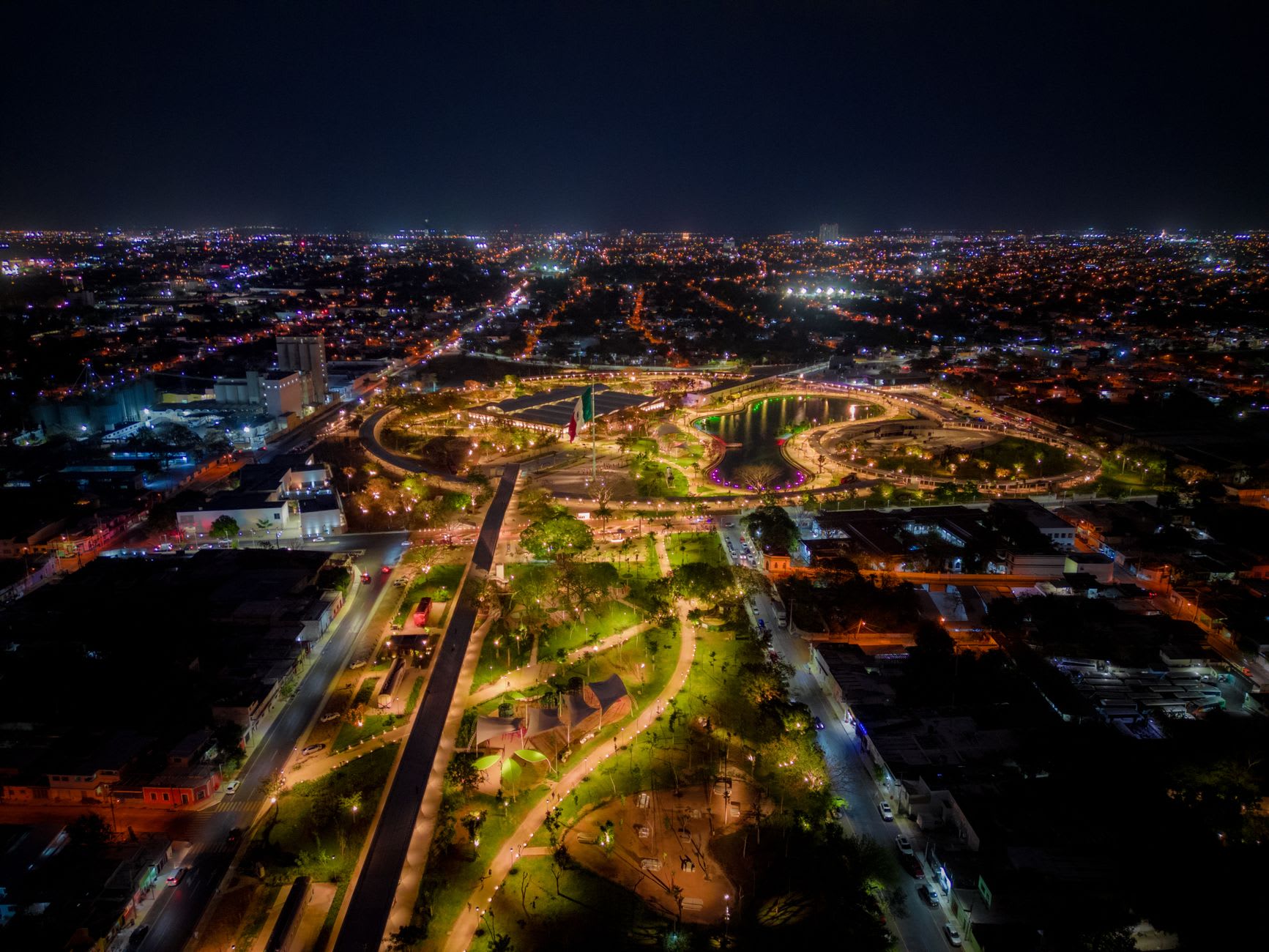
Getting There and Practical Notes
Veracruz is well connected. Direct ADO buses run from Mexico City (approximately five and a half hours), Puebla, Oaxaca, and Villahermosa with regular frequency. The city has its own airport with connections to Mexico City and a handful of other domestic destinations. If you’re doing a Veracruz state circuit — Xalapa to Coatepec to Veracruz — the bus connections between cities are frequent and cheap.
The Centro Histórico is compact enough to walk. The zócalo, the Mercado Hidalgo, the Mercado de Mariscos, and the malecón form a rough rectangle that takes 20 minutes to walk corner to corner. The best neighborhoods for eating are immediately around the zócalo and along the first few streets back from the waterfront. Avoid anything with a laminated menu showing photographs of the dishes — not because the food will necessarily be bad, but because you can almost always find something better within a hundred meters.
The humidity in Veracruz is real and year-round. The city sits at sea level on the Gulf coast and the air is always heavy. This is not a complaint — it’s physics, and it’s part of why the food and the music and the specific atmosphere of the zócalo feel the way they do. Bring light clothing. Drink the agua de horchata. Stay longer than you planned.