Costa Esmeralda
"The Costa Esmeralda is proof that the Gulf of Mexico has been misjudged — just do not tell anyone yet."
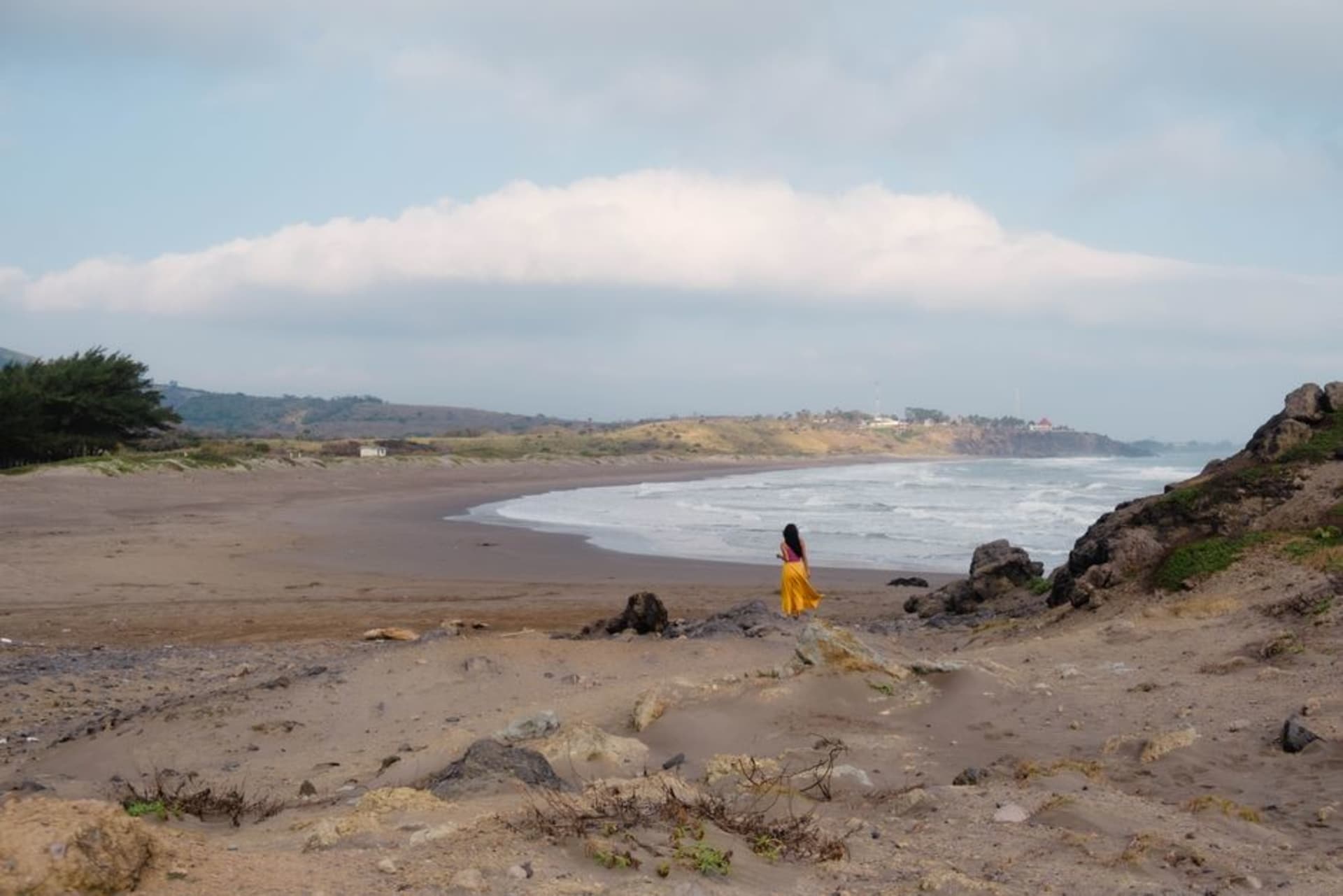
I arrived at Costa Esmeralda on a Wednesday in August with no particular plan, which turned out to be exactly the right way to arrive. The weekday calm that settles over this stretch of Veracruz coast — 20 kilometers between Tecolutla and Nautla — is almost total. Restaurants open when the owners feel like it. The beach belongs mostly to pelicans. I had come because someone in a bus station in Papantla mentioned the turtles, and I figured I would spend one night, maybe two. I stayed four.
The Water Actually Is That Color
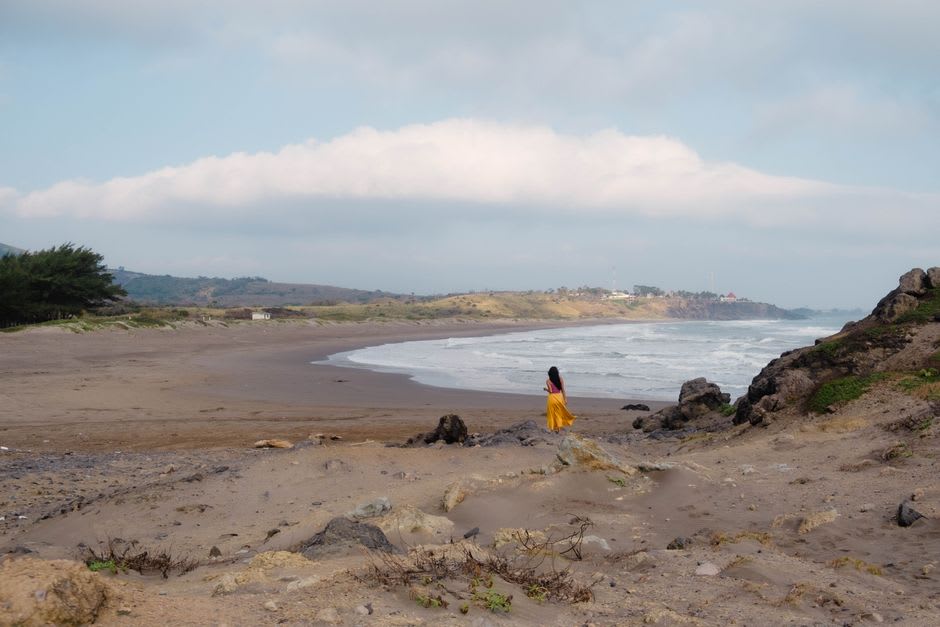
The name is not marketing. The Gulf of Mexico has a reputation — earned in some places, unfair in others — for being murky and industrial, a lesser option next to the Pacific or the Caribbean. Costa Esmeralda is one of the places where that reputation simply does not hold. The water runs a clear green-turquoise, especially in the morning before the afternoon winds pick up and the surface starts to texture. I swam every day before nine, when the light was low and the color was at its most improbable.
The beach from Tecolutla south toward Nautla is wide and relatively clean, broken up by estuary mouths and the occasional rocky point. There are no high-rises here. Development means concrete palapas and small family-run hotels with hand-painted signs. On weekdays that infrastructure sits at maybe fifteen percent capacity, which means you get the full attention of whoever is running the place with none of the chaos. Come a long weekend — Semana Santa, Día de Muertos — and the dynamic reverses entirely. The same stretch fills edge to edge with Mexican families, music competes from every direction, and the whole coast becomes a different place. Neither version is wrong.
Seafood at the Pace of the Gulf
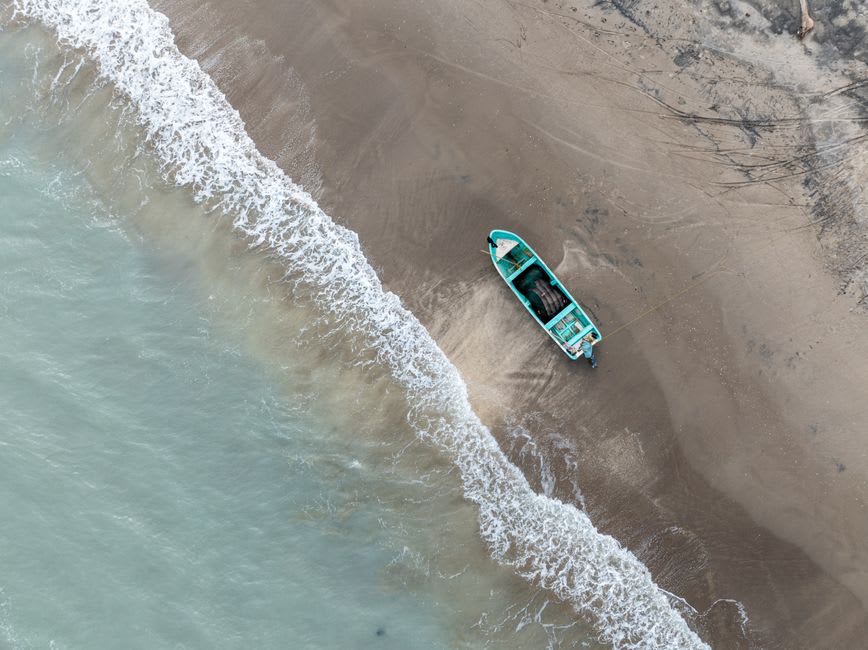
The protocol along Costa Esmeralda is consistent: find a palapa restaurant on the beach, sit down, and let whoever is working explain what came in that morning. In Tecolutla I ate at a place called El Pescador — no sign I could find, just a name the woman behind the counter offered when I asked — where the jaiba enchilada arrived in a clay pot still spitting, crab meat braised with chile ancho and epazote in a way that had clearly been refined over decades rather than invented for visitors. The red snapper a la talla, done over coals rather than in a pan, was the best version I have had on the Gulf side. Lunch came to under a hundred pesos and I sat there for two hours afterward watching frigatebirds work the estuary.
The markets in Tecolutla proper are small but reliable for produce and dried chiles. For anything beyond that you are looking at the highway towns, so arrive stocked if you plan to cook.

The Night the Turtles Went In
I was sitting near the Tecolutla sanctuary at dusk when the biologist gestured for me to come over. I had not known a release was happening that evening — I had simply wandered past on my way back from dinner. A few dozen olive ridley hatchlings went into the water in small groups, each one making for the surf line with the particular determination of something that has no idea what it is doing but is doing it anyway.
The Gulf looked different to me after that. The green of it, the flatness, the way the estuary mouth met the sea at the edge of the mangroves — it stopped reading as a consolation prize for not being the Caribbean. The sanctuary runs releases July through October. Showing up unannounced worked for me; calling ahead is reasonable if you want a confirmed date.
Getting There
The easiest approach is a bus from Papantla or Poza Rica to Tecolutla — both run regularly and take under two hours. From Veracruz city the drive north along Federal Highway 180 is around three hours through decent Gulf coast scenery. There is no central terminal in Costa Esmeralda itself; Tecolutla is your base, and the beach is walkable from the town center.