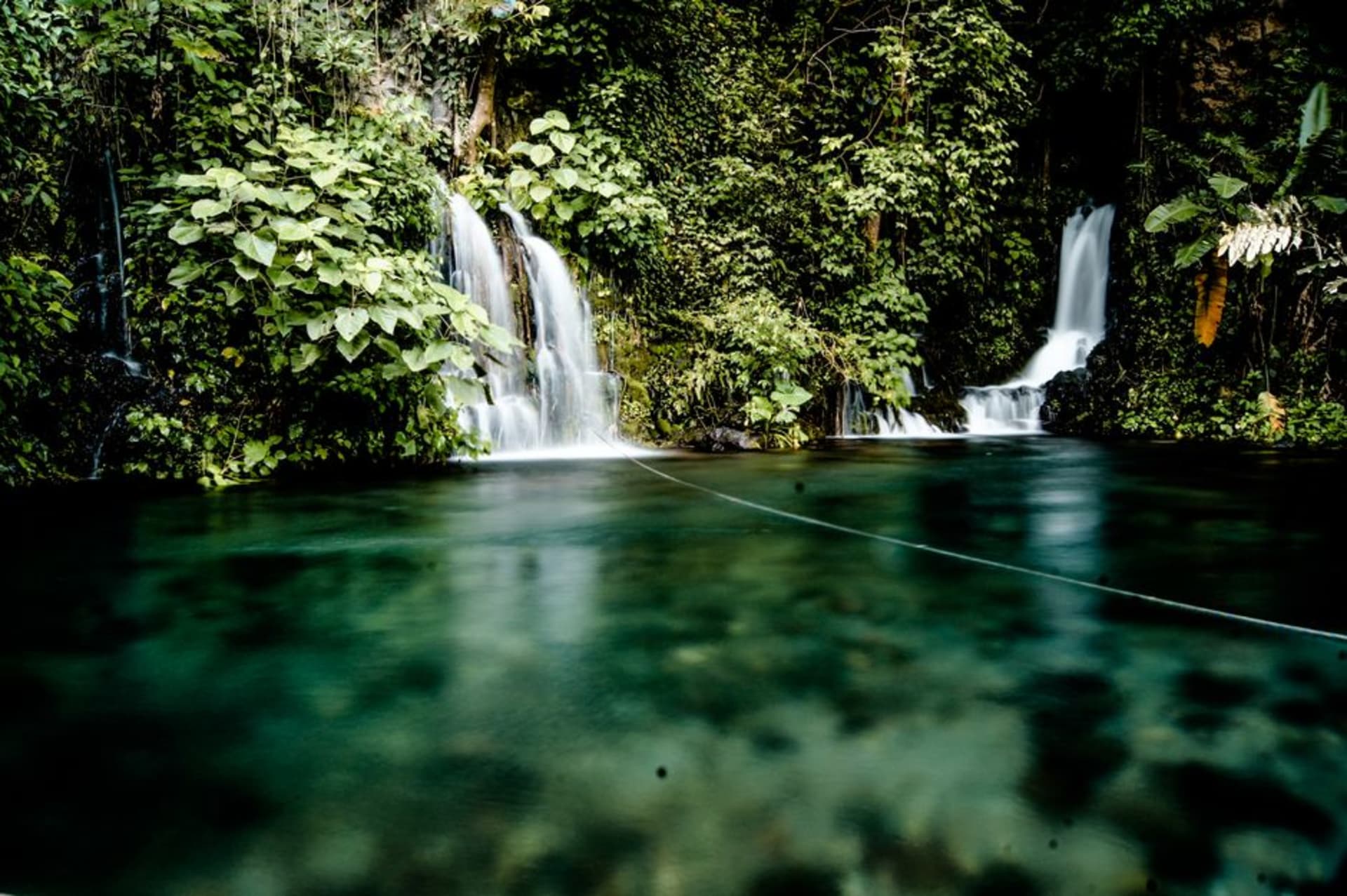
Atzalan
"Every valley here seems to be hiding a waterfall, and every local seems mildly surprised you'd drive up just to look."
I came up to Atzalan on the recommendation of a man in Tlapacoyan who sold me a bag of oranges and, unprompted, an entire itinerary. “You want green?” he said, when I told him I was wandering the sierra with no particular plan. “Go up to Atzalan. It’s all green up there. Waterfalls.” He waved a hand at the mountains behind him as if that settled it, and it did, because I’ve learned that the best travel advice in Mexico comes from people selling you fruit and expecting nothing in return.
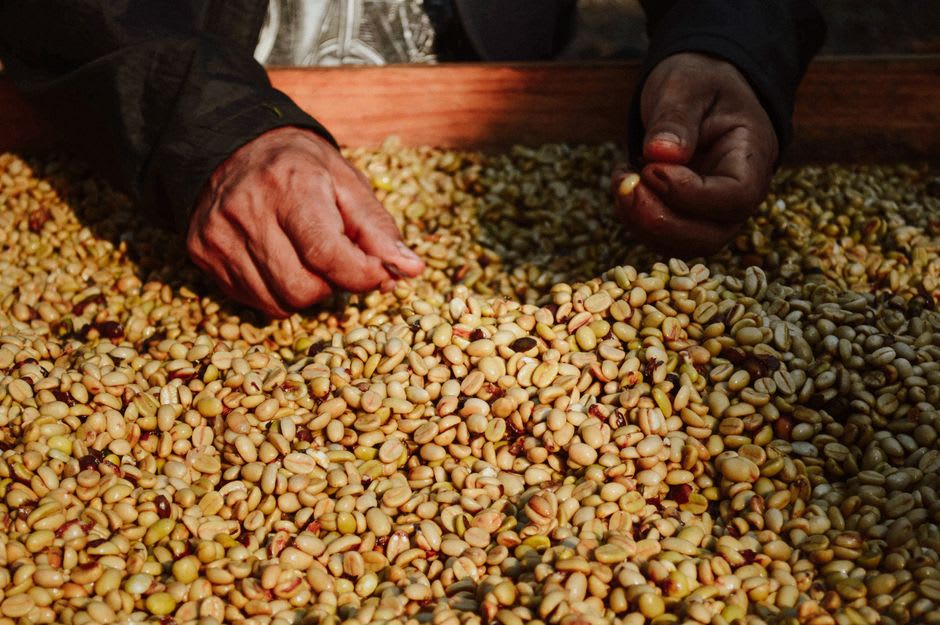
Atzalan is a mountain municipality in the sierra of north-central Veracruz, up in the folded highlands near Tlapacoyan. It’s a country of coffee and citrus — the two crops sharing the slopes, the coffee under its shade trees and the orange and lime groves catching the light — and of green canyons that drop away between the ridges hiding water you can hear before you see. The air up here stays cool and damp, a relief after the heavy heat of the lower ground, and the whole municipality has the quiet of a place that the road doesn’t quite bring anyone to on purpose.
Coffee and Citrus on the Same Slope
What I hadn’t expected about Atzalan was the citrus. I’d come up thinking coffee country, and coffee country it is, but the elevation here catches a band where the oranges and limes do beautifully too, and the result is slopes that smell of both — the earthy green of the coffee shade and, lower down, the bright sharp scent of citrus in the sun.
I walked a farm road one morning that ran between a shaded coffee planting on the uphill side and a grove of orange trees on the down, and the two smells kept trading places as the breeze shifted. A woman was picking limes into a bucket and gave me one when I stopped to talk, and it was so intensely fragrant and sour that I understood immediately why the region’s fruit ends up in markets far from here. She told me the family did coffee too, higher up, and that the year had been decent for both, which she offered with the guarded optimism of someone who knows a mountain can take a good year back whenever it likes.
The mixing of crops gives Atzalan’s landscape a texture you don’t get in the pure coffee towns — a patchwork of greens at slightly different pitches, stitched across slopes that fall away hard on every side.
The Green Canyons
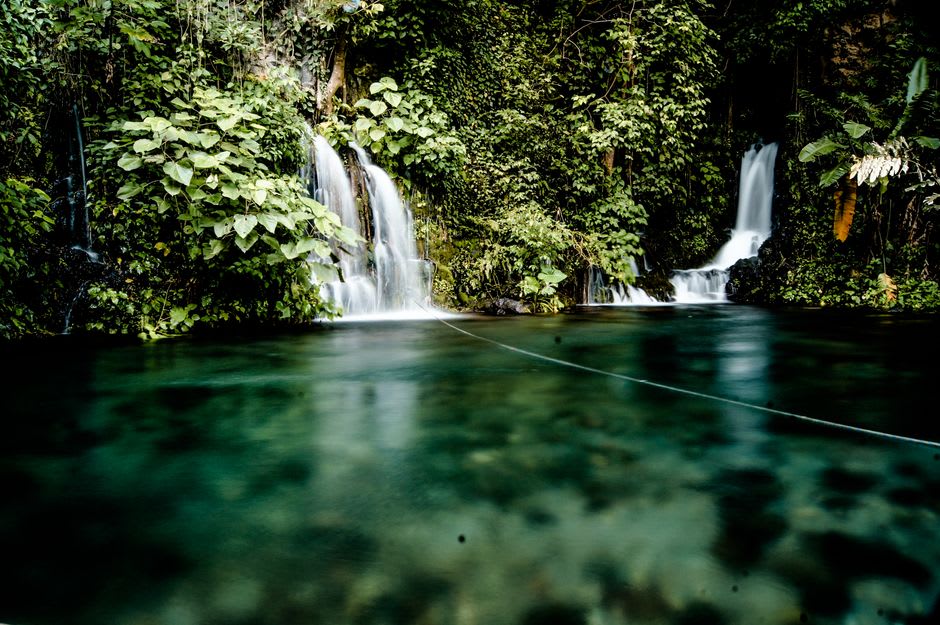
The canyons are what the fruit-seller in Tlapacoyan was really pointing me toward, even if he only said “waterfalls.” The land around Atzalan is cut through with steep green ravines, and in the rainy season especially they run with water — falls that you catch sight of across a valley, silver threads against all that green, often with no obvious way to reach them.
I hiked partway down toward one of them on a path that a local kid pointed out with more enthusiasm than precision. I didn’t make it all the way; the trail got vague and steep and I’m cautious about ravine paths after rain, having once spent an undignified afternoon getting back up one. But I got close enough to feel the cool coming off the water and to sit on a ledge with the fall in view, the whole canyon dripping and loud and completely, gloriously empty of other people.
There’s a particular richness to these north-Veracruz canyons in the wet months — everything oversaturated, the ferns enormous, the air thick enough to drink. It’s not a landscape that photographs easily. You mostly have to just be in it.
The Town and Its Quiet
Atzalan’s town center is modest and cool, sitting up in the highlands with the unhurried air of a place that has never had a reason to hurry. The plaza, the church, a few shops, the trucks coming and going with sacks of coffee and crates of fruit — it’s a working mountain town, not a scenic one, and it’s better for it.
I had a meal at a small comedor off the main street where the menu was whatever the woman had made that day, which turned out to be a caldo and then a plate of beans and eggs and handmade tortillas that arrived hot enough to require respect. She poured me coffee grown, she said, by her brother-in-law up the hill, and it was good in the plain honest way of coffee served in the place it comes from. The other tables held men in from farm work, eating fast and talking quietly, and nobody paid me any particular attention, which after a few years in Mexico I’ve come to read as a form of welcome.
Atzalan doesn’t announce itself. You come up for the green and the canyons and the cool air, and you leave with the specific satisfaction of having been somewhere that isn’t trying to be anywhere.
Getting There
Atzalan sits up in the sierra above Tlapacoyan in north-central Veracruz, and the practical route is through Tlapacoyan, which is itself reachable by ADO and second-class buses from Xalapa, Puebla, and the coast. From Tlapacoyan you climb into the mountains by car, colectivo, or local bus — the road winds and rises steadily, so allow more time than the short distance implies.
There’s little formal tourism infrastructure, so most travelers use Tlapacoyan as a base and come up to Atzalan for the day. A car makes the canyons and outlying farms far more reachable. Come in or just after the rainy season if waterfalls are what you’re after, bring layers for the cool damp highland air, and treat the place gently — its appeal is exactly that it hasn’t been arranged for anyone.