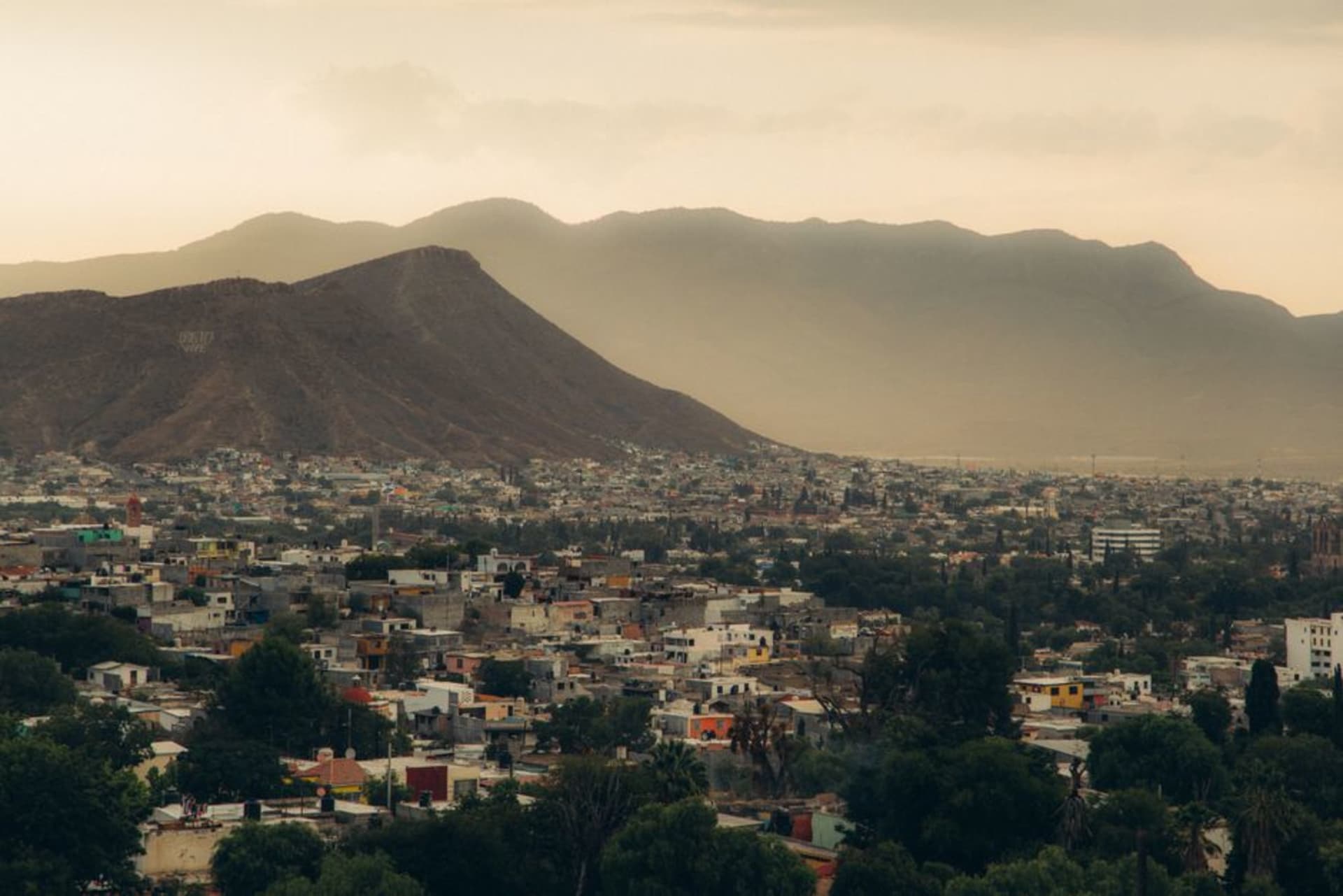
Ixtenco
"The woman selling embroidered cloth gave me a price in Otomi before remembering to switch to Spanish. I didn't mind the pause — it meant I had arrived somewhere real."
The colectivo from Apizaco drops you at the edge of town without ceremony — no painted welcome arch, no souvenir stands. I arrived on a Tuesday, which turned out to be the weekly tianguis, and the first thing I noticed was the sound. Not Spanish, or not only Spanish. Two women at a vegetable stall were talking in something that took me a moment to place, because I had not expected to hear it: Otomi. Not recited for a cultural event, not labeled on a placard — just the ordinary language of a Tuesday morning errand. I bought a bag of tejocotes I didn’t need and stood there longer than I should have.
A Language That Stayed
Tlaxcala rarely appears in the narrative of indigenous Mexico — Nahuatl gets the monuments, Oaxacan languages get the cultural tourism machine. Ixtenco slipped through that calculus. Here, Otomi — Yuhmu in its own tongue — is still a first language for a significant portion of the population, and you hear it at the pharmacy, at the tortillería on Calle Juárez, between a grandmother and her granddaughter carrying the week’s shopping home.
What strikes me is the absence of performance. Nobody is maintaining Otomi for a UNESCO evaluation or a travel feature. The bilingual primary school at the edge of the plaza teaches it because parents expect it to. The town has been doing this — without subsidy or particular attention — for four centuries since Spanish arrived and failed to completely displace what was already there. That kind of stubbornness tends to produce places with a strong sense of themselves. Ixtenco has exactly that quality, and you feel it within an hour of arriving.
What the Needlework Knows
Along the side streets near the market, several women sell embroidered cloth from folded displays on tables or from the steps of their houses. The work is Otomi embroidery — geometric forms, stylized deer and birds, plants assembled into compositions that have no obligation to tourist expectations. There is no Frida, no chili pepper silhouette.
The woman who quoted me in Otomi before catching herself had a piece with a repeating deer motif on white manta cloth, bordered in a pattern I couldn’t name but recognized as considered. She explained the design was hers, not a template, and that the red and black threads came from a specific supplier in Apizaco. The price was fair. I asked how long it had taken and she shrugged in a way that suggested the question had a French answer and an Ixtenco answer, and she had long since stopped translating between the two. I bought the piece. It is currently on a wall in Puerto Escondido, which feels like the least it deserves.

February and the Huehues
Ixtenco’s carnaval predates the concept of audience. It runs in February — the specific dates shift with Ash Wednesday — and centers on the Huehues: masked, elaborately costumed figures who dance through the streets for four days. The word comes from Nahuatl for elder, and the tradition here is old enough that no one is entirely certain of its origins, which is itself a sign of something genuine.
I was not in Ixtenco in February. A shopkeeper showed me photographs on his phone: dozens of Huehues in mirrored headdresses moving through the same streets I was walking in afternoon quiet. The contrast was arresting. Ixtenco holds these two registers — festive and composed — without treating either as its real face. Both are.
Getting There
From Tlaxcala city, a colectivo to Apizaco and another onward puts you in Ixtenco in roughly 45 minutes. From Mexico City, Apizaco is two hours by ADO from TAPO. The town sits at 2,600 meters — mornings are cold regardless of season, and the afternoon light goes flat fast. The Tuesday tianguis is the best single reason to choose that day, though Ixtenco on any other morning is entirely itself.