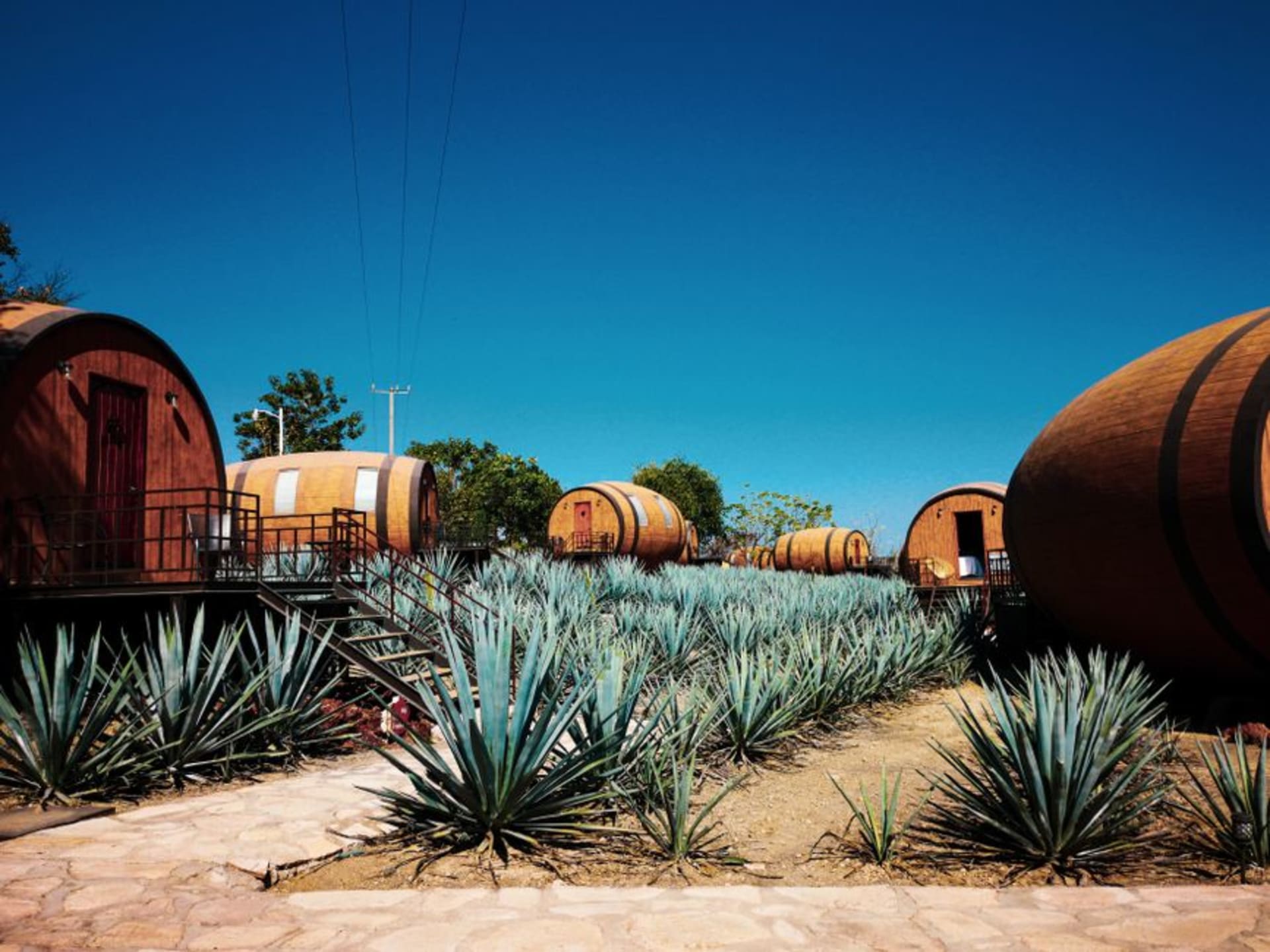
Hueyotlipan
"The maguey takes a decade to be ready. Then you cut its heart out and it gives you a drink. Nothing about pulque is in a hurry."
The man scraping the heart of the maguey let me taste the aguamiel straight from the plant — the sweet sap that pools where the agave’s core has been hollowed out — and it was cool and grassy and faintly sweet, nothing like the sour fizz it becomes once it ferments into pulque. He worked with the unhurried economy of someone who has done a thing ten thousand times, drawing the sap up into a long gourd with his breath, and told me the plant we were standing beside was older than I was. Out here on the plains of northwestern Tlaxcala, that’s an ordinary fact. The maguey measures time in decades.
I’d come to Hueyotlipan looking for exactly this — the living end of the pulque tradition, which in most of Mexico has faded into nostalgia but out here on the Tlaxcalan altiplano is still, quietly, a way of life. This is big-sky farm country, flat and open, the agave marching across it in long grey-green rows, punctuated by the ruins and half-ruins of the great pulque haciendas that once made this one of the wealthiest rural corners of the country. It’s a landscape that rewards slowness, which is fortunate, because slowness is all it offers.
The Maguey Plains
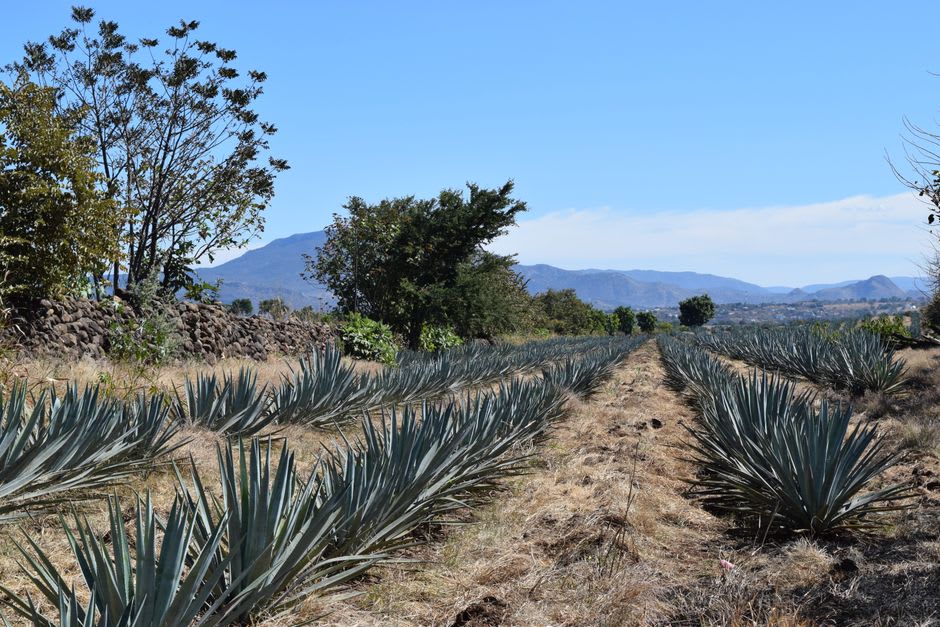
The land around Hueyotlipan is wide and level and given over to the maguey — the great spiky agave whose sap becomes pulque — planted in rows that run to the horizon in the disciplined way of a crop that’s been grown here for centuries. It’s a strange and beautiful plant en masse, silver-green and architectural, and the plains of northwestern Tlaxcala are one of its great heartlands. I drove the farm roads between the rows with the windows down, the altiplano sky doing its enormous thing overhead, and stopped constantly to look at the geometry of it, the plants receding into perfect perspective.
The scale of the sky out here is the thing I keep coming back to. There are no mountains close enough to hem it in, just the flat productive plain and an overturned bowl of sky that goes from horizon to horizon, clouds building into towers in the afternoon and the light lying long and low across the maguey at either end of the day. It’s the altiplano at its most open, and after the enclosed valleys of much of central Mexico, it made me want to breathe deeper.
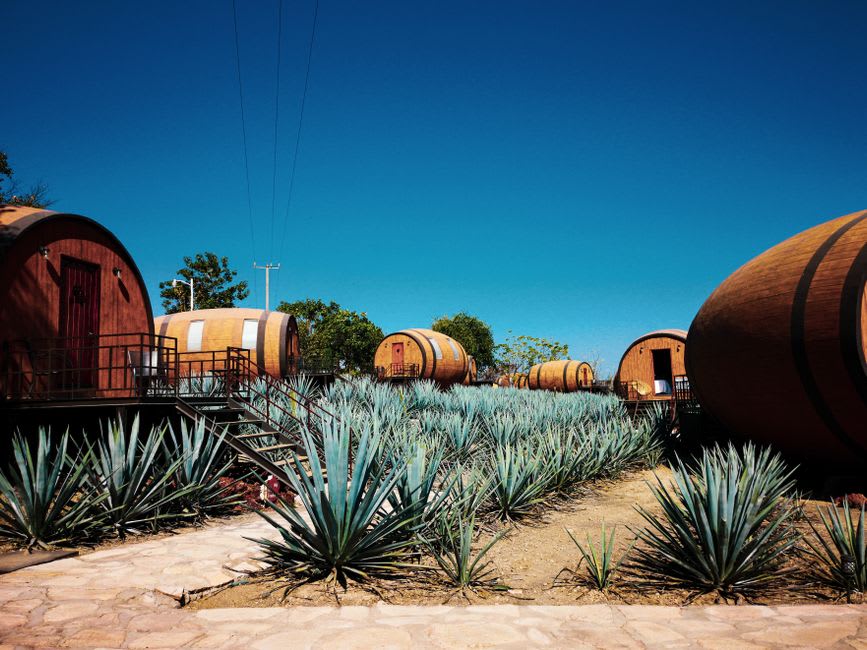
The Pulque Haciendas
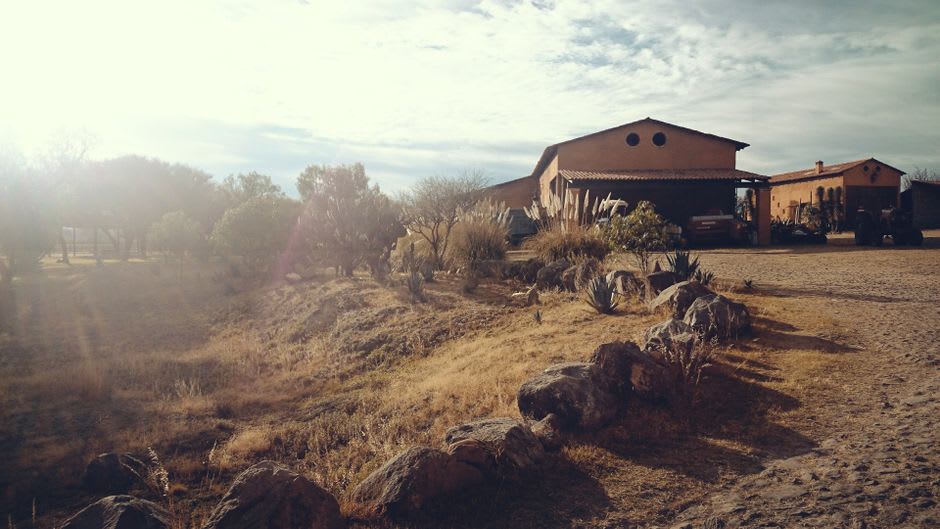
Scattered across these plains are the old pulque haciendas — the grand agricultural estates that grew rich, sometimes obscenely rich, on pulque in the century or so before the drink fell out of fashion. Some are ruins now, roofless and colonized by weeds; some soldier on in reduced circumstances; a few have been patched into life again. I wandered one late in the afternoon, an old estate with a cavernous tinacal — the vaulted hall where the aguamiel was fermented in vats — the great space empty and echoing, swallows nesting in the beams, the machinery of an industry that had defined this land for generations gone quiet.
There’s a melancholy to these places, but also something more interesting than melancholy. Pulque never fully died out here the way it did elsewhere, killed off by beer and bad marketing, and there’s a stubborn revival underway, younger people taking the tradition seriously again. The man who let me taste the aguamiel was proud, not wistful. He sold his pulque locally and to a couple of the fashionable places in the cities that had rediscovered it, and he clearly enjoyed being at the authentic source of something that had become briefly hip somewhere far away.
The Town and the Parish Church
Hueyotlipan itself gathers around its old parish church, a solid weathered structure that has watched the plains for centuries, and a plaza that fills and empties with the unhurried rhythm of a farm town. I sat out a hot midday there, drinking a fresh pulque somebody sold me from a bucket — sour, thick, faintly alive on the tongue, an acquired taste I’ve genuinely acquired — while the town went about its slow business around me. Tractors and pickups came and went. Men in hats discussed things at length. The church bell marked the hours to nobody in particular.
It’s an ordinary town, and I mean that as high praise. It isn’t preserved or curated or waiting for visitors; it’s just getting on with being a working community on the maguey plains, the way it has been for a very long time. I liked it enormously for that. The pulque loosened, the afternoon stretched, the big sky wheeled slowly overhead, and I understood why nobody out here seemed in any hurry about anything. When your signature crop takes ten years to mature, hurry stops making much sense.
Getting There
Hueyotlipan lies on the plains of northwestern Tlaxcala, an easy drive by car from the state capital or from the highways crossing the altiplano between Mexico City, Puebla, and Hidalgo. The flat, open roads make for a straightforward approach, and the maguey country begins well before you reach the town. Regional buses serve Hueyotlipan from larger Tlaxcalan centers. Come for the pulque at its source, wander the surrounding haciendas at your own pace, and give yourself an afternoon to do very little under that enormous altiplano sky.