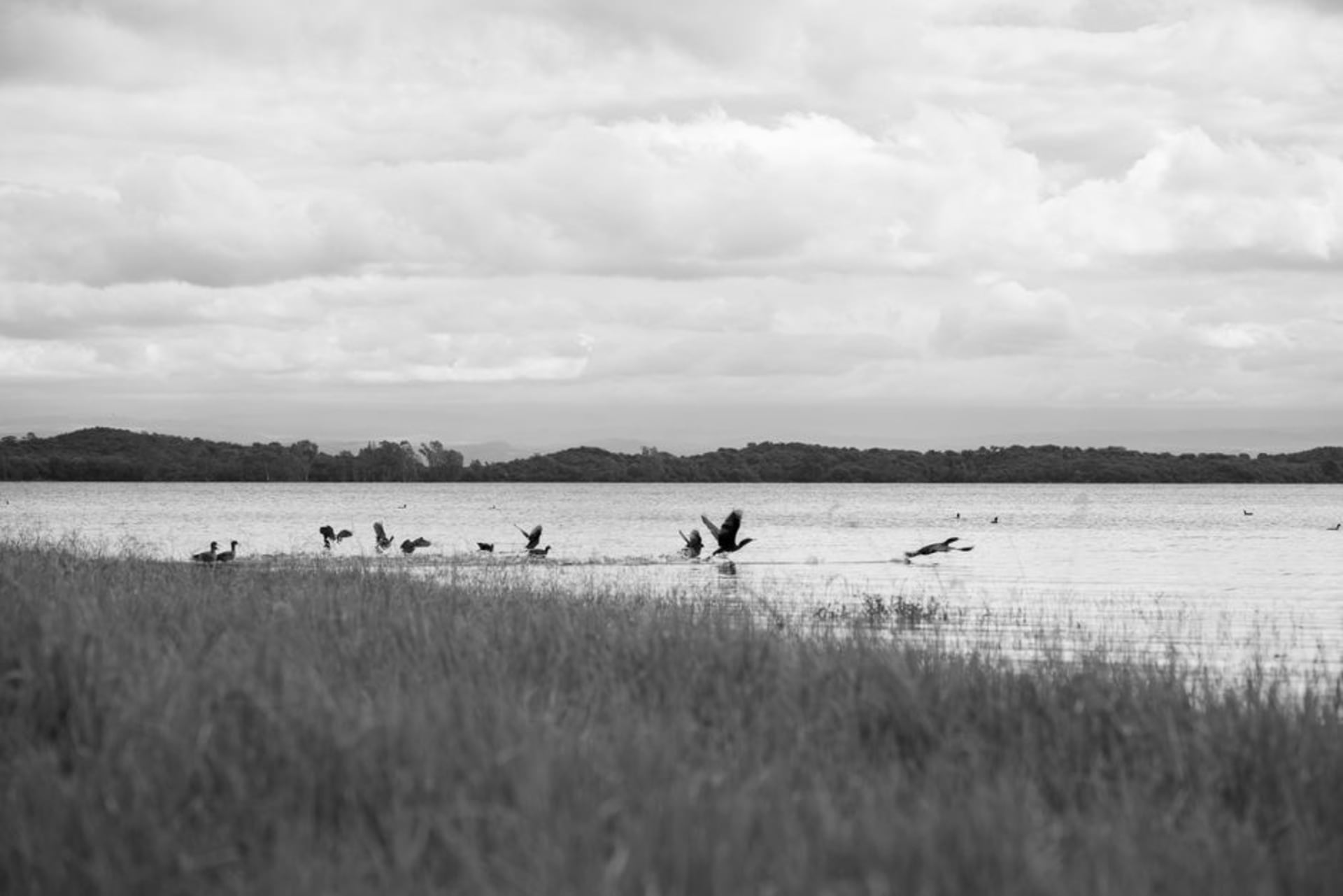
Atlangatepec
"There is no monument here, no viewpoint marked on a map. The reservoir is the whole event, and it is enough."
I came to Atlangatepec by accident, really — I’d been driving the back roads of northern Tlaxcala with no particular destination, the kind of aimless Sunday I’ve learned to protect since moving to Mexico, and the road simply delivered me to the edge of a very large sheet of water where I hadn’t expected any. I parked on the shoulder of packed dirt, killed the engine, and sat there for a long time listening to nothing. A man on a bicycle passed with a rod across his handlebars and lifted two fingers off the grip in greeting. That was the entire drama of the morning, and I remember it better than most museums.
Tlaxcala is the smallest state in Mexico and the one people skip on their way to Puebla, which means its north empties out into a landscape most travelers never register: high, flat farm country, maguey rows, and this — the Presa Atlangatepec, a reservoir big enough to hold weather of its own.
The Reservoir
The Presa Atlangatepec is the largest body of water in Tlaxcala, an irrigation reservoir dammed decades ago on the upper reaches of a river that feeds the farms downstream. It is not pretty in the postcard sense. It is better than that — it is honest. The banks are grass and mud and the stubble of grazed fields, and the water changes color through the day from pewter to a hard silver to something almost gold in the last hour of light.
Local families come on weekends to fish for carp and mojarra from the banks, sitting under improvised shade with a cooler and a radio turned low. Nobody hurries. I watched a grandfather teach a boy to cast, the line going nowhere useful for a long time, and neither of them minded.
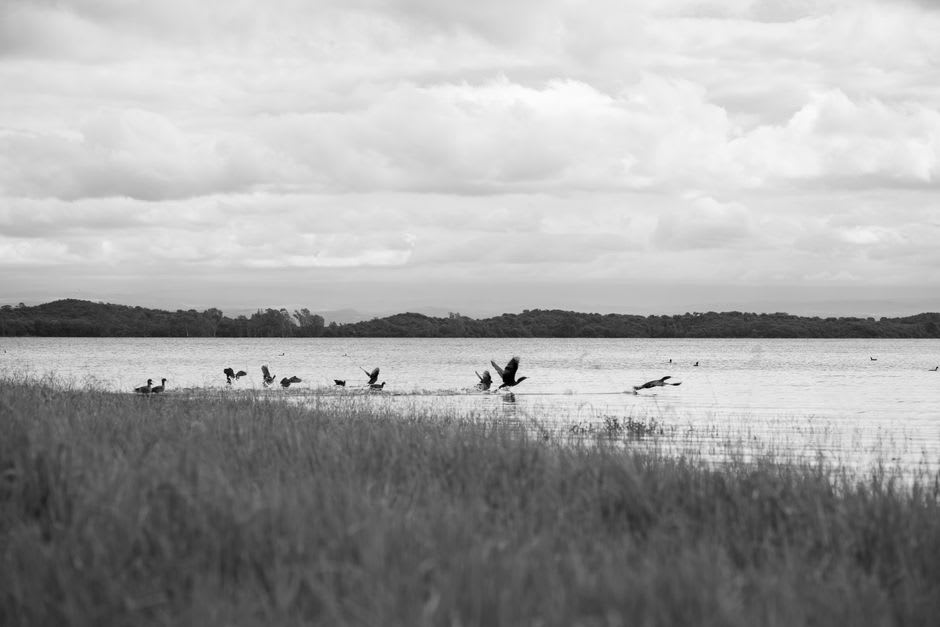
Birds and Big Skies
What surprised me most was the birdlife. The reservoir is a stopover on migratory routes, and in the cooler months the water fills with ducks, coots, and the long-legged patience of herons and egrets working the shallows. I am no ornithologist — I couldn’t name half of what I saw — but you don’t need Latin to appreciate a hundred birds lifting off water at once because a truck door slammed too hard.
Come at dawn if you can. The light comes low across the grassland, the mist sits on the water for an hour, and the birds are loudest before the day warms up. Bring a thermos. There is no café waiting for you out here, and that is the point.
The Town
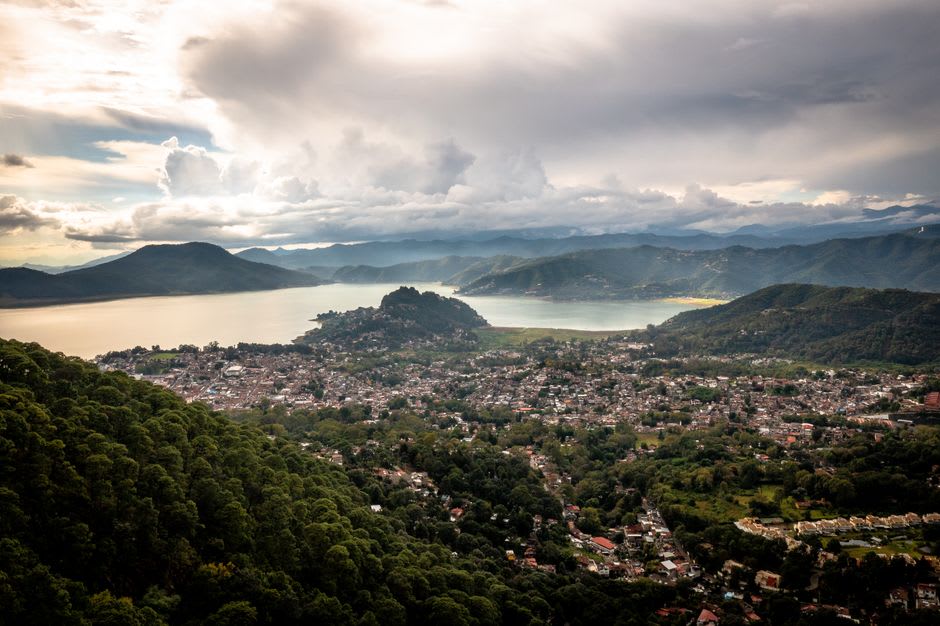
The town of Atlangatepec itself is small and unhurried — a modest plaza, a colonial-era church, a few shops, and the ordinary rhythm of a farming community that has never needed tourists to justify itself. I bought a soda and a bag of chicharrón from a woman who asked, with genuine curiosity rather than suspicion, what a Frenchman was doing all the way out here. I told her the water had stopped me. She nodded as though that were the most reasonable answer in the world.
There is nothing to “do” in the town, and I mean that as praise. You walk it in twenty minutes, you greet people, you feel the altitude in the thinness of the air and the sharpness of the shade. Then you go back to the water.
Getting There
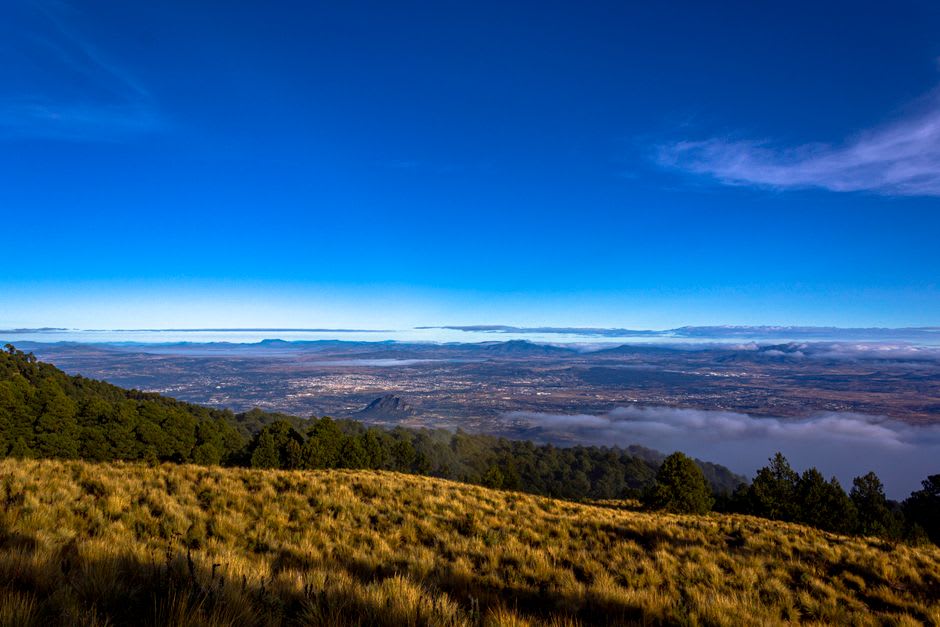
Atlangatepec sits in northern Tlaxcala, roughly 40 minutes by car north of the city of Tlaxcala and about the same from Apizaco. The practical way is to drive — the reservoir has no formal visitor infrastructure, and having your own vehicle lets you follow the dirt tracks to whichever stretch of bank looks best. From Puebla it’s around an hour and a half. Public buses reach the town from Apizaco, but you’ll want to walk or hitch the last stretch to the water. Go on a weekday if you want the reservoir entirely to yourself, and bring everything you’ll need, because out here the land provides the view and nothing else.