
Concordia
"I stopped for a coffee and stayed four hours watching a man carve a headboard from a single piece of mesquite — that is what Concordia does to you."
I took a combi from the Mercado Pino Suárez in Mazatlán on a Thursday morning with no particular plan — forty minutes east on the highway, a turn-off toward the sierra, and suddenly the malecon and the cruise ships felt like a different country. That’s the trick with Concordia: the proximity makes the contrast almost theatrical. I arrived expecting a quick look at a colonial church and a furniture workshop. Instead I found myself still there at three in the afternoon, slower than I’d been in weeks, watching a craftsman named Aurelio smooth the arm of a mesquite chair with movements that had nothing to do with hurry.
The Workshops on Calle Hidalgo
The furniture is the whole reason Concordia earned its Pueblo Mágico designation, and for once that title feels deserved. Along Calle Hidalgo and the surrounding streets, a dozen or more talleres open directly onto the sidewalk — no showrooms, no retail theater, just sawdust, the smell of fresh-cut wood, and men working. Mesquite is the material here: dense, slow-burning, reddish-brown when polished, and abundant in the dry hills around town. It doesn’t behave like pine or cedar. It resists the tool and rewards patience, which explains something about the character of the pieces that come out of these shops.
I watched Aurelio spend the better part of an hour on a single curved leg. The headboard behind him — the one that had stopped me in the first place — was already spoken for, bound for a hotel in San Miguel de Allende. The price on the wall for a full dining table was roughly a third of what you’d pay for comparable quality in Mexico City. I bought a small bowl, the only thing that fit in a backpack, and I still think about it.
San Sebastián and the Slower Clock
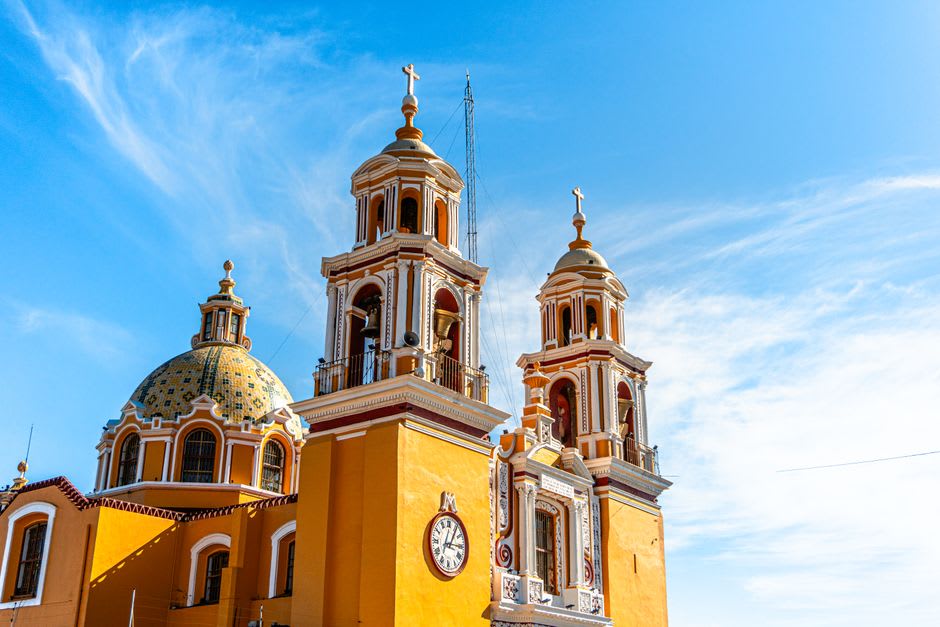
The baroque Parroquia de San Sebastián was built in the eighteenth century and carries the weathered authority of something that has watched several versions of this town come and go. The facade is elaborately carved — churrigueresque impulses meeting local stone — and the interior is cooler than the street by enough degrees to matter in July. But what I liked most was the plaza in front of it.
By one in the afternoon, three men were playing cards under a laurel tree. A woman was selling tejuino — the cold fermented corn drink with lime and salt that you find across Sinaloa — from a cart near the church steps. I bought one (eight pesos at the time, though prices shift) and sat on a bench until the bells rang at half past. There were no other tourists. That will change, or it won’t. Concordia seems genuinely indifferent to the question.

Where to Eat Before You Leave
Restaurant options are limited, which is a compliment. There are fondas around the market running a rotating comida corrida — the day I visited, the second course was a guisado de res with dried chiles and tomatoes that tasted like someone’s grandmother had been perfecting it since the 1980s. I paid sixty pesos and felt mildly embarrassed by the value.
For tejuino, the cart by the church steps is the obvious move. There’s also a small panadería near the main workshop strip that turns out conchas and polvorones in the morning — worth timing your arrival for. Skip anything near the highway junction and walk into the centro.

Getting There
Combis to Concordia leave throughout the morning from the Mercado Pino Suárez in Mazatlán — the ride is forty to fifty minutes and costs almost nothing. If you’re driving, head east toward El Quelite and follow the signs for Concordia. The dry season, November through April, is the most comfortable time. There’s no compelling reason to stay overnight; a half-day from Mazatlán is enough.