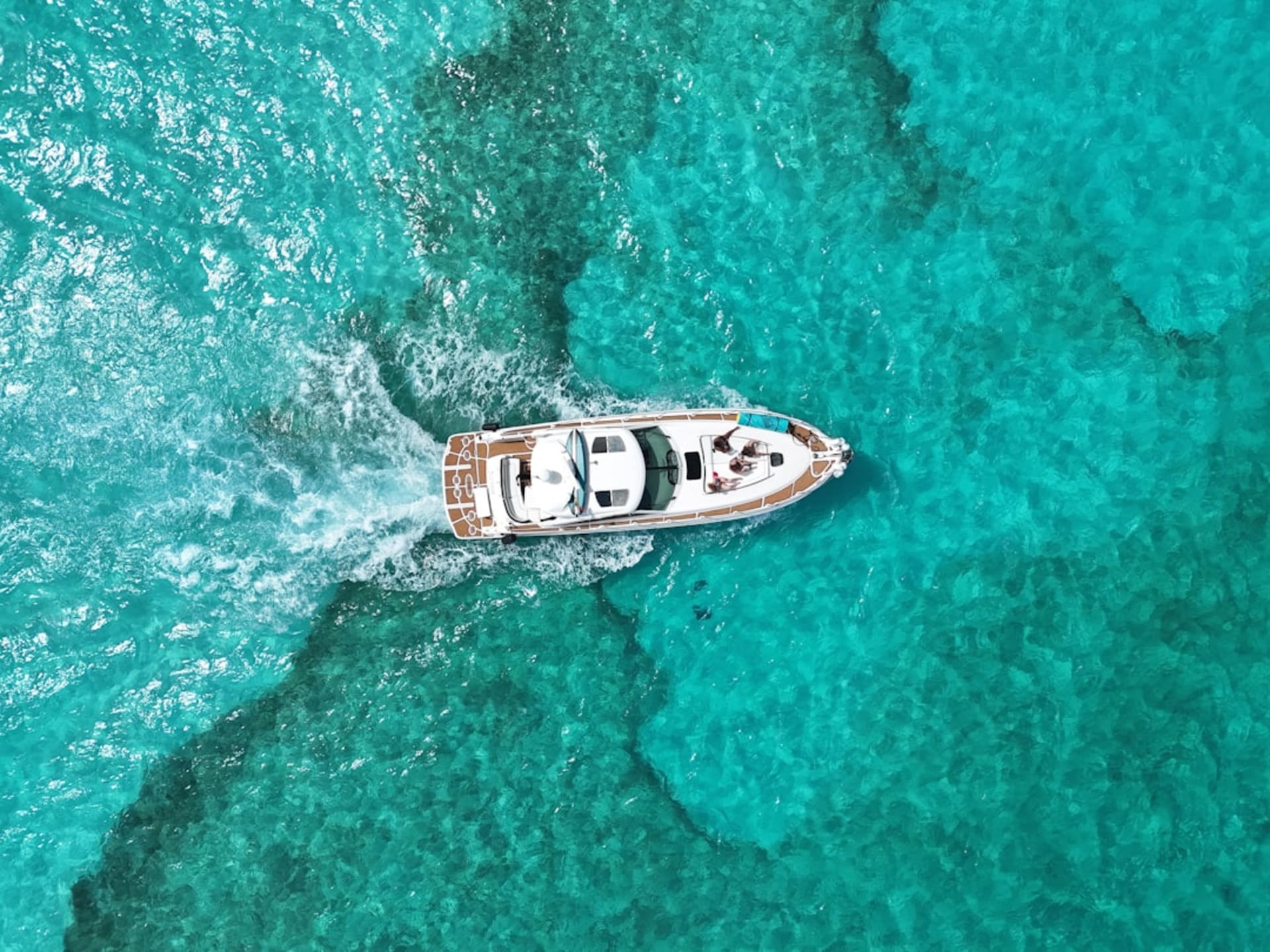
Isla Mujeres
"The whole island is seven kilometers long. You can rent a golf cart and see all of it before noon. Most people decide to stay for a week."
Isla Mujeres is 13 kilometers across the water from Cancún, a ferry ride that takes twenty minutes and might as well be a trip to a different decade. The island is seven kilometers long and less than a kilometer wide at its widest point. There are no major resort hotels (though several boutique ones), no convention center, no nightclub strip. There is a village of colored wooden houses, a beach famous in the Caribbean for the color of the water, and the specific quality of time that belongs to small islands.
I came for two days and stayed for five. Lia and I rented a golf cart on the first morning — the standard transport on the island, shared with the electric trikes and the occasional bicycle — and had covered the entire perimeter of the island by noon. We spent the afternoon at Playa Norte, swam, ate ceviche at a palapa table with our feet in the water, and did not look at our phones until we needed the ferry schedule.
Playa Norte
The beach at the northern tip of the island is the reason Isla Mujeres has been on the Caribbean itinerary for sixty years. The water here is shallow — you can walk out fifty meters and be waist-deep — and a specific shade of turquoise that, in late morning light, looks less like a natural color and more like a paint sample that someone has applied with improbable precision to the entire Caribbean basin.
The beach is shared between the hotels behind it and anyone who wants to use it, which is the correct arrangement. The palapa restaurants rent chairs and umbrellas and sell cold beer and reasonably good ceviche and aguachile and fresh fish cooked in whatever way the kitchen felt like that morning. The music is generally a reggae-adjacent hybrid produced at a volume that allows conversation.
Peak hours: 10am-3pm when day-trippers from Cancún are present. Before 9am and after 4pm the beach returns to a population that is mostly staying on the island.
Punta Sur
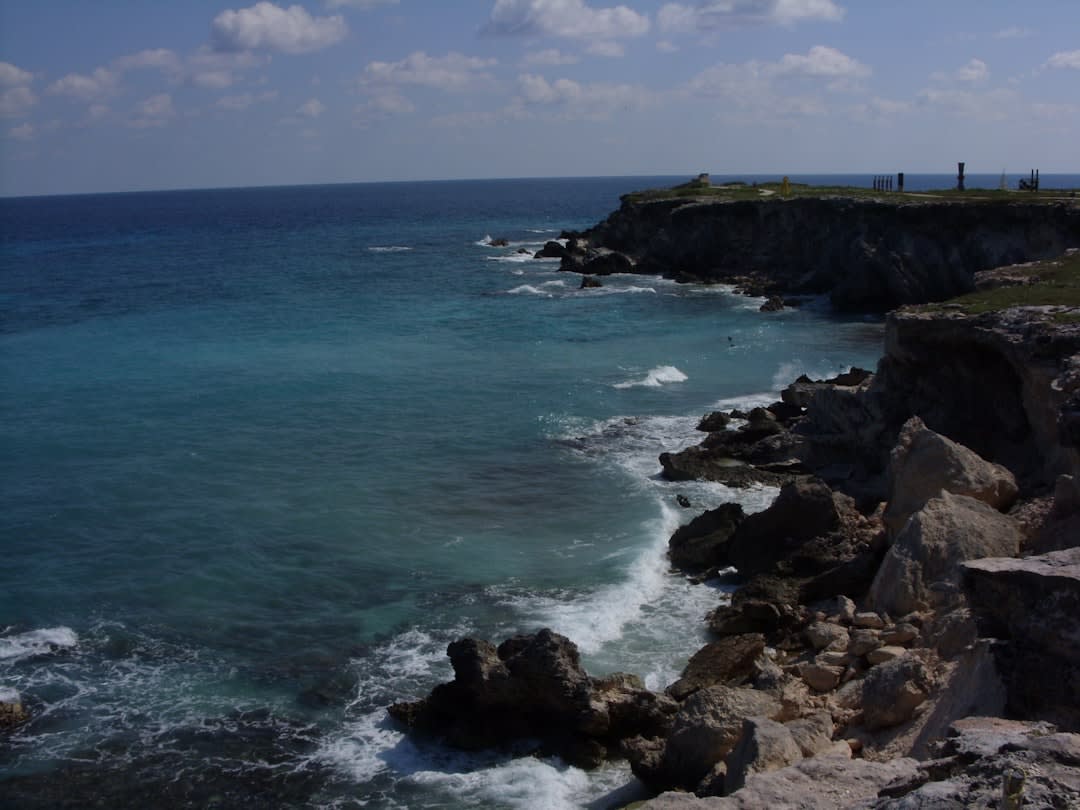
The southern tip of the island is where the Caribbean meets the Gulf of Mexico in a current that has eroded the limestone cliffs into sharp formations. The Punta Sur park contains a ruined Maya temple (modest, but genuinely pre-Columbian), a lighthouse, and the cliff views — the water here is darker, more unsettled, the horizon feels farther — that provide the best photography on the island.
The cliffs at Punta Sur are also the site of the island’s most famous artwork: a series of sculptures by Mexican artists installed in the park, which sounds touristy in description and is in fact interesting in execution. The sculptures are large enough to be visible from the water and are integrated into the cliff-edge landscape in a way that doesn’t try to compete with the view.
The Village and the Food
The pueblo at the northern end of the island — a grid of streets lined with wooden houses painted in the Caribbean palette of yellow, pink, turquoise, and white — is the actual social life of the island. The main pedestrian street, Hidalgo, has restaurants and shops that run the quality spectrum from excellent to tourist-trap; the side streets are where the locals eat.
Lonchería Ely — no sign, a woman’s kitchen with four tables on the street, open for breakfast and lunch — serves the best breakfast on the island by a margin that makes it worth finding. Huevos motuleños (fried eggs on tortillas with refried beans, ham, and a tomato sauce), fresh papaya, Mexican coffee. I went back three mornings in a row.
Mercado Municipal on Avenida Guerrero: the morning fish market, where the daily catch from the island’s fishing fleet is sold directly. The smell is the smell of fresh fish, which is entirely different from the smell of fish that has been sitting. Several small restaurants in and around the market cook whatever was caught that morning.
Fishing for whale sharks: From June through September, Isla Mujeres is the base for whale shark excursions — the Caribbean waters north of the island host the largest aggregations of whale sharks in the world during this period, with hundreds of individuals feeding on fish spawn in the open sea. The tours leave at dawn, motor forty minutes offshore, and allow snorkeling alongside the largest fish in the world in open water. Regulated by quota; book in advance through one of the certified operators in the village.
Getting there: Ferry from Puerto Juárez (north Cancún) — multiple departures daily, 20 minutes, cars allowed. Also ferry from the Cancún hotel zone and from Punta Sam. The ferry runs until 11pm; staying on the island is unnecessary but recommended.
When to go: November through May for beach weather. June-September for whale sharks (and summer heat). October is the peak of hurricane season — manageable risk but real.