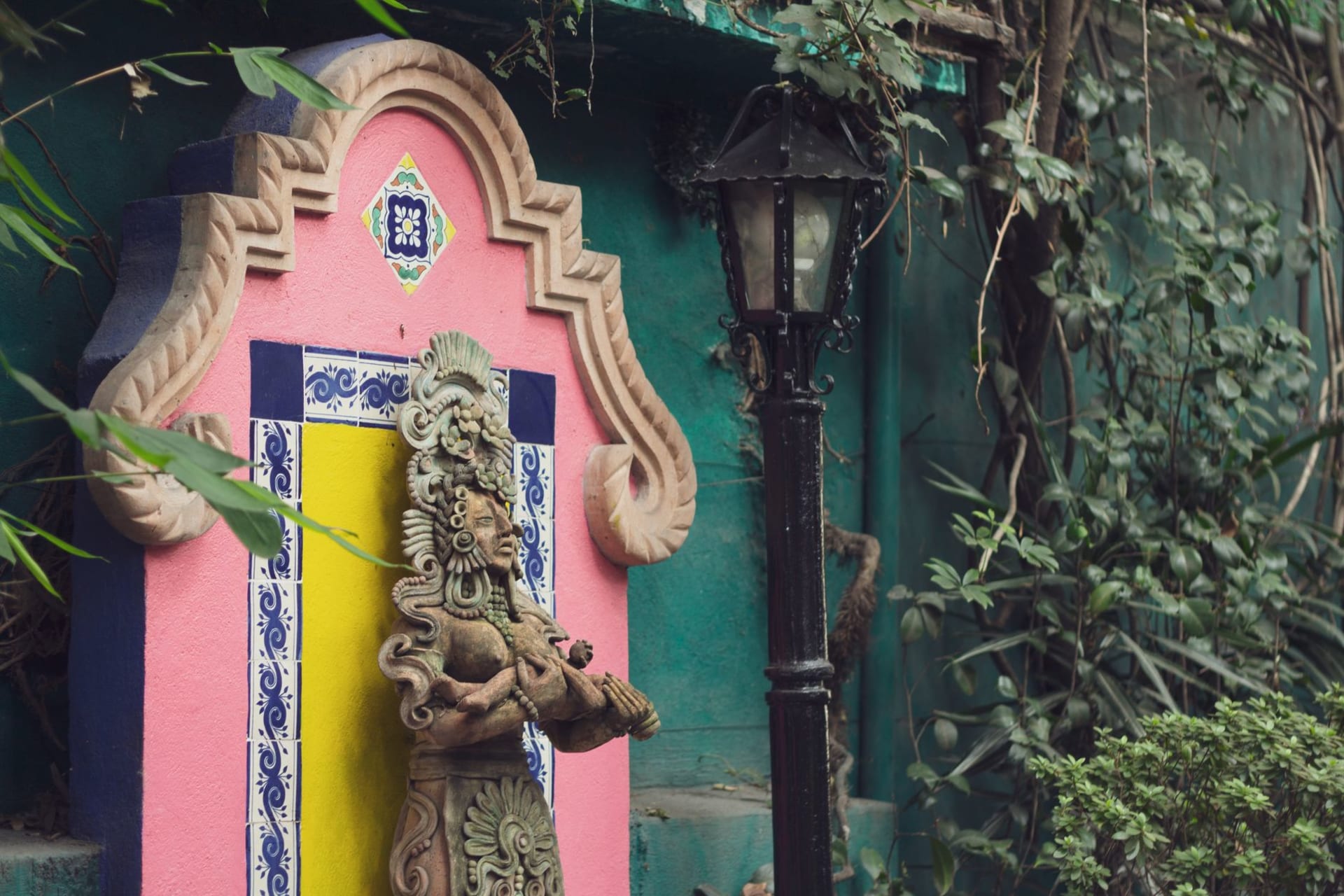
There is a particular kind of silence you encounter when you walk into a building and your brain stops processing information in the usual way and simply tries to absorb what it is looking at. It happened to me once in the Sainte-Chapelle in Paris — that first moment when you walk into the upper chapel and register the ratio of stained glass to stone. It happened again in Tonantzintla, a village of ten thousand people in the Atlixco valley south of Cholula, in a church that most of the world has never heard of.
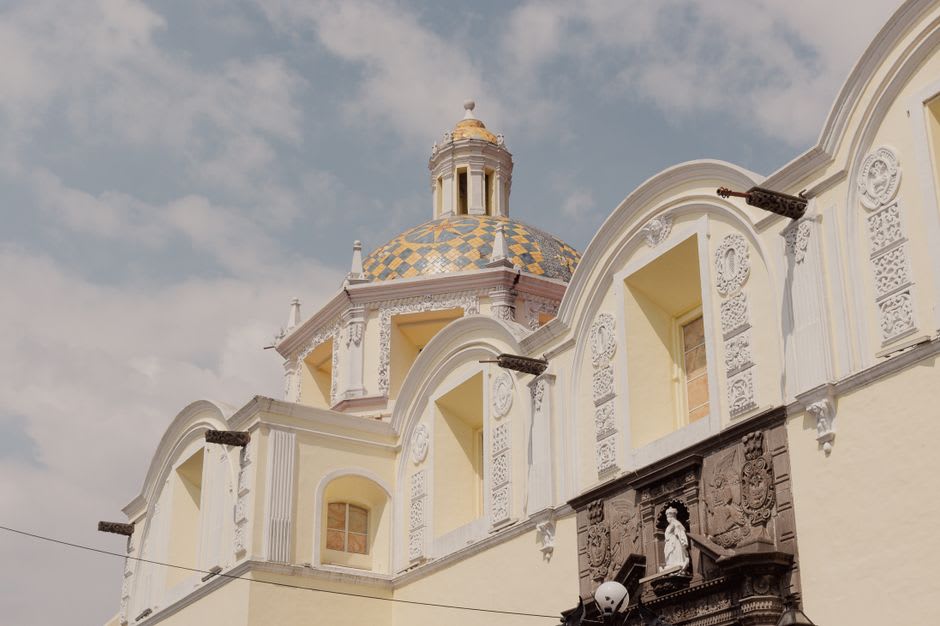
Santa María Tonantzintla is small from the outside. A cream-colored facade with a dome behind it. You would not guess, walking toward it from the parking area past the small market stalls selling religious candles and plastic saints, that the interior represents one of the most singular achievements in the entire baroque tradition in the Americas.
What the Interior Actually Is
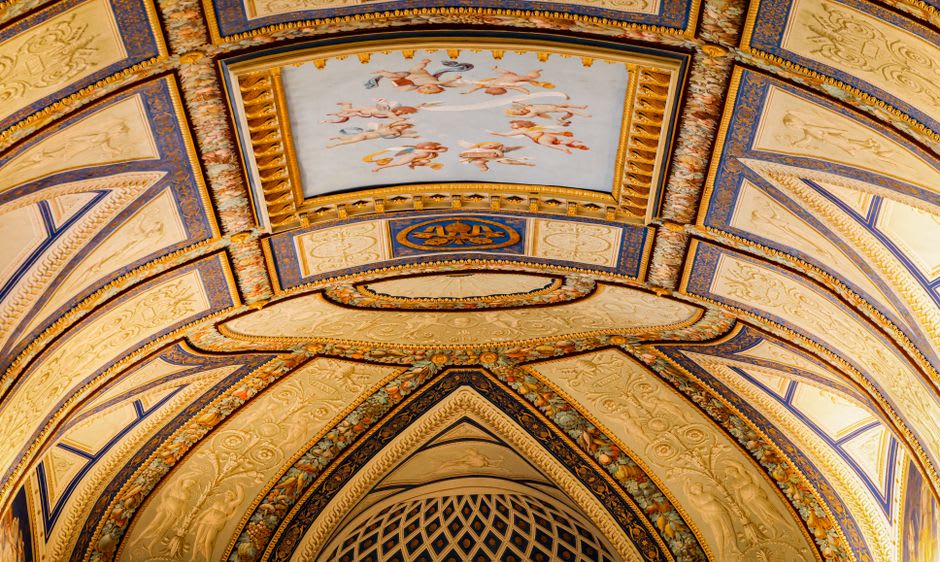
The nave ceiling and walls of Santa María Tonantzintla are covered — and covered is the word, there is no uncovered surface — in polychrome stucco figures. Not a painted ceiling. Not tiled. Sculptural stucco, built up in relief from the surface of the structure, covering every arch, every column, every inch of the nave vault. The colors are gold, turquoise, white, deep red, and they have the intensity of something that has been maintained rather than restored — which is apparently the case, the parish having kept the interior in continuous ritual use from the seventeenth century to the present.
The figures are indigenous. This is the thing that takes a while to understand. The church was built and decorated by Nahua craftsmen working under the Spanish baroque program, and they used the European vocabulary of angels and saints and decorative scrollwork, but they filled it with their own world. The cherubs have indigenous faces — round, brown, with the specific physiognomy of central Mexican highland people. The flora is Mexican: corn, cacao pods, chiles, tropical flowers, exotic birds from the Mexican south, all rendered with the same sculptural care as the Christian iconographic elements. The entire ceiling is a Nahua cosmology dressed in baroque clothes, and once you see it, you cannot unsee it.
Standing in the Nave
I walked in on a Tuesday afternoon with Lia. She is not especially interested in baroque architecture as a rule, and she stopped just past the entrance and said nothing for what I estimated was ninety seconds. I was doing the same thing. There is a point where visual complexity exceeds your ability to process it in sections and you just have to let it come at you whole.
The church is still in active use — there were candles burning at the side altars, and a woman was arranging flowers near the base of one of the columns, entirely unbothered by the tourists. This matters. A deconsecrated baroque church is one thing; a baroque church that is also a living place of worship, where people bring candles and flowers and private petitions on a Tuesday afternoon, is another thing entirely.
I spent forty minutes in the nave and still felt I had not finished looking at it. The dome, the lateral walls, the area above the entrance — each section rewards the kind of sustained attention that is hard to maintain because new things keep pulling your eye.
The Approach, the Context, the Other Churches
Tonantzintla is in the orbit of Cholula, which means it is in the orbit of Puebla — a fifteen-minute drive from either. The most efficient approach is to come from San Andrés Cholula and continue south, combining the church with a stop at the nearby Iglesia de San Francisco Acatepec, which has a Talavera-tiled facade that is spectacular in a completely different register. The two churches together make for a morning or afternoon that is difficult to match anywhere in the Puebla region.
There is no entry fee. There is a donation box. You should use it. The church is maintained by the parish community, not by a national preservation body, and the quality of that maintenance — the fact that the polychrome stucco is this vivid after three centuries — reflects an unbroken local commitment that deserves whatever you can put in the box.
I have been to a lot of baroque churches in Mexico. I have been to the cathedral in Puebla, the sanctuary in Ocotlán, the Rosary Chapel in Santo Domingo. Tonantzintla is the one I think about most. It is the one I will go back to first.