Naupan
"A single blouse can hold months of a woman's evenings. You learn to hold it more carefully once you know that."
I came to Naupan because of a blouse. I’d seen the embroidery months earlier at a market elsewhere in the sierra — a density of stitched color and pattern so far beyond ordinary craft that I asked where it came from, and the woman selling it said one word: Naupan. It took me a while to actually get there, up the winding roads above Huauchinango into a fold of the Sierra Norte that sees almost no outside visitors. When I finally arrived, in the usual mountain mist, I understood that I hadn’t come to a tourist town. I’d come to a working Nahua community that happens to make some of the most extraordinary textiles in Mexico.
Naupan is a Nahua municipality set on steep green slopes high in the Sierra Norte de Puebla, near Huauchinango. It is traditional in the deep sense — a place where the Nahuatl language, the agricultural calendar, and the textile traditions are living daily practice rather than heritage on display. There is no infrastructure built for me here, and I came to see that as a gift rather than a lack.
The Embroidery
The textiles are the reason Naupan has any name at all beyond its own mountains. The women here work an intricate hand embroidery of remarkable density and color — blouses and cloths covered edge to edge in stitched patterns, geometric and floral, in combinations that seem to vibrate. Each piece represents an enormous investment of time, worked in the evenings across weeks and months.
I sat one afternoon with a family who let me watch — not perform, just watch — while a grandmother and a granddaughter worked at opposite ends of the same technique, decades apart in age and identical in patience. Nobody was in a hurry. Nobody was making anything for me. When I bought a piece at the end it cost real money, as it should, and I paid it gladly, thinking of all those evenings folded into the cloth.
Steep Green Slopes
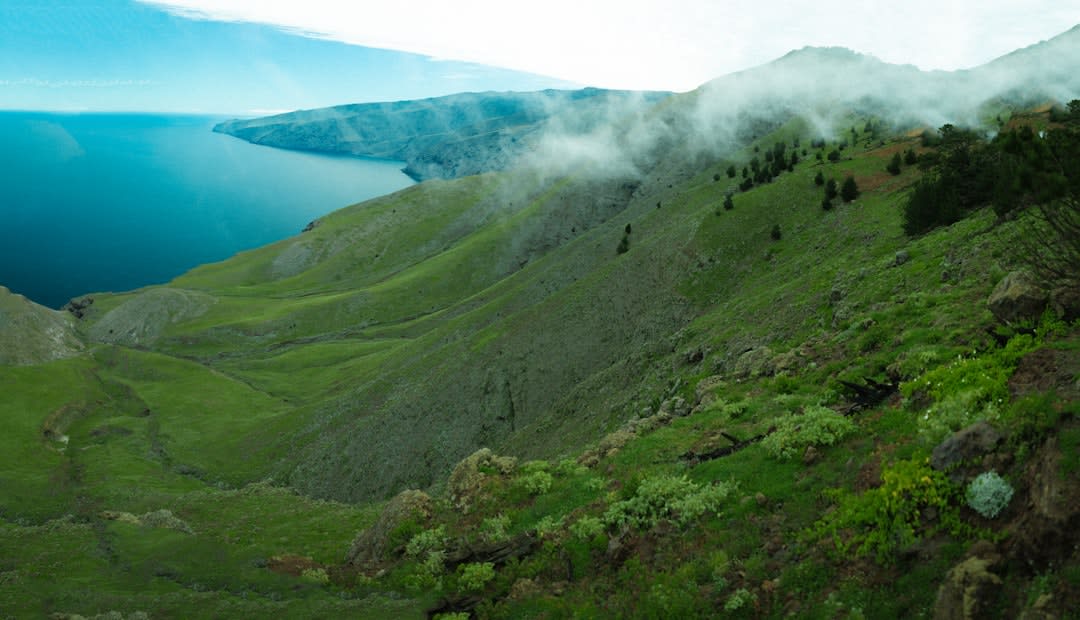
The land here is vertical. Naupan’s houses and plots cling to slopes so steep that everything — walking to a neighbor’s, tending the coffee, carrying anything anywhere — involves climbing. Coffee grows in the shade on these inclines, as it does across this part of the sierra, and the green is the deep saturated green of a place that is wet more often than not.
I walked what paths I could, lungs working in the altitude and the thin wet air, past coffee bushes and milpa plots tucked into every workable angle of the mountain. The mist moved constantly, hiding and revealing the slopes below. There’s a hardness to life on ground this steep that you feel in your legs after a single afternoon and that the people here carry through entire lives.
A Traditional Life
What stays with me from Naupan is not a sight but a texture of life. This is a place where the old rhythms hold: the language spoken in the market and the home, the festivals tied to the agricultural year, the labor and knowledge passed hand to hand across generations. It receives few visitors, and it is not organized to receive them, and both of those things are true in the best way.
I moved carefully here, aware that I was a guest in a community living its own life, not a customer in a destination arranged for mine. I asked before photographing. I bought directly, and fairly. And I left with the sense — rarer than it should be — of having glimpsed a way of living that owes nothing to me and continues, in the mist and the green, entirely on its own terms.
Getting There
Naupan lies in the northern Sierra Norte de Puebla, reached by road from Huauchinango, itself connected by bus to Mexico City (roughly three to four hours) and to the city of Puebla. From Huauchinango the way up to Naupan is winding mountain road, climbing into steeper, greener, mistier country; local transport runs it, though not frequently, so patience helps. Come as a respectful guest rather than a sightseer — there are no attractions arranged for you here, only a community that may, if you’re courteous, let you glimpse its extraordinary work.