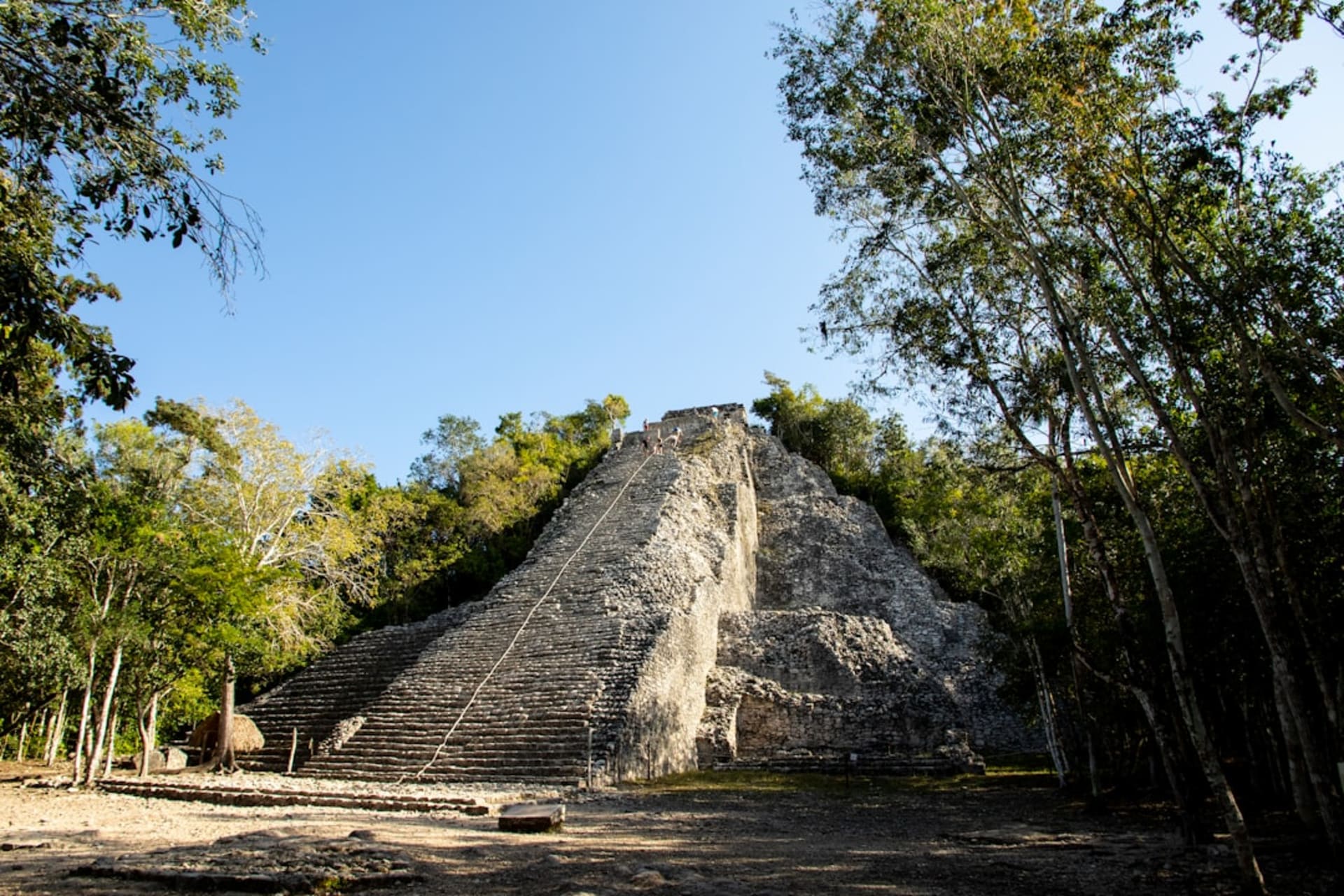
Cholula
"There is a pyramid under that hill. There is a church on top of the pyramid. Mexico in one image."
The tour guide at Teotihuacán told me Cholula was bigger. Not taller — wider, deeper, more massive. The Great Pyramid of Cholula, he said, is the largest pyramid on earth by volume: 4.45 million cubic meters of adobe brick, larger than the Great Pyramid of Giza by a factor of nearly four. I didn’t believe him. I drove to Cholula the following week.
He was right. The pyramid is so large that the Spanish colonists, arriving in the 1520s, apparently mistook it for a natural hill. They built a church on top of it in 1594. The Nuestra Señora de los Remedios still sits there, its yellow domes visible from the center of the city below, perched on a platform that turns out to be the summit of a construction project that took several centuries and several civilizations to complete. Cholula was a sacred city — it contained, at its peak, as many as four hundred temples — and the pyramid at its center was the ritual hub of central Mexico for nearly a thousand years before the conquest.
Inside the Pyramid
The archaeological zone around the pyramid is not much to look at from the outside: a large grass-covered hill, a few excavated sections of the outer walls, some explanatory signage. What makes it worth going is the tunnel system — eight kilometers of passages bored through the pyramid’s interior by archaeologists in the 20th century, of which about a kilometer is open to visitors.
Walking through them, in near-darkness, with the ceiling occasionally close enough to require ducking, you begin to feel the scale in a different way. The pyramid is not a single construction but a sequence of superimpositions: each new civilization built over the previous one, encasing the old pyramid inside the new. The tunnels reveal the strata — different building styles, different eras, one civilization’s sacred mountain sealed inside another’s. It is like an archaeological matryoshka.
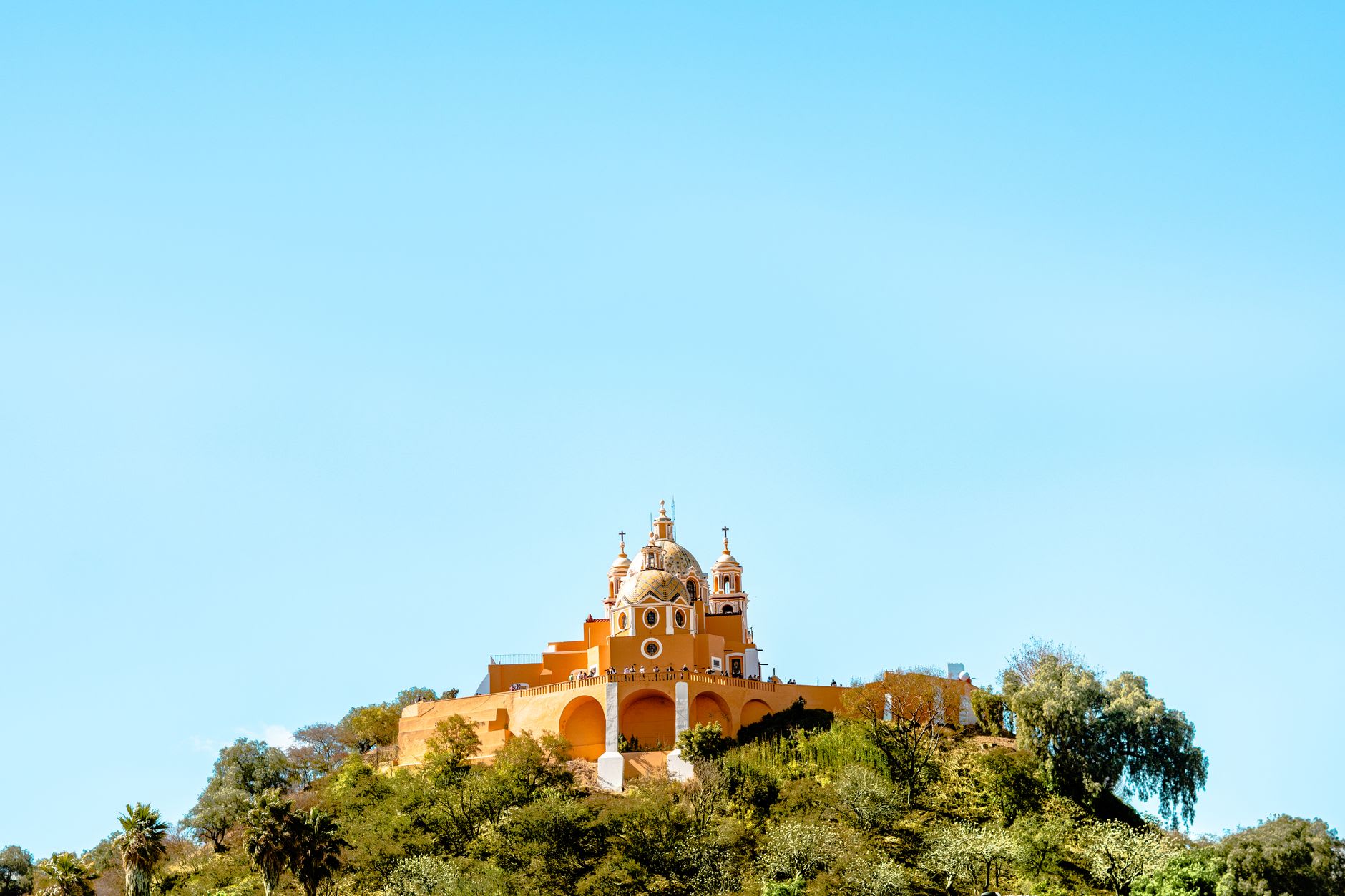
Climb to the church after the tunnels. The summit view takes in Popocatépetl and Iztaccíhuatl — the two great volcanoes of the Puebla basin — and on a clear morning (arrive before 9am) is one of the better panoramas in central Mexico. Popocatépetl smokes regularly and occasionally rumbles; standing on the pyramid watching it exhale feels appropriate.
The City
Cholula is a university town — the Universidad de las Américas Puebla anchors the student population — which gives it a nightlife and café culture that distinguishes it sharply from Puebla proper, fifteen minutes away by bus. The main pedestrian area around the Zócalo fills in the evenings with mezcal bars, taco stands, and the ambient noise of a city that doesn’t slow down early.
The Zócalo itself is one of the most pleasant in the region: wide, tree-lined, with a long portal of restaurants on the north side and the church of San Gabriel (built on the site of the main Aztec temple) closing the east. The municipal fountain and the surrounding streets on weekends become a kind of extended social event that runs from late afternoon into the early hours.
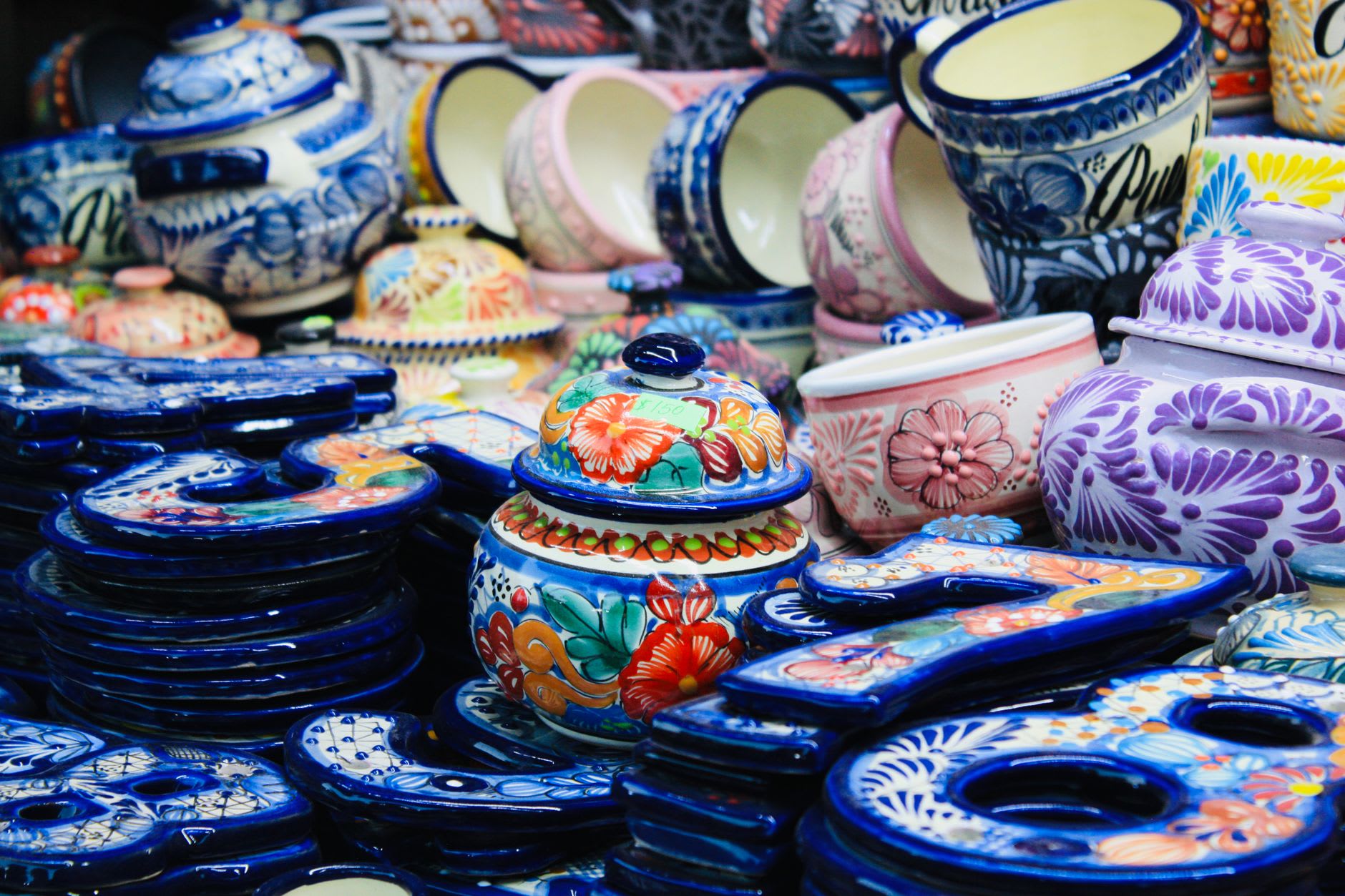
Talavera — the distinctive blue and white tin-glazed pottery that Puebla state is famous for — is produced in workshops on the edges of Cholula and sold in shops around the Zócalo. The tradition arrived with the Spanish in the 16th century and absorbed indigenous ceramic techniques in a synthesis that became uniquely Mexican. The pieces worth buying are the hand-painted ones with irregular glaze and slightly imperfect geometry; the machine-made versions are immediately identifiable by their uniform perfection.
What to eat: Cholula sits in Puebla state, which means mole poblano and chiles en nogada within reach. The best mole in the area is not in Cholula itself but at La China Poblana on the main road to Puebla — the kind of place where the mole has been cooking for two days and the tortillas are made by hand at the counter. In Cholula proper, the tlapalería-style cenadurías that open at nightfall around the market serve excellent memelas and gorditas at prices that reflect a student economy.
Puebla: Thirty Minutes Away
Cholula works best as a base for Puebla — the full colonial city, fifteen kilometers east, that most visitors shortchange by staying only a day. Puebla’s Barrio del Artista has a functioning community of painters working in open-air studios. The Biblioteca Palafoxiana, founded in 1646 and the first public library in the Americas, contains 45,000 books in a room of carved wood and gold leaf that is worth seeing even if you read no Spanish. The Mercado de Sabores in the old market hall has a floor dedicated entirely to Puebla’s canonical dishes, cooked simultaneously by forty stalls competing on the same recipes.
When to go: October through March. The Puebla valley sits at 2,200 meters and the evenings are cold year-round — pack accordingly. The week of the Batalla de Puebla in early May (Cinco de Mayo) fills both cities; worth it if you want the context, plan ahead if you want a room.