Calpan
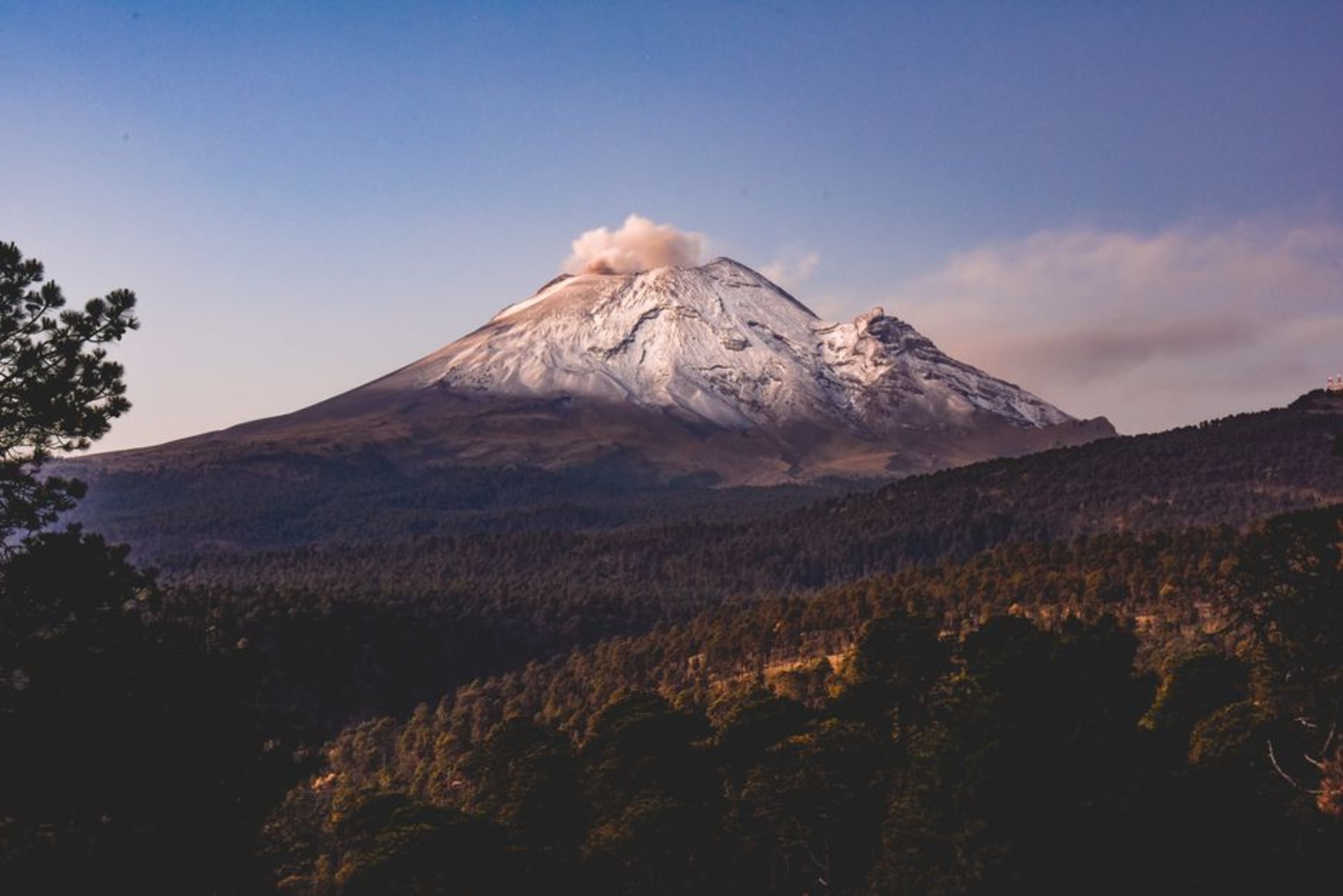
"Four centuries of stone, four corner chapels still standing. Popocatépetl behind them, exhaling."
I came to Calpan expecting thirty minutes. A convent, a quick loop of the atrium, back on the road toward Cholula before noon. Instead I found myself sitting on the stone steps of a corner chapel — a posa, technically — watching a man lead a dog across an empty churchyard while Popocatépetl exhaled a slow plume above the far wall. It was a Tuesday in February. Nobody else was there. The whole scene had the particular stillness of a place that has been doing exactly this for four hundred and seventy-odd years, with or without witnesses.
Four Chapels, Still Standing
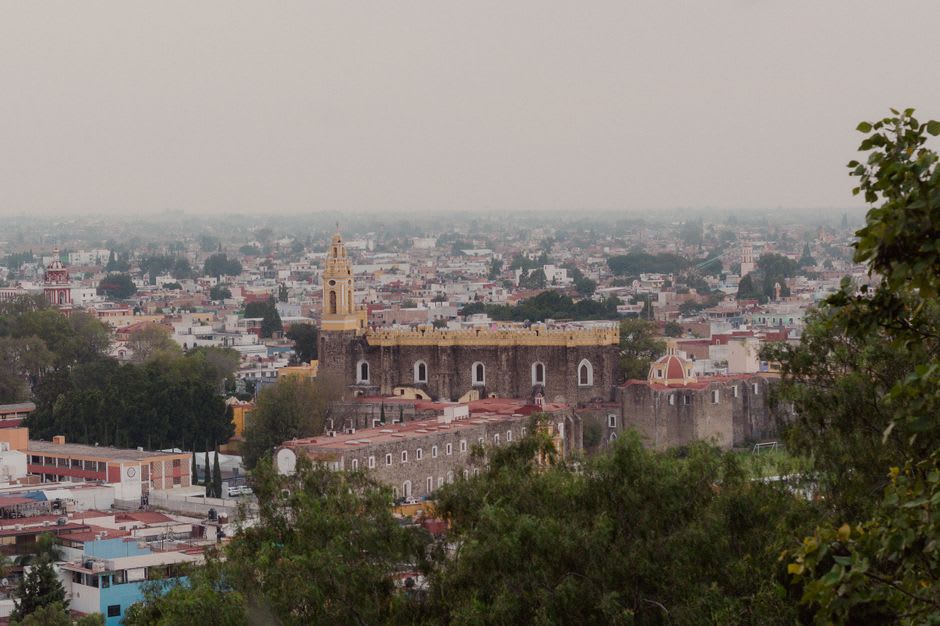
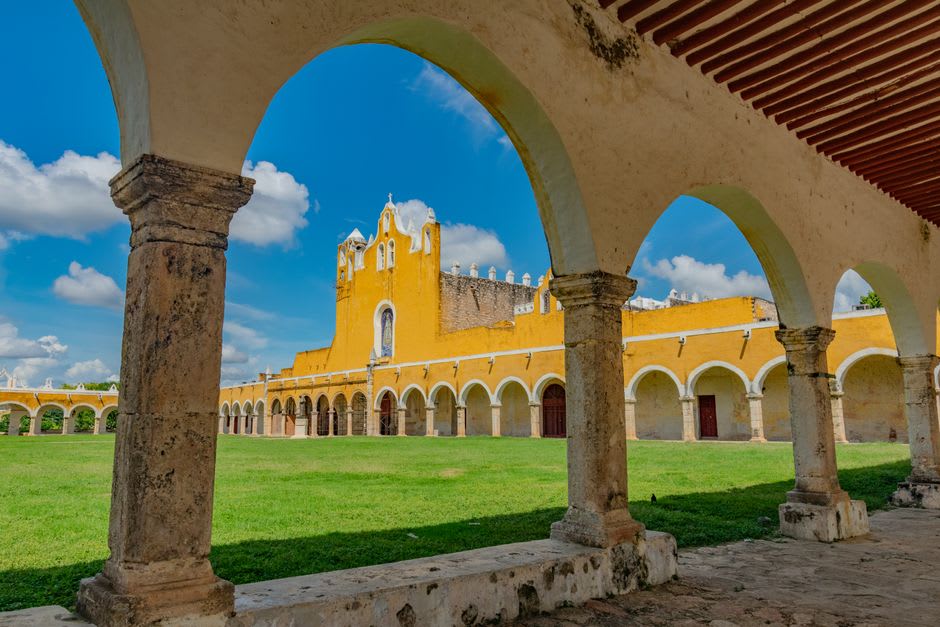
The ex-convento de San Andrés Calpan was built by Franciscan friars around 1548, less than three decades after the Conquest, and what makes it remarkable — what earned it a place in the UNESCO World Heritage group covering the earliest monasteries on the slopes of Popocatépetl — is a question of survival. In most of the sixteenth-century monasteries scattered across this part of Puebla state, the posas have crumbled to stumps or vanished entirely. Here all four stand, squat and square, one at each corner of the large walled atrium. Their carved stone reliefs show a hybrid vocabulary: Christian iconography worked through indigenous hands. Look carefully at the angels on the north chapel — the facial structure, the stylized flowers winding through the borders — and there is something in it that belongs entirely to this part of the world. Nothing imported, nothing purely European. The church interior is austere, a single white nave with little to detain you, but the open atrium and those four stubborn corner chapels are what the trip is for.
The Town the Monument Forgot
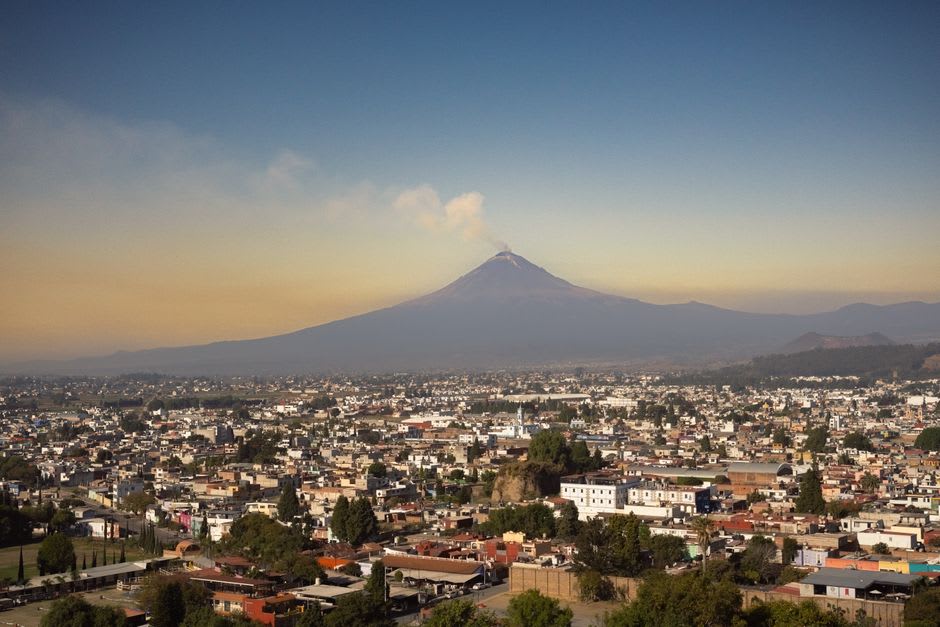
Calpan is not arranged for visitors. There is no restaurant row, no souvenir circuit, no mercado turístico. The Sunday market near the main plaza runs on its own logic — stacks of memelas glistening with bean paste and red salsa from a comal set up under plastic sheeting, gorditas de chicharrón sold by a woman who clearly does not need to explain anything to anyone. I ate standing, paying with coins, watching schoolchildren cut across the churchyard at a diagonal. The land around Calpan is apple country — orchards climb toward the volcanic foothills on all sides — and in autumn the roadside stalls fill with fruit at prices that seem unreasonable to anyone arriving from the capital. The town is small enough to walk in twenty minutes and unhurried enough that nobody will look at you strangely for stopping in the middle of the street to look at the volcano.
On Getting the Light Right
Arrive early. By nine in the morning in winter the sun is low enough that the posa carvings throw actual shadows, making the relief work legible in a way it simply is not at noon. Popocatépetl is also more likely to be visible before the afternoon clouds stack up against the summit. I had the atrium to myself until half past ten, when a family arrived with a grandmother who walked slowly and photographed everything at close range, which felt right. I came back briefly around four: the volcano was catching the last light on its snowcap, and the stone had gone warm and orange. Both ends of the day work. The middle does not.
Getting There
From Cholula, take a combi heading toward San Nicolás de los Ranchos and ask to be dropped at the ex-convento — the ride runs around thirty to forty minutes. From Puebla city, change in San Andrés Cholula. There is no real taxi or rideshare infrastructure in Calpan itself; if you are not renting a car, sort out your return transport before you need it, or flag the combi back toward Cholula from the main road.