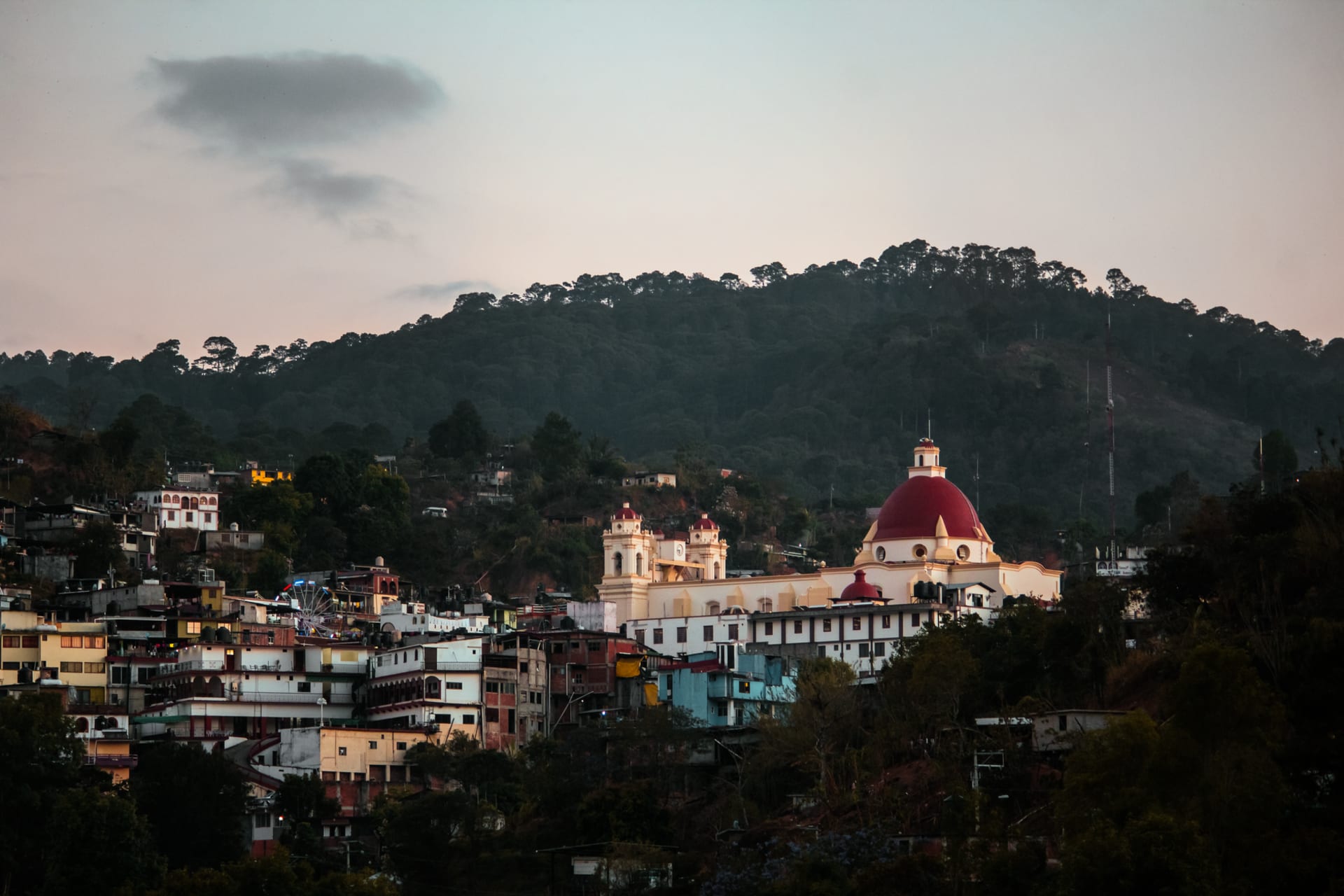
Atlixco
"The volcano appeared over the church tower at 7am, perfectly white and perfectly clear. By 8am it was gone. Atlixco operates on its own schedule."
I drove to Atlixco on a morning in late September with no agenda beyond seeing the festival, and arrived to find the main square already occupied by a dance group from Oaxaca practicing their footwork on the cobblestones. They were not practicing quietly. The drums were enormous and they filled the square in a way that made every conversation around me either louder or abandoned. I stood at the edge for ten minutes watching a teenage boy manage a feathered headdress taller than he was, his face completely composed. Then I went looking for coffee.
That’s how Atlixco works. Things happen there at their own pace and in their own order, and the visiting logic is to move around the edges until you find yourself inside something.
The Volcano and the Valley
The Poblano valley, which Atlixco sits at the center of, is one of the most fertile agricultural zones in central Mexico. The altitude — around 1800 meters — combined with volcanic soil and reliable mountain water produces conditions that flower growers have been exploiting since before the colonial period. The nurseries are everywhere: on the road into town, on the hillsides above the centro, tucked into residential streets between houses. Greenhouses with plastic roofs that catch the morning light. Open fields of cempasúchil going orange to the horizon in October. This is a working agricultural economy, not a decorative one — these flowers end up at CEDA in Mexico City, the largest wholesale flower market in the world, sold by the crate before dawn.
Popocatépetl is the reason you stay in Atlixco overnight instead of day-tripping from Puebla. The volcano is visible from the city on clear days, and in late September the clear days are few — the afternoon rains of monsoon season cloud everything by noon — but the mornings sometimes open. I woke at 6:30 on my second day and went to the roof of the guesthouse. There it was: the cone, perfectly shaped, perfectly white at the summit, floating above a layer of low cloud that concealed everything below the treeline. Just the mountain, appearing to be situated roughly where the sky should be, the faint thread of smoke from the active crater rising straight up in windless air.
I stood there until my coffee went cold. By the time I came back up after breakfast, it was gone. The cloud had come in from the east and the sky was simply white in every direction. This is the thing with Popocatépetl — you get it or you don’t, and there’s nothing to plan around.
The Huey Atlixcáyotl
The festival happens every year on the last Sunday of September, in the main square, and the correct description is organized chaos at the highest level. Fifty indigenous dance groups, representing communities from across Puebla and neighboring states, each perform their traditional dances simultaneously in different parts of the plaza. There is no stage, no unified program, no moment when someone announces what’s happening. You walk through it.
I arrived at 10am, when things were building. By noon the square was at capacity — several thousand people, more than Atlixco’s centro was designed to hold, though the cobblestones handle it without complaint. The dance groups are distinguished by their costumes, which range from Nahua feathered headdresses to Totonac sequined tunics to groups I couldn’t identify whose regalia was completely unlike anything I’d seen before: mirrored shields, embroidered panels that must weigh five kilograms each, silver ornaments catching the sun and throwing light in every direction. The sound is the hardest thing to convey — five different drum rhythms layered over each other, with brass and flute and the occasional sharp call from a conch shell, all of it blending into something that is less like music and more like weather.
What strikes you once you adjust to the noise and crowd is the quality of the dancing. These groups have traveled from their communities, some for multiple days, to participate in a festival that has existed in some form since the pre-Hispanic period and in its current organized form since 1965. The footwork is precise. The formations are complicated. A group of men in their fifties dancing a Huastec son with the same technical rigor as the teenagers performing beside them — there’s something quietly serious about that, about the transmission of something difficult across generations.
Lia disappeared into the crowd at one point and emerged forty minutes later from the opposite side of the square, having found the one churro vendor operating at the festival’s edge. The churros were fresh — not the pre-fried highway-stop kind — and the cinnamon sugar was excessive in the best possible way. We ate them standing near a wall while a group from the Sierra Norte performed a Danza de los Quetzales in costumes whose circular headdresses, flower-shaped and three feet across, seemed physically impossible to sustain for more than a few minutes. They danced for ninety minutes without stopping.
The Nursery Economy
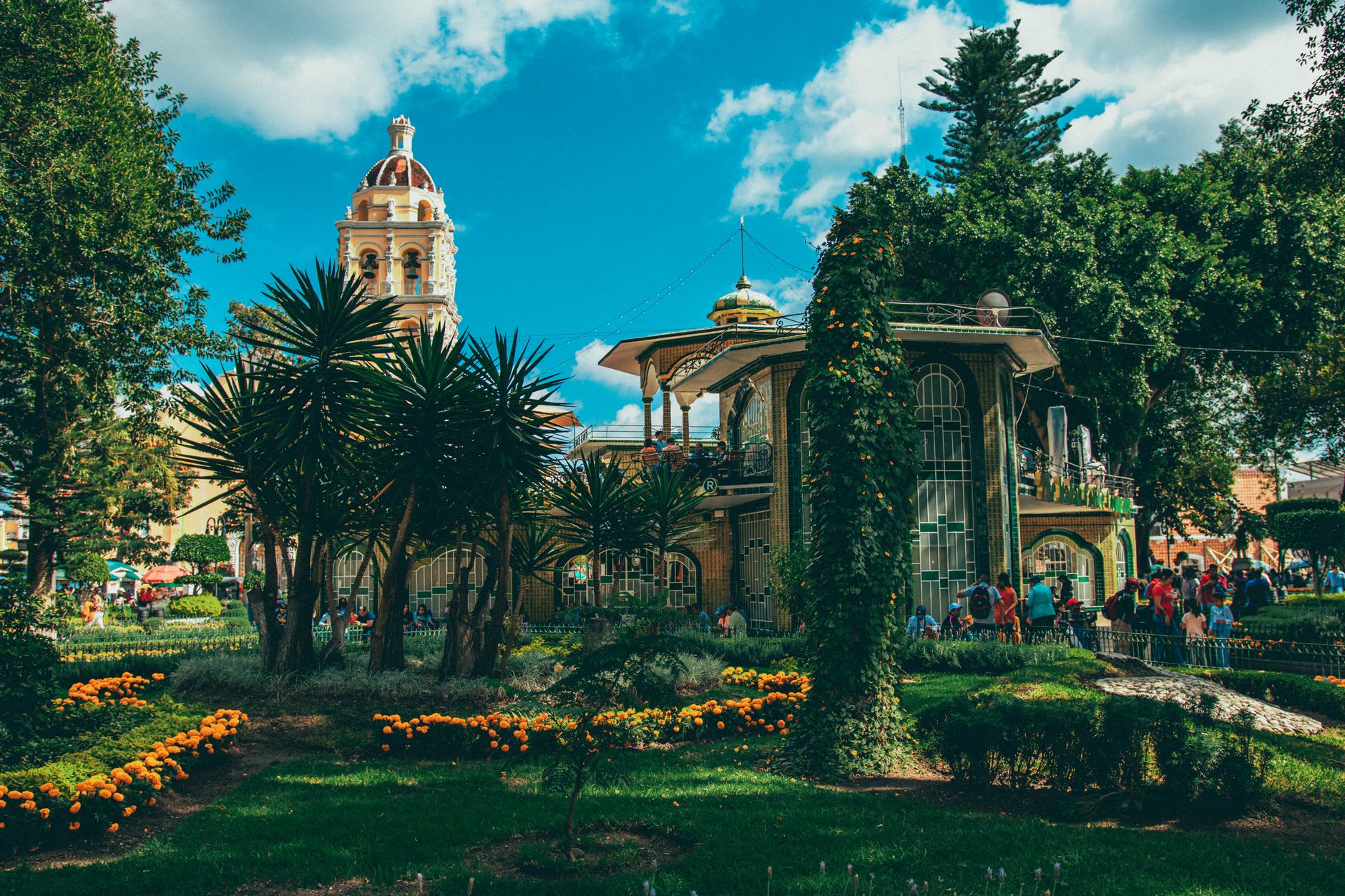
Outside festival season Atlixco’s draw is quieter. The colonial centro is handsome without being remarkable — a good main square, a seventeenth-century parish church, the usual municipal buildings arranged around a kiosk. What makes Atlixco worth a dedicated trip is the nursery landscape that surrounds it, which you understand best from the road.
Driving in from Puebla city, the road passes through twenty kilometers of organized flower production: rows of greenhouse plastic, truck depots where cut flowers are boxed and iced for the overnight run to the capital, roadside stalls selling directly to anyone who stops. I stopped at one and bought a bundle of white gladioli for forty pesos that filled the entire back seat of the car with something close to overwhelming sweetness for the entire drive home.
The Saturday market is where the flower economy becomes visible at street level: growers selling direct, not just flowers but bulbs and cuttings and seedling starts that make the next season’s crop possible. I spent time at a stall run by a woman selling rose varieties I’d never seen before — striped ones, varieties that seemed to shift color from bud to full bloom — and she named each one in Spanish and then again in what I eventually realized was her family’s private naming convention, distinct from the commercial names entirely. A personal taxonomy developed over thirty years of rose cultivation in this valley.
The chileatole is the local dish worth knowing — a thick corn-based soup made with green chile, herbs, and sometimes chicken or pork, served in the market fondas from early morning. It’s warming and specific in its flavoring, the kind of thing you eat two bowls of before you’ve decided you like it. I had it for breakfast both mornings and thought about it on the drive back.
Practical Notes
Atlixco is 30 kilometers from Puebla city — roughly 45 minutes by car, or an hour by bus from CAPU terminal in Puebla, with frequent departures. There is no airport; fly into Puebla or Mexico City and come by road.
The Huey Atlixcáyotl happens the last Sunday of September. If you plan to attend, book accommodation in Atlixco two to three weeks in advance — the town has limited rooms and they fill completely. Arrive by 9am to find a position before the square reaches capacity; by 11am you are navigating crowds. The festival runs from roughly 10am to 5pm, with different groups performing throughout.
For the volcano: the best views are from the higher streets of the centro and from rooftop positions. Mornings before 9am on clear days are your best odds. Popocatépetl is actively monitored — CENAPRED publishes current alert levels, which affect whether certain roads toward the volcano are accessible.
For flowers: the Saturday market is in the main market building one block from the square. Roadside nurseries on the Puebla-Atlixco highway sell at wholesale-adjacent prices with no intermediary. October is cempasúchil season and the fields are worth stopping for.