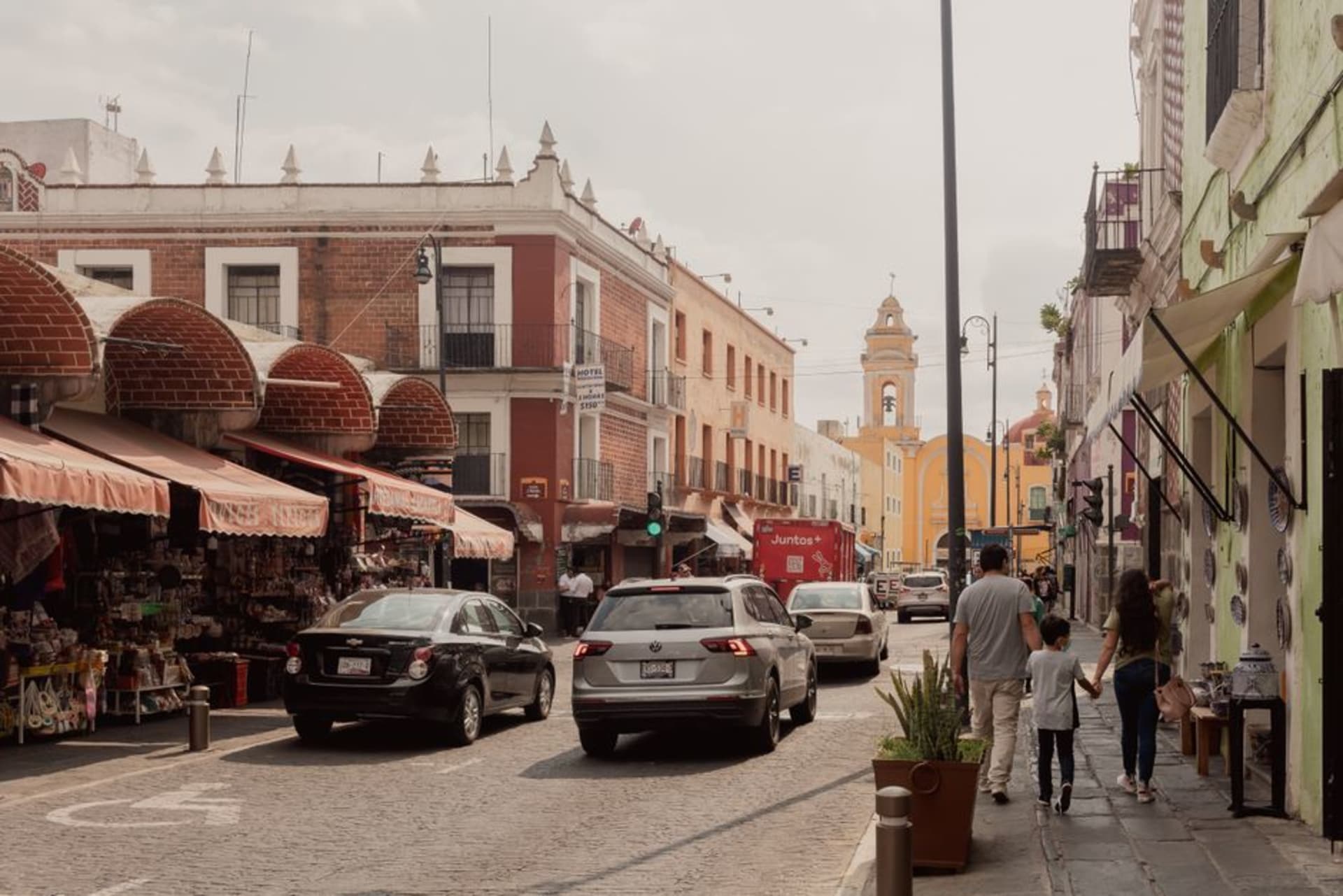
Acatzingo
"On Sunday the whole plain seems to pour into Acatzingo. By Tuesday you could hear a pin drop in the same plaza."
The first time I saw Acatzingo it was a Sunday, and I thought I’d misjudged the size of the town entirely. The tianguis had swallowed every street around the plaza — tarps strung wall to wall, the smell of frying and coriander and diesel, campesinos haggling over piglets and pyramids of chiles, a wall of sound you had to lean into. I bought a bag of guavas I didn’t need just to have a reason to stand still. When I came back on a Wednesday weeks later to see the church properly, I genuinely wondered if I’d come to the wrong place. The same streets lay empty in the sun, a dog asleep under the arcade. Acatzingo, I learned, is really two towns wearing the same walls.
The Sunday Tianguis
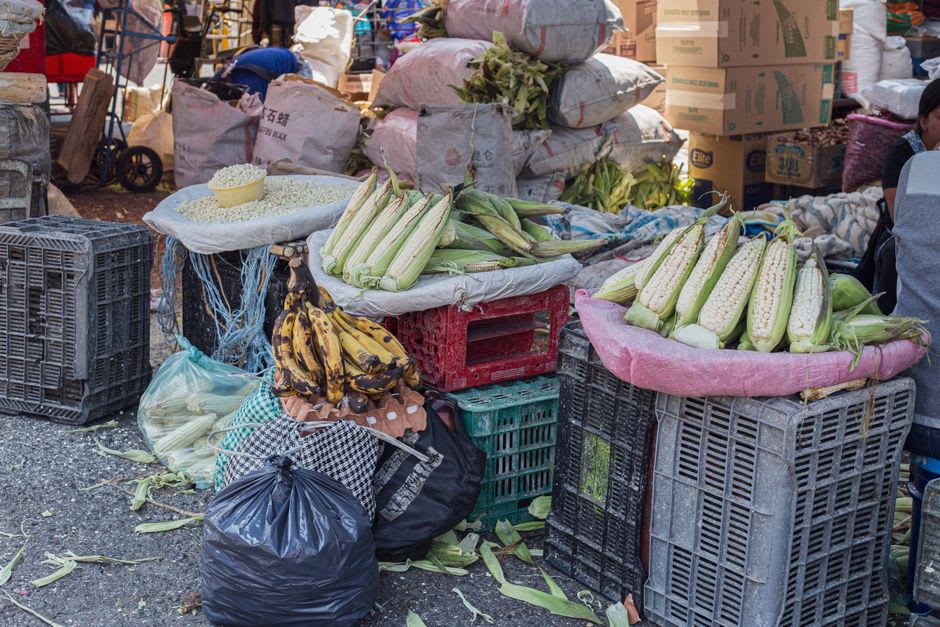
The market is the town’s heartbeat and its fame. One of the largest regional tianguis in this part of Puebla, it draws farmers and traders from across the surrounding plain — the produce is mountainous and cheap, the livestock section is a world unto itself, and the food stalls serve the kind of unglamorous, perfect market cooking that I’d drive an hour for. I ate a plate of something with a green sauce standing up, elbow to elbow with men who’d been up since four, and it was among the best things I’ve eaten in the state. This isn’t a market curated for visitors. It’s commerce, the ancient weekly kind, and you’re welcome as long as you keep moving.
The Convent and the Plaza
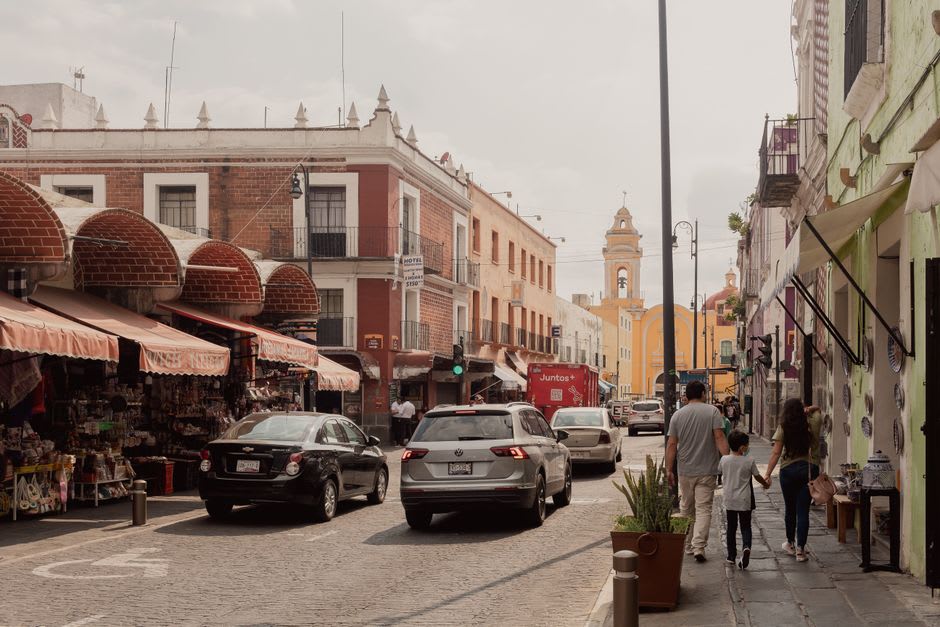
At the town’s center stands its quiet dignity: a sixteenth-century church and former convent, one of the early religious foundations built as Spanish settlement pushed out across these plains. On my weekday visit I had it almost to myself — thick walls, cool air, the particular hush of old stone. The arcaded plaza outside is the town’s parlor, a run of portales where you can sit with a coffee and watch Acatzingo be itself when it isn’t performing the market. An older man sharing my bench told me his grandfather had sold rope under those same arches. Continuity like that is easy to walk past and worth slowing down for.
The Farm Country Around
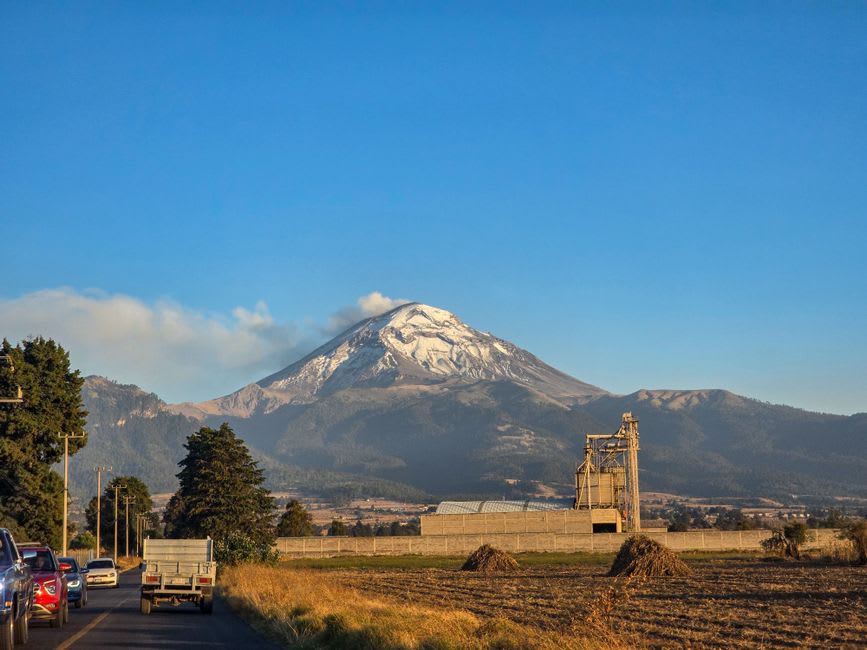
Step past the last houses and you’re in it: flat, fertile Puebla farm country, maize and vegetables running to the horizon under the distant blue of the volcanoes on a clear day. This land is why the market exists — everything sold on Sunday grows within a cart’s ride of the plaza. I like to drive the ruler-straight farm roads out of town in the late afternoon, past irrigation channels and men walking home, when the light goes gold and the whole plain seems to exhale. It’s unspectacular in the way that good, honest country is, and it puts the town’s two moods — the roar and the hush — into their proper frame.
Getting There
Acatzingo lies on the plains southeast of Puebla city, an easy trip by car on the highways heading toward the Orizaba direction — under an hour from the capital in normal traffic. Frequent second-class buses and colectivos run from Puebla’s CAPU terminal and drop you near the center. Come on a Sunday if you want the tianguis at full force — arrive early, bring cash and small bills, and expect to park on the edge and walk in. Come on any other day if you’d rather have the church and plaza to yourself. Both versions of Acatzingo are worth the trip; just know which one you’re signing up for.