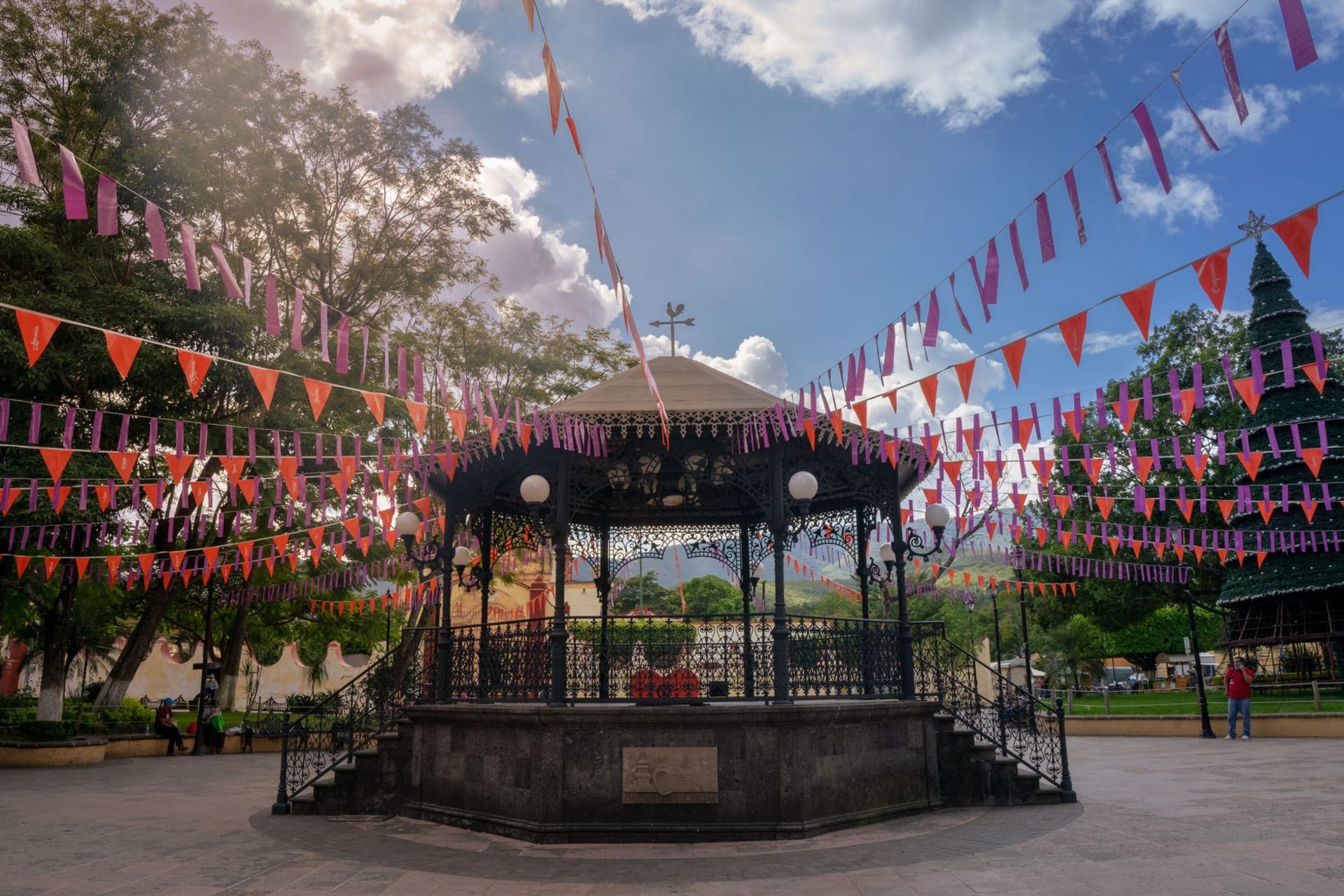
Tlacolula de Matamoros
"The Sunday market at Tlacolula is not for tourists. It is for the valley. That's why it's the best one."
The Tlacolula Sunday market is not the most famous market in Oaxaca — that would be the Saturday market in Oaxaca city itself, or the Zaachila Thursday market, or the market at Ocotlán to the south. It is the largest and, in my experience, the most interesting, because it has the lowest ratio of tourist-directed commerce to actual commerce of any market in the Central Valleys. The Tlacolula market operates primarily for and by the Zapotec communities of the valley: the farmers from the surrounding villages, the mezcal producers from the palenques in the sierra, the weavers from Teotitlán and Santa Ana del Valle, the butchers and cheesemakers and chile merchants who provision the valley’s kitchen. If you go with any expectation of shopping in a curated environment, you will be confused. If you go to understand how a valley feeds and supplies itself on a weekly basis, you will stay for four hours and feel like it was two.
I have been to the Tlacolula market four times. The first time I arrived at eleven in the morning on a recommendation that turned out to have been given by someone who had never actually been. At eleven the market is full beyond navigable — two hundred bodies in a covered space designed for a hundred, the aisles reducing to the width of a sideways-shuffled shoulder, the sound of multiple radios, multiple conversations, the amplified call of a vendor, a child crying, a live turkey expressing displeasure. I was overwhelmed in the specific way you are overwhelmed when an experience exceeds your preparation by a significant margin.
By the third visit I understood the temporal structure. The early market is the producer market: the people who drove in from the villages before dawn are selling directly to the first buyers, who are the restaurateurs and market vendors from Oaxaca city making their weekly run. At eight-thirty, the mezcal producers from the palenques in the hills above Matatlán are already at their folding tables with unlabeled bottles and plastic cups.
The Mezcal
The Tlacolula valley is the heart of the Valley Zapotec mezcal region — the villages of Matatlán, Miahuatlán, and dozens of smaller communities between them contain the highest density of mezcal palenques in Oaxaca. On Sunday morning, the producers who make small quantities — a few hundred liters per batch, from agave they grew or foraged themselves — bring what they have to the Tlacolula market rather than selling to commercial distributors.
This is the mezcal transaction I prefer above all others: standing at a folding table with a producer who is also the distiller and sometimes also the agave farmer, tasting from a plastic cup, talking about the specific agave that produced this batch. The vocabulary that emerges from this conversation — the agave’s age when harvested (wild Espadín grown without intervention at fifteen to twenty years versus cultivated at eight to ten), the roasting wood (encino, mezquite, each imparting a different char to the final spirit), the still type (clay pot versus copper, the clay giving a denser earthier expression) — is not the vocabulary of a sommelier’s performance. It is the vocabulary of someone describing their work from a position of complete technical authority.
I bought a liter from a producer whose name I didn’t catch clearly over the market noise, whose Espadín Minero had a mineral quality I associated with high-altitude rocky soils. He poured me three different batches before we agreed on one. The liter cost the equivalent of twelve euros. I am aware that the economics of this transaction are not sustainable for the producer in the long term. But offering to pay more would have been received as an insult to the agreed price, which is a form of relationship I respect.
The Market Itself
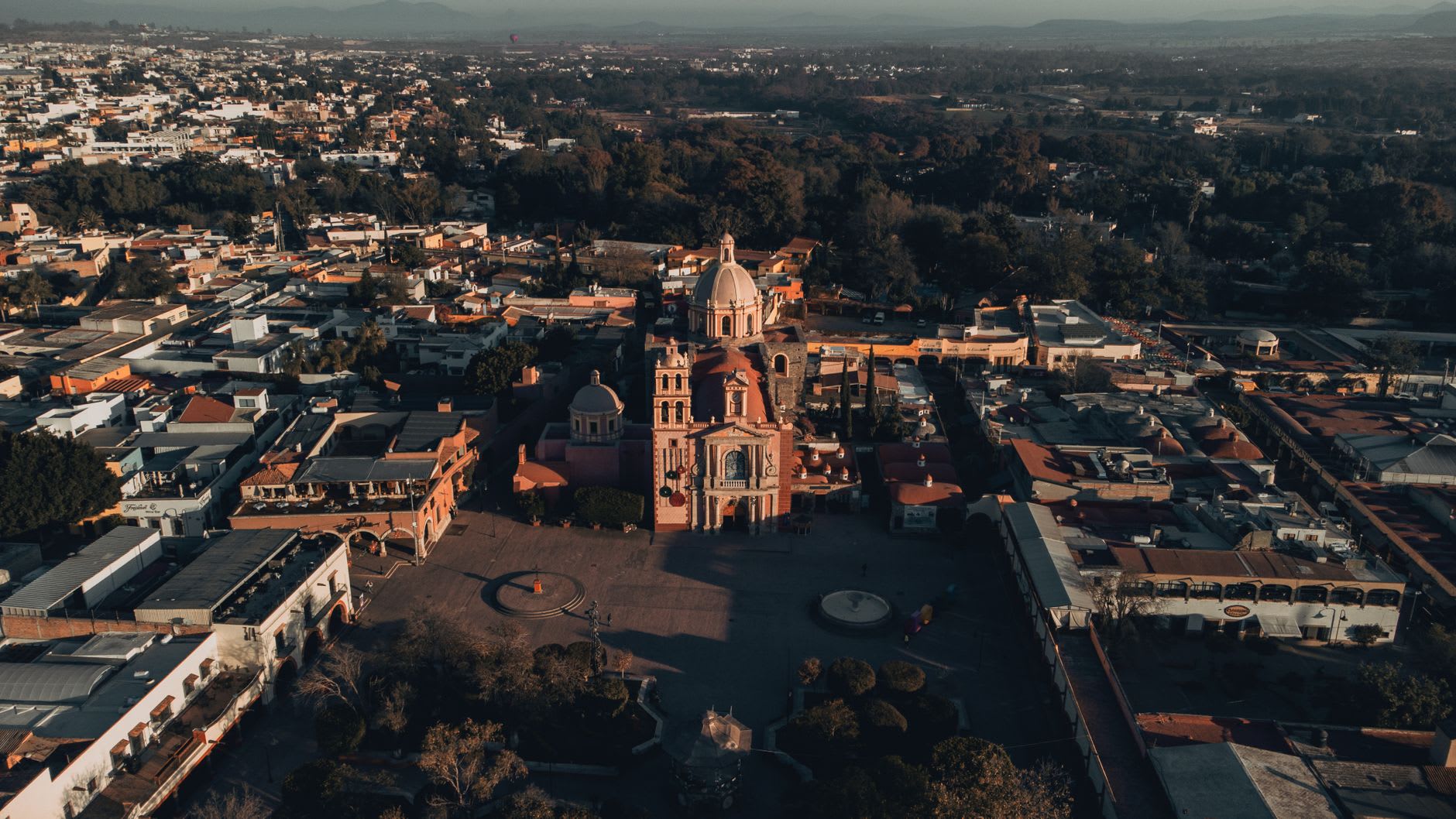
The covered market occupies a large concrete structure in the center of Tlacolula, spilling out onto the surrounding streets in the Sunday extension. The covered section has the produce, the meat, the dried goods, and the prepared food. The street extension has textiles, crafts, agricultural equipment, religious goods, and the secondary markets in used clothing and salvaged hardware.
Produce section: chiles in perhaps twenty varieties, fresh and dried, the color range of a Zurbarán still life from dark maroon mulatos to bright yellow güeros. Tlayudas (large dried tortillas) stacked by size. Oaxacan string cheese (quesillo) in wheels wound like turbans. Tasajo (dried beef) hanging from hooks in a color between burgundy and black. Chapulines (grasshoppers) sold by volume from large plastic buckets — toasted, lime-salted, occasionally with chile, in a size range from the small seasonal ones to the large pre-autumnal harvest variety.
I bought chapulines at Tlacolula for the first time on my second visit, persuaded by Lia who had no equivalent French anxiety about eating insects and was genuinely baffled by my hesitation. The large toasted variety, eaten as a snack, are crunchy, earthy, lime-bright, with a back flavor somewhere between peanut and dried shrimp. They are good. They are, in fact, excellent. I regret the hesitation.
Textile section: The weaving villages of the Central Valleys bring their work to Tlacolula. The tapetes (woven rugs) here are priced at production cost rather than at the markup of the Oaxaca city craft shops. The same rug that costs four hundred euros in the Mercado Benito Juárez costs two hundred from the weaver at Tlacolula. This is not haggling. The price is lower because the distribution chain is shorter.
The Chapel of the Lord of Tlacolula
On the north side of the main church, the Capilla del Señor de Tlacolula is one of the most extraordinary baroque spaces in Oaxaca — a late 17th-century chapel whose interior is entirely covered in carved and gilded plaster decoration, the walls and vault dissolving into a three-dimensional program of cherubs, vines, saints, and angels that approaches visual overload in the most productive way. The chapel is small, which intensifies the effect. Most people walk through it in the thirty seconds between the nave and the market. Stand in the center, look up, take five minutes. The craftsmen who built this were working for a patron who wanted something extraordinary, and they produced it.
Getting there: Colectivos from Oaxaca city’s second-class bus station (near the Abastos market) run to Tlacolula and the other Central Valleys destinations every few minutes throughout the day. The fare is minimal. The journey takes about forty-five minutes. Return colectivos run until late afternoon; after that, taxis from the main plaza.
When to go: Sunday only for the full market experience. The town on other days is quiet — the market infrastructure is there but operating at perhaps twenty percent of Sunday capacity. Arrive between 8:30 and 9:30am to see the early producer market and the mezcal vendors before the midday crowd. By noon the density is at its peak and the chapulines sell out of the better varieties. The valley circuit — Mitla in one direction, Yagul in another — pairs naturally with the Sunday market into a complete day from Oaxaca.