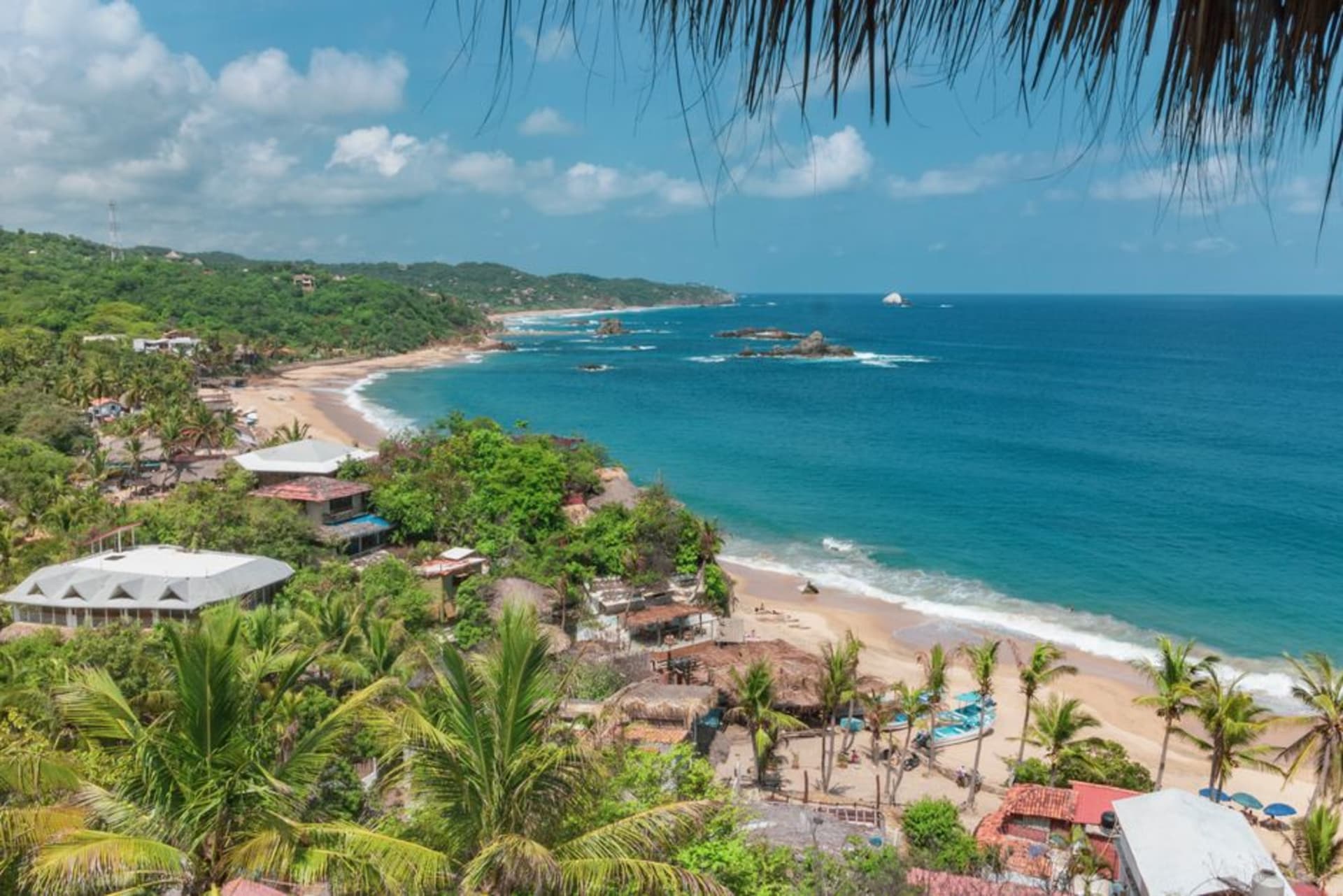
The first time I passed through San Agustinillo, I didn’t stop. I was in a colectivo heading to Mazunte — the kind of day trip you make when you live in Puerto Escondido and want somewhere slightly more awake than Zipolite. But the bay appeared in the window for maybe ten seconds and there was something about the color of the water, a green-blue that only happens when the Pacific goes genuinely flat, that made me tap the driver’s shoulder. He looked at me like I’d miscalculated something. I stayed four nights.
A Bay That Actually Behaves
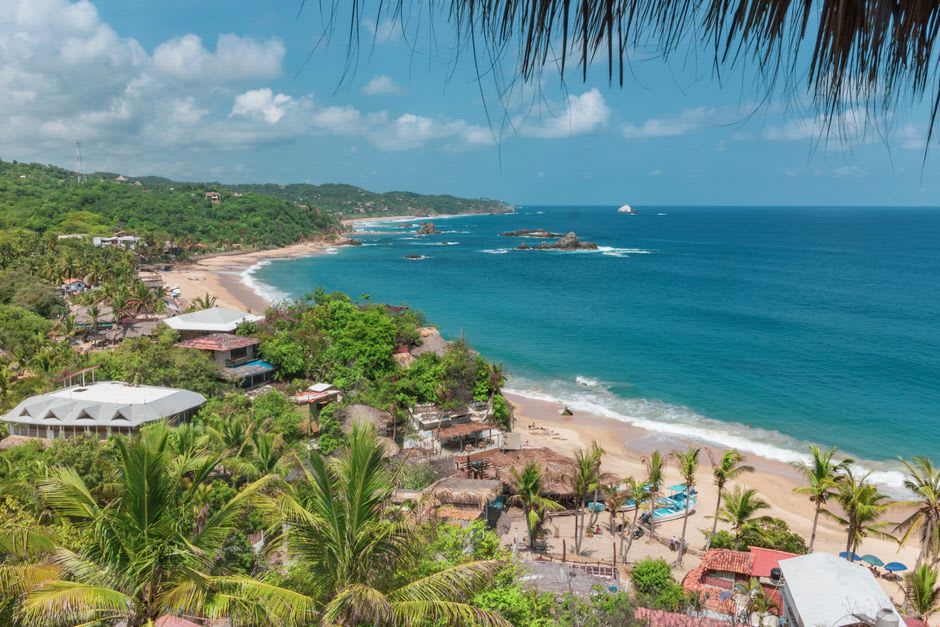
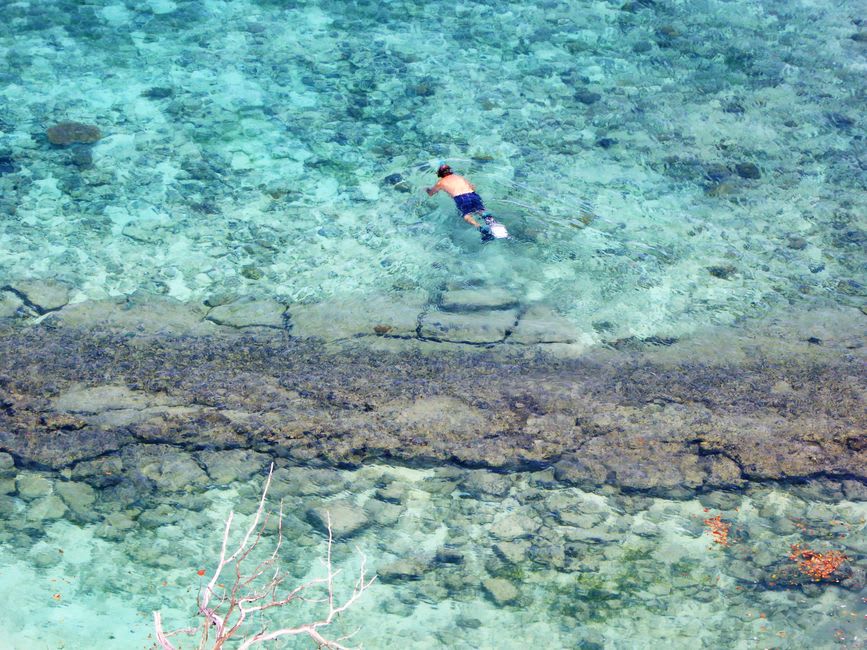
This stretch of Oaxacan coast has a reputation for waves that will end you. Zipolite has its rip currents. Mazunte has its swells. Puerto Escondido, where I live, has beach breaks that professional surfers travel specifically to be humiliated by. San Agustinillo has none of that. The bay curves in a way that absorbs whatever the ocean sends, and on most mornings the water is shallow and clear enough that you can see your feet at chest depth. I swam here in July, which is when the Pacific along this coast is usually at its most theatrical, and it was fine. Better than fine — it was the kind of swimming where you stop tracking time. The bay faces roughly southwest and catches afternoon light in a way that turns everything briefly gold around four o’clock. I learned this because I was still in the water at four o’clock. The thing nobody tells you about San Agustinillo is that it is the most genuinely swimmable bay between Puerto Ángel and Mazunte, and the people who live here seem to prefer you not find out.
The Palapa at the End of the Street
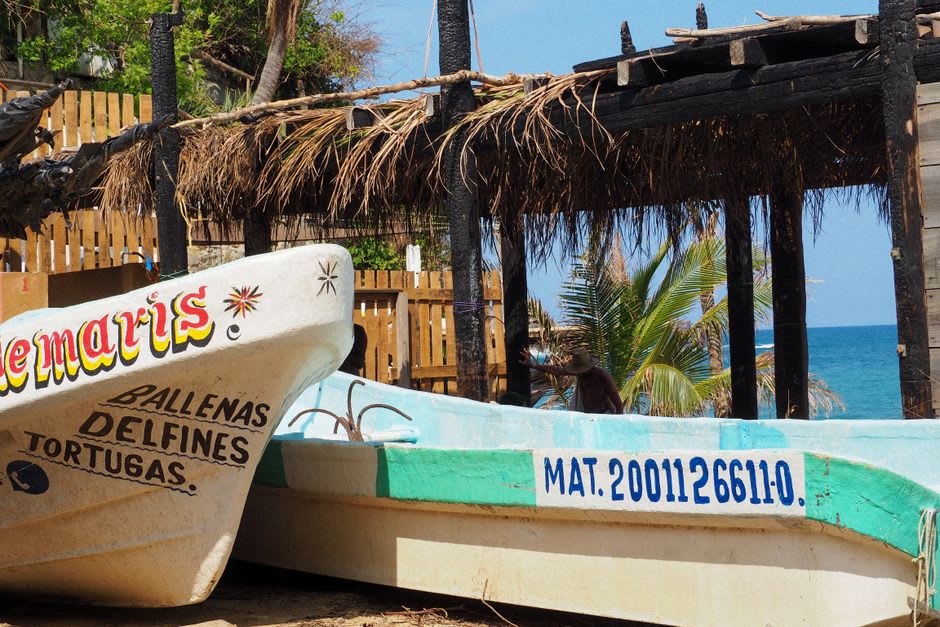
There is a palapa at the western end of the beach whose name I never learned because it doesn’t need one — it’s the palapa, the only one with plastic chairs actually on the sand and a blackboard that changes depending on what arrived that morning. I ate pescado a la talla four days running and feel no guilt about this. The fish is rubbed with adobo and grilled over coals until the skin chars at the edges; you eat it with a stack of corn tortillas and a salsa verde that somebody makes on the premises and that I have thought about since. On my last morning I ordered huevos con frijoles at half past seven and sat there until the fishing pangas started coming back around ten. The owner brought me a second coffee without being asked. That is the kind of hospitality that doesn’t exist in places that know they’re being reviewed.
Staying in a Village With One Street
San Agustinillo is a single road running parallel to the beach, with a handful of small posadas set back from it and a few hammocks strung under palms that belong to nobody in particular. Accommodation is spare by design — there are maybe three places to sleep, none of them expensive, none of them what you’d call a hotel. Bring cash from Puerto Ángel or Pochutla because the village has no ATM and the posadas do not always have signal strong enough to run a card reader. The correct way to stay here is two nights minimum: swimming in the morning, eating at the palapa at midday, lying in a hammock while the afternoon gets unreasonably hot, repeating. By day two you will stop checking your phone for reasons you couldn’t fully explain.
Getting There
From Puerto Escondido, take a colectivo toward Pochutla along Highway 200 and ask to be dropped at San Agustinillo — about an hour and a half. From Oaxaca City, the drive is four and a half hours via Route 175 through the sierra, which is worth doing at least once. Taxis from Puerto Ángel, fifteen minutes away, are the easiest option if you arrive with luggage.