Santiago Juxtlahuaca
"The Mixteca Baja is Oaxaca's wild west, and Juxtlahuaca is where you go to find it."
Nobody at the second-class terminal in Oaxaca city had much to say about Juxtlahuaca except that it was far. Four hours southwest along roads that climb and then descend through increasingly dry sierra, the green valleys giving way to ochre canyons and columns of organ pipe cacti — a landscape that looks borrowed from somewhere else entirely. I arrived on a Thursday, which is market day, which turned out to be the only timing that mattered. The bus pulled in around nine in the morning and the market was already at full volume. I didn’t check into my room until two in the afternoon.
Three Languages Before Noon
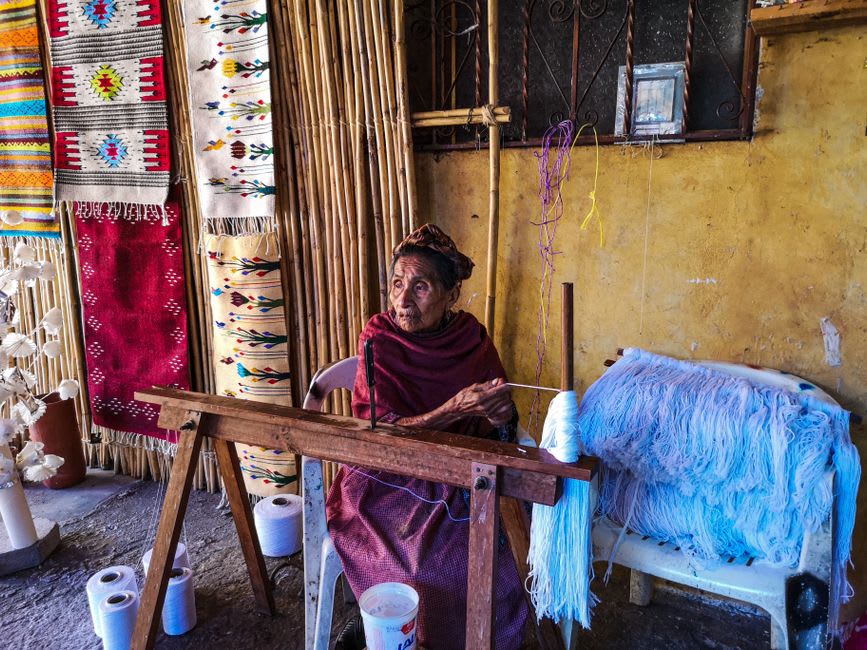
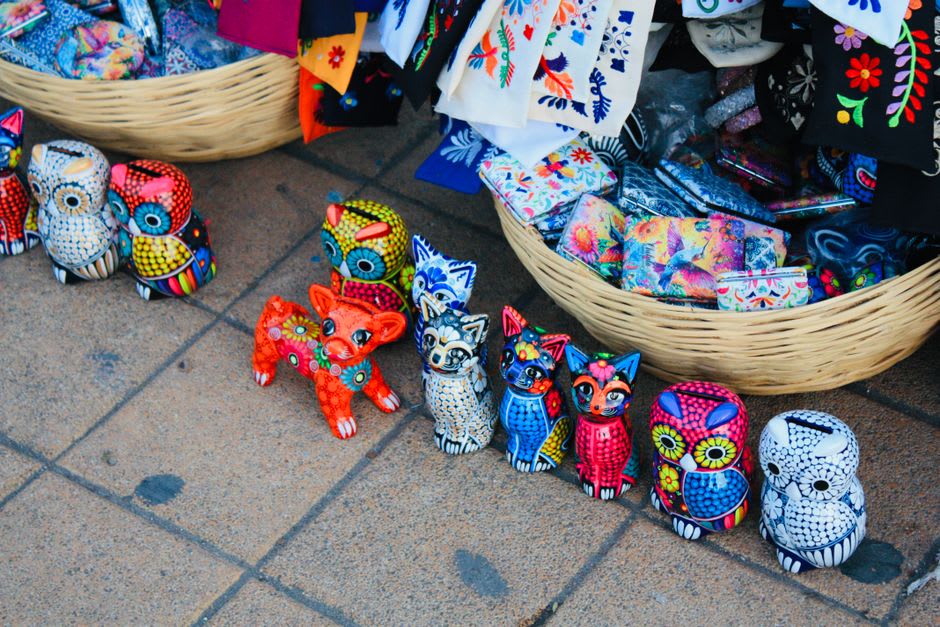
The market at Santiago Juxtlahuaca is the kind of place that makes every artisan shop in Oaxaca city feel like a pale translation. Mixtec, Triqui, and Amuzgo vendors occupy different sections of the covered hall and its surrounding streets, each community identifiable by the textiles they wear as much as the ones they sell. The Triqui women arrive in huipiles of dense red embroidery — some of the most technically demanding textile work in Oaxaca — and spread their own out on folded plastic tarps. Prices here are not tourist prices. Nobody expects you to be there.
I spent an hour in the section I can only describe as the apothecary wing: dried herbs packed into sacks, brown paper bags of copal resin, medicinal roots I couldn’t name, and at least four varieties of chapulines ranging from fine dustings you’d shake over an egg to fat grasshoppers the size of a thumb. A woman sold me a bag of the smaller ones, tossed with lime and chile de agua, and I ate them standing at the edge of the market trying to look like I’d done this a hundred times before.
The Bones of the Mixteca Baja
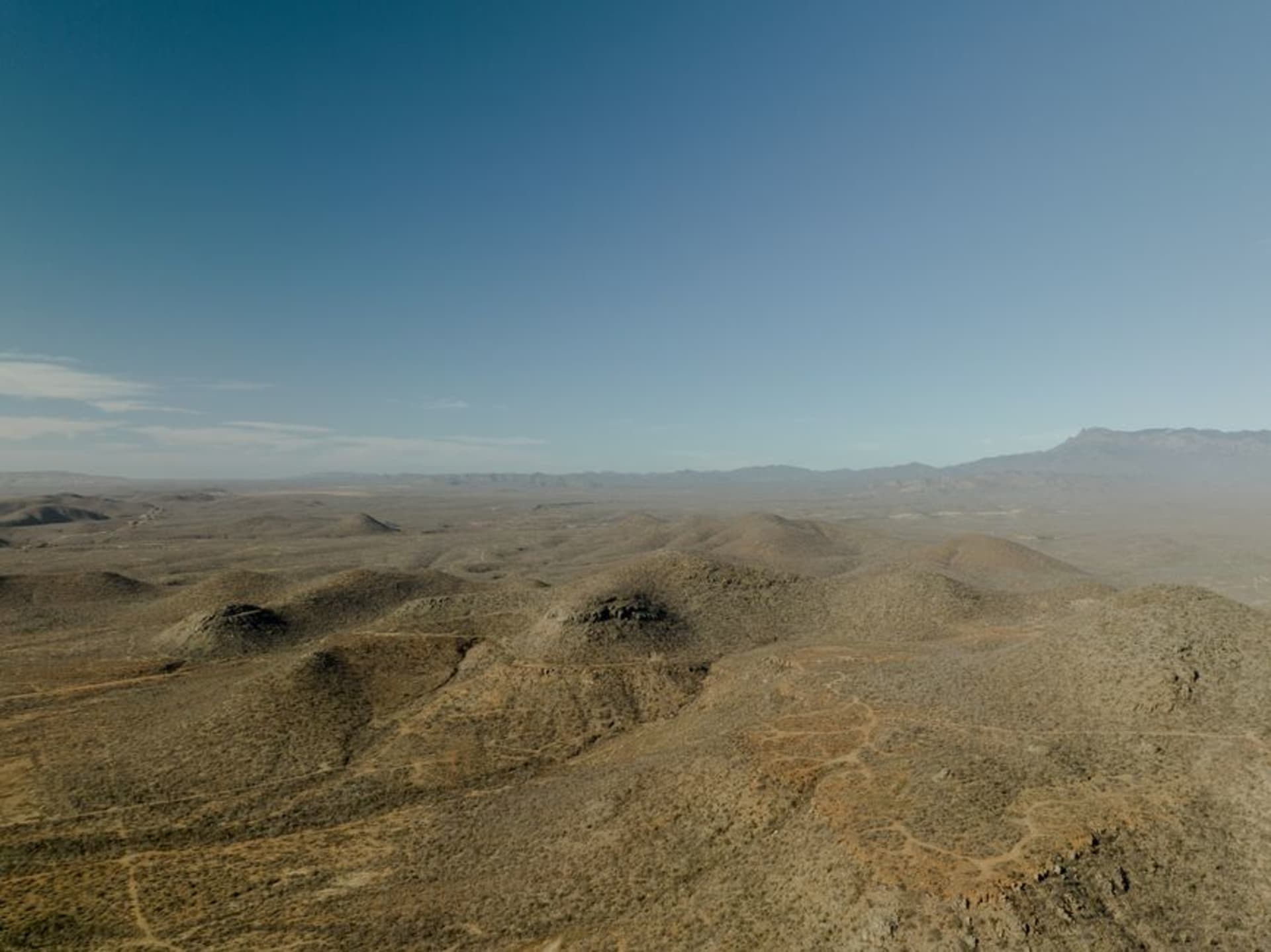
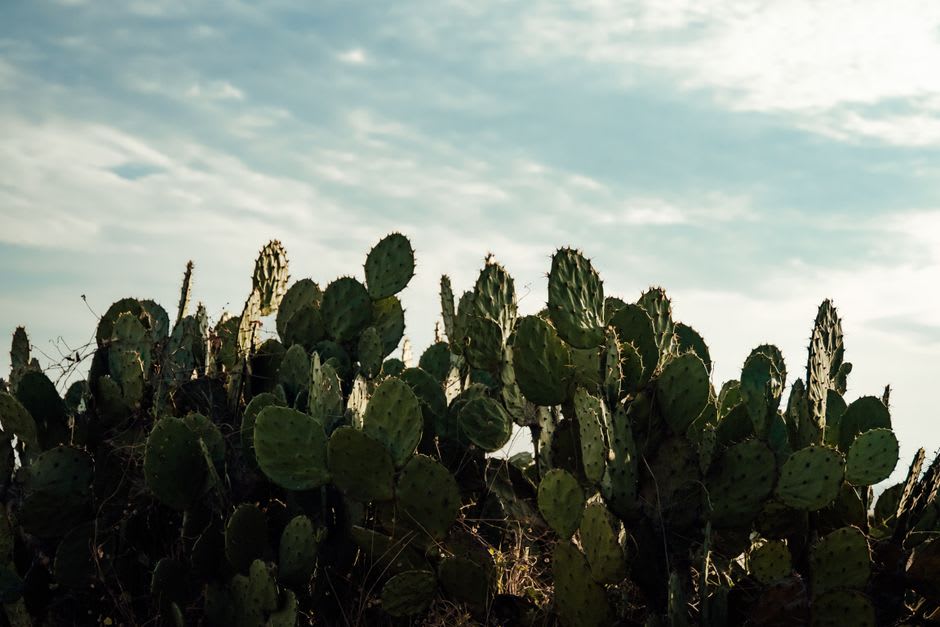
What surprised me most about Juxtlahuaca — more than the market — was the landscape. Coming from the coast, I’d grown used to Oaxaca as lush: wet hills, cloud forest, the Sierra Sur draped in green. The Mixteca Baja is something else. The hills around town are eroded down to their bones, streaked rust and pale yellow, studded with cardón, nopal, and the occasional copal tree clinging to a slope it has no business being on. The roads out of town drop into canyons that look more like the Hidalgo barrancas than anything else I’d seen in this state.
A few kilometers north, the terrain flattens slightly and the mountain communities that produce much of the region’s pottery and weaving come into view. I hired a driver for half a day and went nowhere in particular — just followed the canyon roads until they narrowed into dirt tracks and the silence outside the window became absolute. It costs almost nothing to do this, and it’s worth every kilometer.
The Fondas Behind the Market Hall
For food, I ate at the small fondas tucked behind the main hall — the kind where the menu is whatever the cook made that morning and the price is written on a piece of cardboard taped to the wall. On Thursday I found a bowl of coloradito de guajolote that was the right amount of dark and smoky, served with yellow-tinged beans and tortillas made from a masa I didn’t quite recognize. The corn here is different from coastal Oaxaca, and it shows in everything. For lodging, the options are functional rather than charming: a handful of small hotels near the central plaza. I stayed at one on Calle Independencia where the shower worked and the windows opened onto street noise at six in the morning. Juxtlahuaca doesn’t cater to visitors, which is most of its appeal.
Getting There
From Oaxaca city, second-class buses depart from the Central de Abastos terminal; the journey runs roughly four hours through the Mixteca Alta and then down into the Baja. From Puerto Escondido there is no direct route — you’ll connect through Oaxaca city or push north via Sola de Vega, neither of which is quick. Thursday is market day, and the only real reason to plan around anything else.