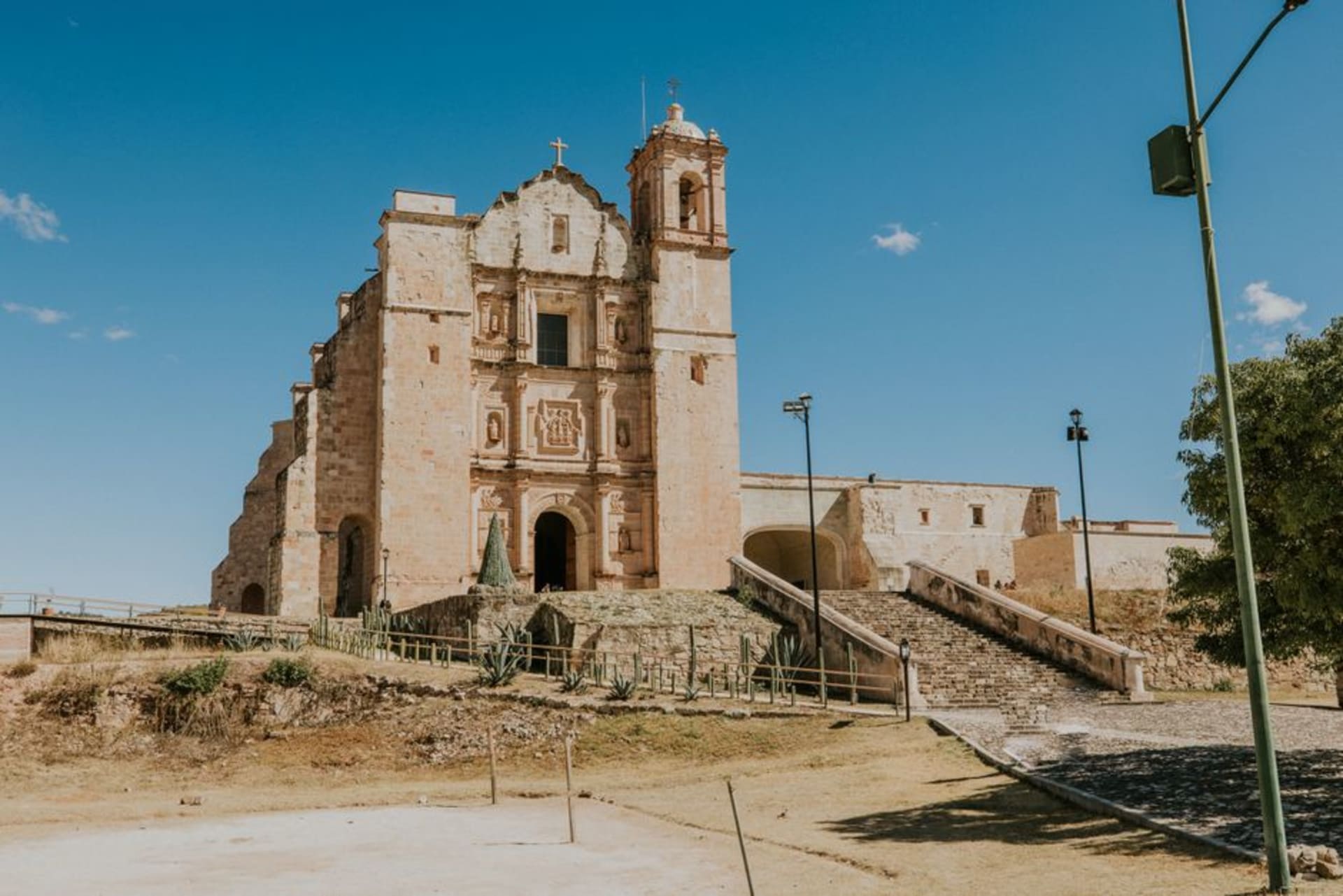
Cuilapan de Guerrero
"Cuilapan is a ruin that out-stages most intact churches in the country, including several that spent considerably more money finishing themselves."
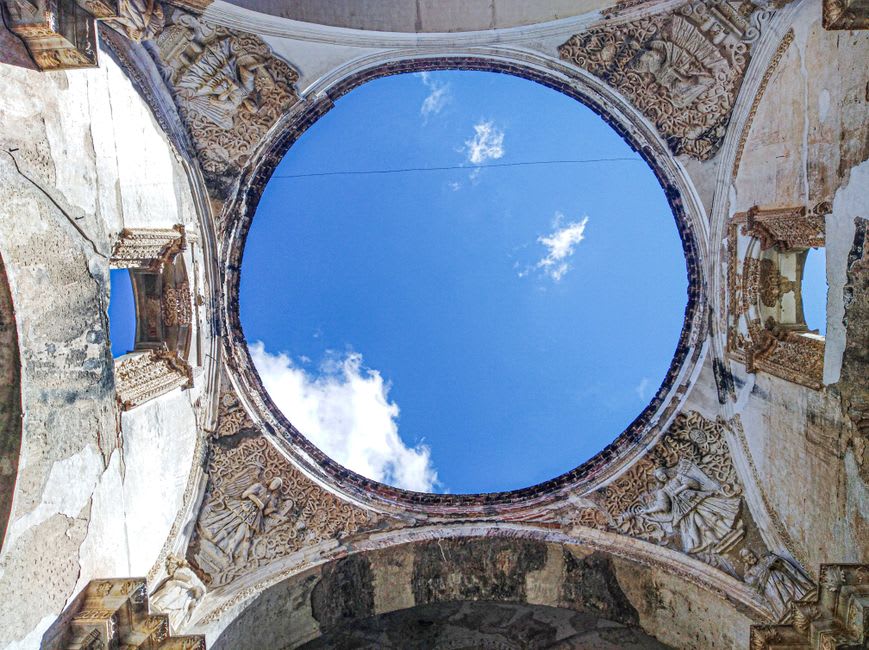
The colectivo to Cuilapan leaves from the second-class terminal in Oaxaca and costs twelve pesos. It deposits you on the highway, you walk toward a low stone wall, you pass through a doorway, and then the scale of the place arrives before anything else does. A basilica with no roof. The columns still standing, the arches still holding their geometry, the nave open to whatever the Oaxacan sky decides to offer that afternoon. I had read about it beforehand and still felt unprepared. The thing nobody tells you about Cuilapan is that incompleteness is not its problem — it is precisely its power.
What the Dominicans Left Unfinished
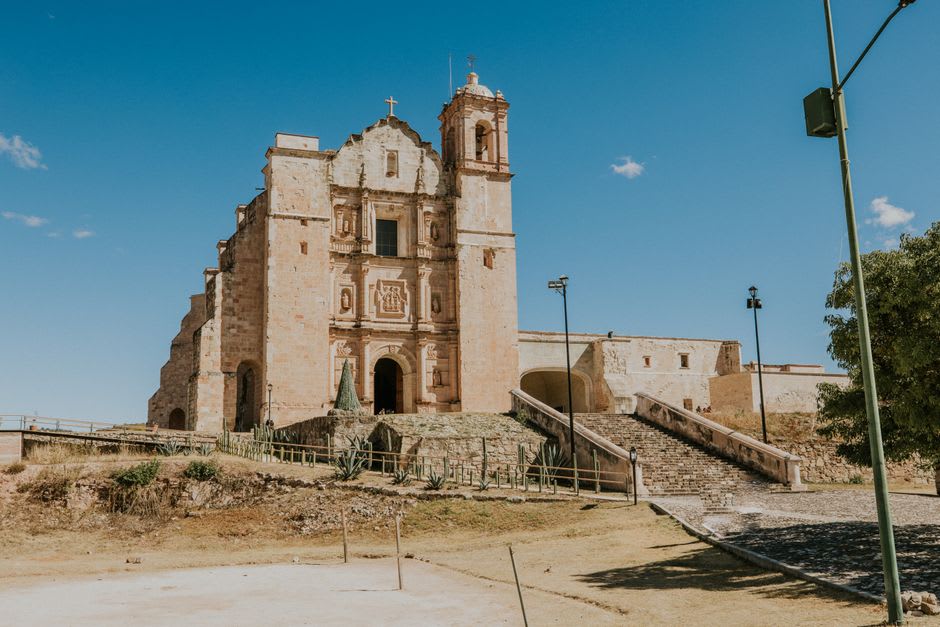
Construction on the convent began in 1555, commissioned by the same Dominican order that built Santo Domingo in Oaxaca city — the church tourists pay forty pesos to enter. Cuilapan gets a fraction of those visitors and arguably earns more of them. The open-air basilica, abandoned before the roof could be completed, runs roughly a hundred meters in length, its proportions closer to a French cathedral than a provincial chapel. Stone columns divide the interior into three naves; carved capitals and traces of ornamental detail survive in places, enough to tell you what the ambition was. What has worn away matters less than what remains. Walking the full length of it, the sky does what a ceiling does without any of the limitation. There is a quality to the light inside Cuilapan — horizontal and unfiltered and different by the hour — that I have not found duplicated in any of Oaxaca’s finished churches. The attached completed church, smaller and still actively used by the community, sits adjacent to the ruin. The contrast between the two buildings is itself a kind of argument.
The Room Where Guerrero Waited
Vicente Guerrero was a complicated figure even before he became inconvenient enough to be shot. Of mixed African and indigenous descent, he fought alongside Morelos during the independence war, became president of Mexico in 1829, and abolished slavery within his first year in office. He was then betrayed by a political rival who arranged his kidnapping via an Italian sea captain paid a bribe to deliver him. The cell where he spent his final days before his execution on February 14, 1831, is preserved inside the convent complex — a plain whitewashed room that the site curators have made into a small but affecting memorial. The story is taught in every Mexican school. Standing in the actual room gives it a weight that no textbook paragraph can. The patio outside, where they shot him, is visible through the doorway. He was fifty-two. I stood there long enough that the other visitors, two of them, left before I did.
The Town Beside the Monument
Cuilapan de Guerrero is a working Zapotec community, not a destination built around the convent. The streets adjacent to the site contain the usual functional disorder of an Oaxacan town — a mercado municipal on the main square, a taquero who appears by midday, a woman selling tlayudas on a comal outside the smaller church. After my second visit I ate a bean-and-quesillo tlayuda for thirty-five pesos, standing at a folding table on the sidewalk. The town asks nothing more of you than that. Arrive early on a weekday and the convent is nearly empty. Oaxacan families tend to come out on weekend afternoons, which has its own warmth. Either works; the building handles both.
Getting There
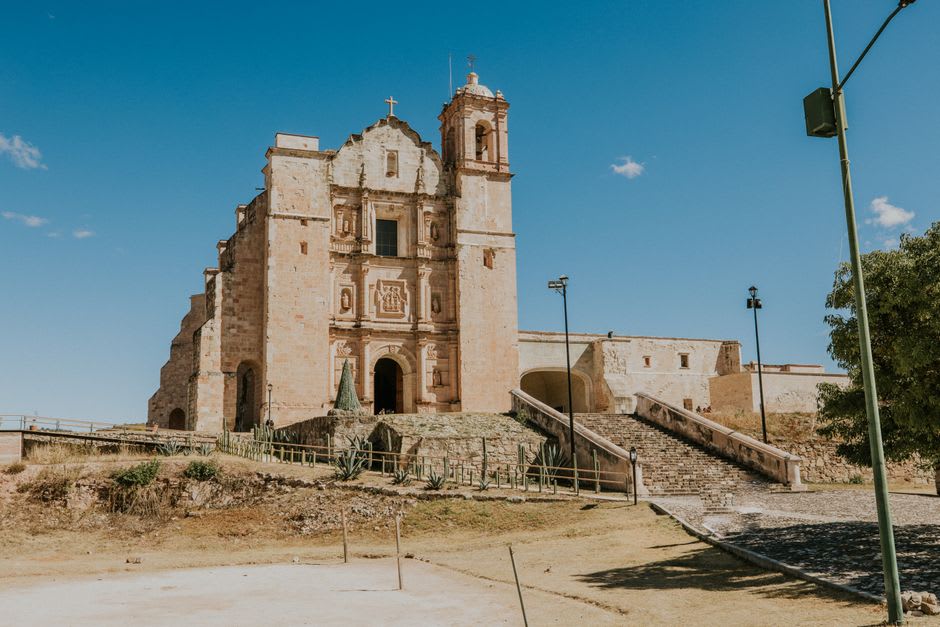
Colectivos to Cuilapan leave throughout the day from the second-class terminal near Central de Abastos in Oaxaca city for around twelve pesos — the ride takes under twenty minutes. A taxi runs 80 to 100 pesos. The convent charges a small entrance fee, around thirty pesos when I last visited. You can combine the trip with Zaachila, a few kilometers further south, which has a worthwhile Thursday market and its own archaeological zone.