Apoala
"The canyon walls close in as you descend toward the village, and somewhere in that narrowing you stop needing the mythology to explain why people believed the world began here."
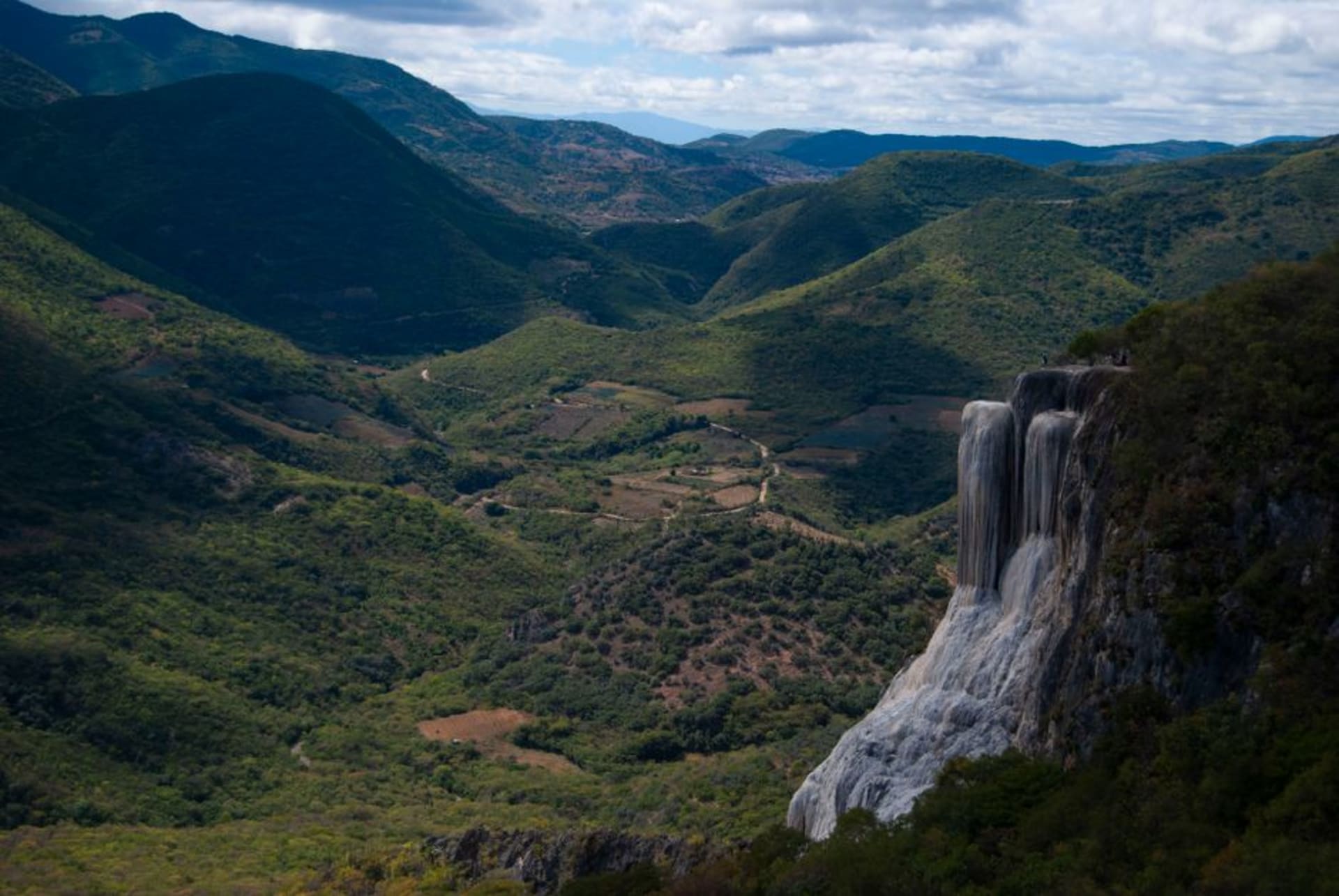
Apoala is not difficult to find on a map. It is difficult to reach, which is a different problem. The junction from the highway near Nochixtlán is easy to miss, and the thirty kilometers of unpaved road that follow take longer than they look — dropping through scrub oak and maguey and eventually into a narrowing that becomes a canyon. I arrived in late morning, three and a half hours out of Oaxaca city. The village sat on the valley floor, pale and quiet, a school and a church and a handful of houses in whitewashed plaster. Below the houses, the Apoala River was doing something I was entirely unprepared for.
Cola de la Serpiente
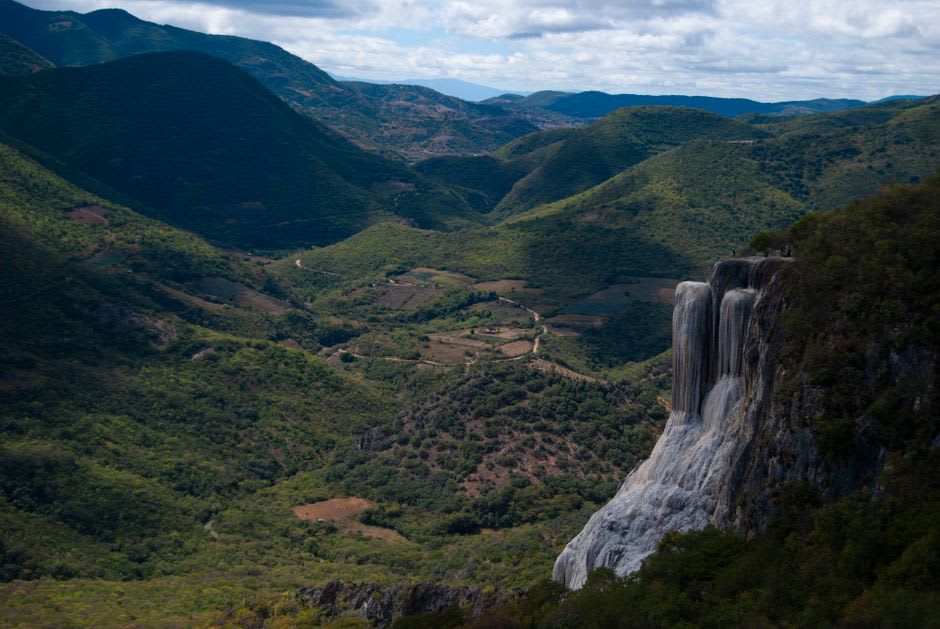
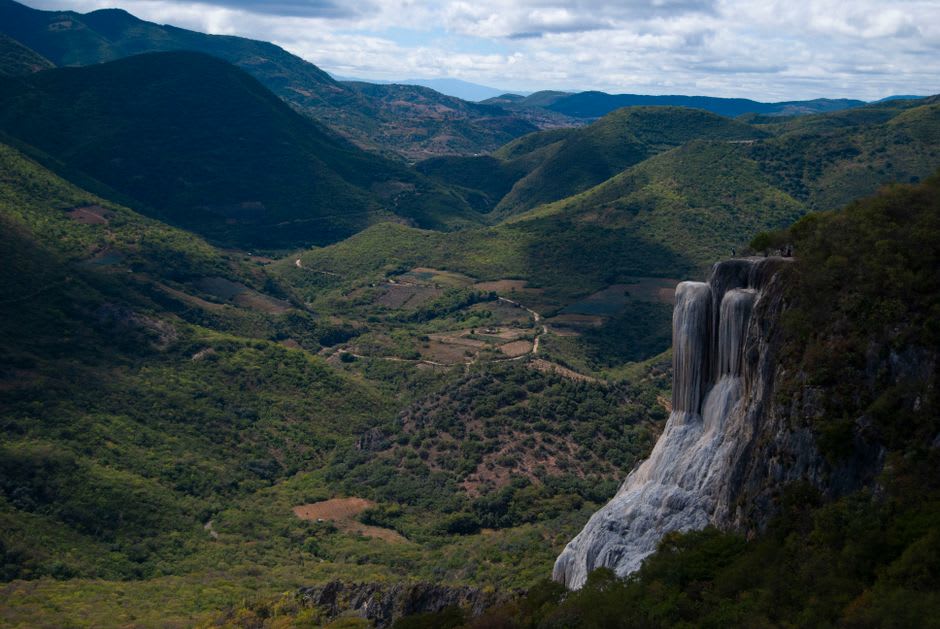
The canyon that holds Apoala is limestone and very old, and the river that carved it has produced at least one specific miracle: a natural arch of pale rock spanning the gorge, and beneath it a pool of water so startlingly turquoise it looks like someone adjusted the saturation. The locals call the waterfall that feeds it Cola de la Serpiente — the Serpent’s Tail. You reach it by walking the canyon floor for about forty minutes from the village, fording the river twice in places where the walls press close enough to touch with both hands. There are no barriers, no entrance booth worth noting, no guides required unless you want one. I swam there on a Tuesday in November with two other visitors and a dog that had followed us from the edge of the village. The water is cold enough to clarify your thinking completely.
Where the World Began
The Mixtec codices — the Vindobonensis most explicitly — place the creation of the first humans here at Apoala, where a man and a woman emerged from two trees growing from a rock beside the river. This is not a minor footnote in Mixtec cosmology. Apoala is where everything begins. Standing in the canyon, it is not hard to understand why someone chose this place for that story: the limestone walls block the horizon entirely, the river appears from the rock as if conjured, and the silence has a quality that feels less like absence and more like intention. There is a marked trail to the sacred trees — or to the rocks where the codices describe them. What you find there is modest. The walk through the canyon is the point, and that walk is extraordinary.
The Comedor by the Church
The village has one comedor, and it opens when there are visitors to feed — ask at the presidencia if the door is closed, which it usually is before noon. They serve tasajo and black beans and fresh tortillas from local corn, and the mezcal that appeared at the end of my meal arrived in a small glass with no label and no explanation and was very good. There is no hotel in Apoala that I would recommend sleeping in. The smarter approach is to arrive early from Oaxaca, spend the day in the canyon, and drive back before dark. A few families do rent rooms if logistics require it, and the village president’s contact information circulates reliably on Mexican hiking forums if you need to arrange something in advance.
Getting There
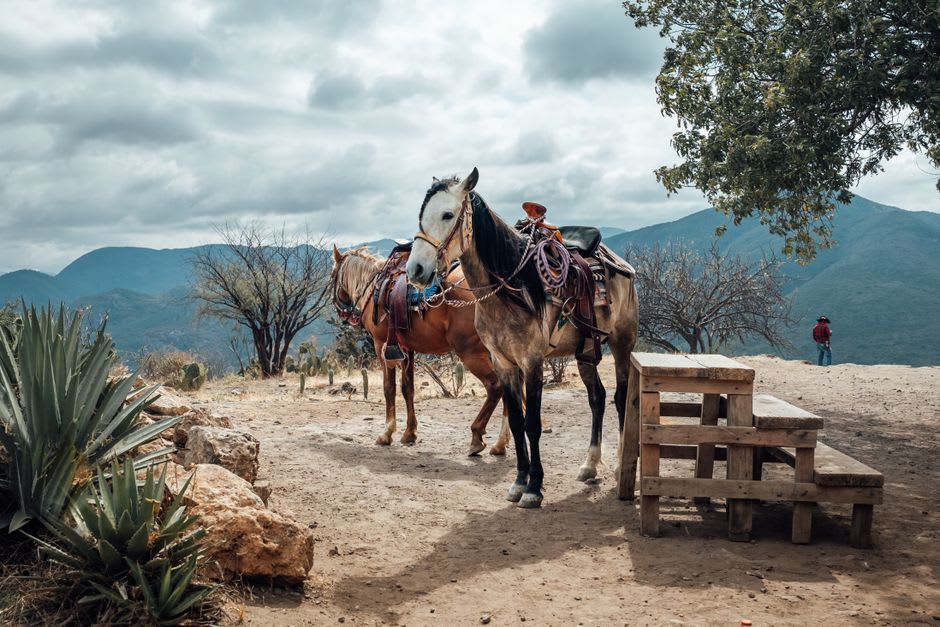
Apoala sits roughly three and a half hours from Oaxaca city by car. Take Highway 190 north toward Nochixtlán, then follow signs toward San Miguel Chicahua and eventually Apoala — the junction is easy to miss on the first pass. No direct buses reach the village; second-class buses go to Nochixtlán, from which a taxi or arranged ride covers the remaining unpaved stretch. The dry season, October through April, is when the road is most reliable and the river runs clear.