We found Chacala by elimination. We had been to Sayulita on a recommendation from someone we trusted, arrived on a December weekend, and found a village that had reorganized its entire economy around producing the same experience for the maximum number of people simultaneously. The beach was fine. The tacos were fine. The mezcal bar with the painted mural was fine. Everything had the texture of something that had once been specific and had been smoothed, by the pressure of too much attention, into a surface with no grip.
Someone at the hostel told us to take the bus north. An hour up the coast, in a bay that had no particular reason to be famous — no celebrated surf break, no celebrity sighting, no magazine article that started it — was Chacala. We came for two nights and stayed five.
Chacala occupies a crescent bay about two kilometers long, with the village at the northern end and a headland at the south where the swell gets interesting for surfboards. The beach itself is uncrowded even in high season by the standards of the Riviera Nayarit coast — the density of development has not settled here in the way it has settled twenty kilometers south. There are palapa restaurants on the beach. There is a small street of family posadas and one or two larger lodges. There is no Starbucks, no chain anything, no boutique taco stand with a curated playlist. There is a store that sells beer, ice, and tortillas. There is a pescador who brings whatever he caught to the palapa on the north end in the early afternoon.
This is not nothing. This is, in the current state of the Pacific coast, extraordinary.
The Beach and the Water
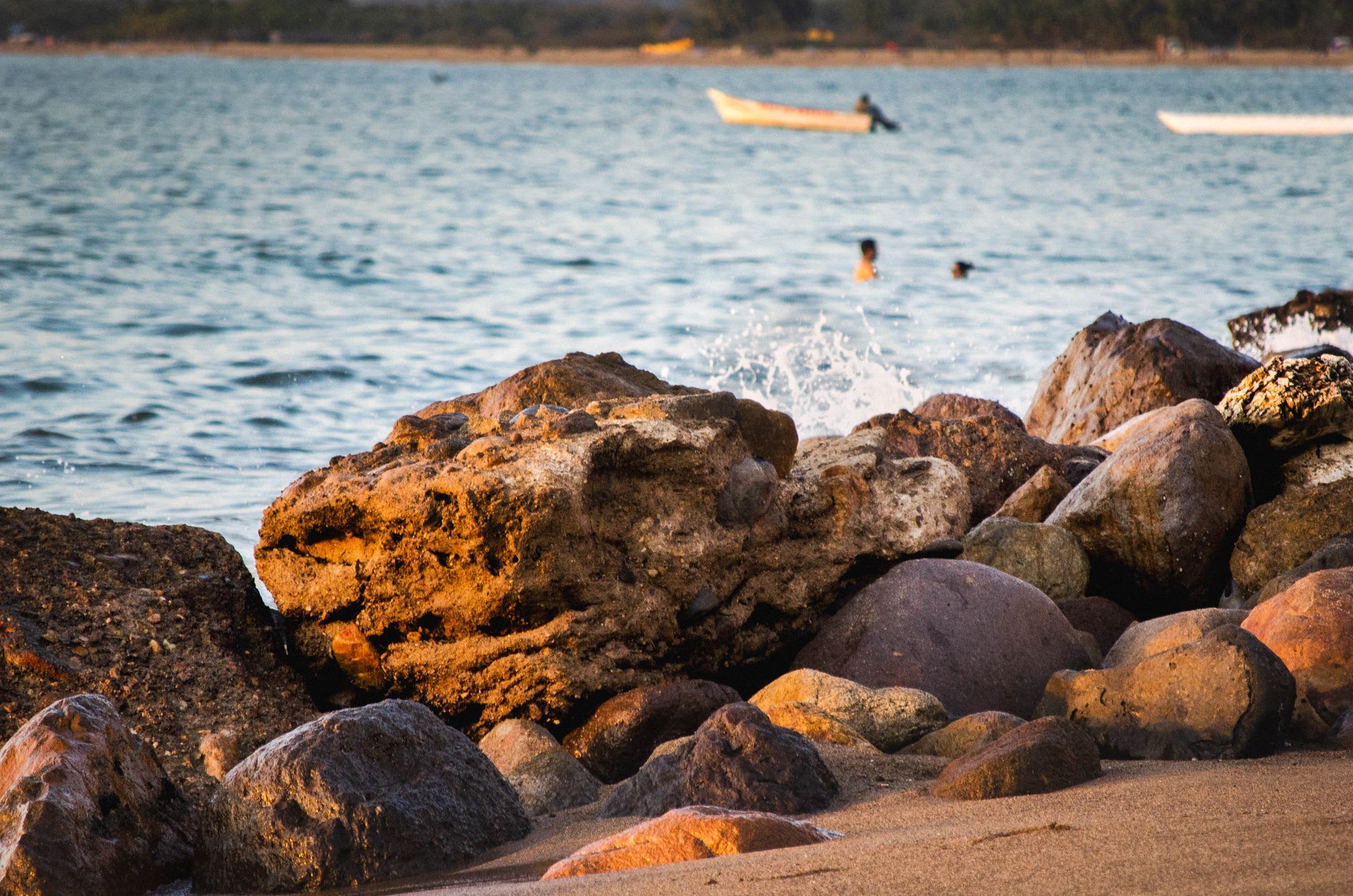
The Chacala bay faces west-southwest, which means it catches the afternoon sun directly and is sheltered from the north swells that batter more exposed beaches in winter. The water color changes through the day: green-gray in the early morning, translucent blue by mid-morning when the sun gets above the headland, darker green again in the late afternoon when clouds build offshore. The bottom is sand with some rock at the southern end near the headland.
Surfing at the south end works on west swells, which Nayarit picks up from October through March. The waves are not large by Nayarit standards — this is not Punta Mita or Sayulita’s south break — but they are consistent and, more importantly, uncrowded. On the three sessions I paddled out here, I shared the break with a maximum of four other people, two of whom were local. That ratio is not available at any better-known beach on this coast at any time of year.
For non-surfing water: the bay is protected enough for swimming. Sea turtles come into the shallows in the evenings from September through November — I saw three in a single dusk swim in October, dark shapes moving below the surface that resolved when they came up to breathe. An older woman from the village, who had been watching me stop dead in the water, came down to the waterline and explained, in slow and patient Spanish, that the turtles come every year and that her family had stopped eating the eggs before she was born. She seemed genuinely pleased about this. I found I was pleased too.
Whale sharks, which appear offshore in the Banderas Bay region from October through March, occasionally come into the bay. A fisherman showed me photos on his phone of a four-meter whale shark cruising within fifty meters of the beach. No dive operation has organized this into a bookable tour yet. For now it is just something that happens to people who happen to be in the water.
Eating at the Palapa
The eating in Chacala is organized around fish and the daily catch. The palapa restaurants on the north beach — there are three of them, each with plastic chairs, sand floors, and tables that list slightly in whatever direction the sand shifted last night — serve what came in that morning and do not apologize for the limitations of the menu.
I ate grilled huachinango (red snapper) here on four consecutive evenings. The fish arrived whole, grilled over wood, with lime and salt and a bowl of salsa roja that was so simple — blended tomato, chile de árbol, a little garlic — that it exists only to not interfere with the fish. On the side: rice, black beans, warm tortillas from a comal in the back. The meal cost about the equivalent of eight euros. It was the best meal I ate on the Nayarit coast, better than anything in Puerto Vallarta at twice the price.
The woman who ran the palapa where I ate most evenings told me she had been in Chacala her whole life and that her grandmother had run the same spot on the same beach before there was a restaurant structure — just a fire and a grill set up in the sand. She showed me a photograph from what appeared to be the 1970s: her grandmother cooking fish on the beach, and behind her, an empty bay that looked essentially identical to the bay outside the palapa window. The preservation of that image across fifty years was not accidental. It required consistent decisions not to do the obvious thing.
The morning fish taco vendor, who sets up near the bus stop at around eight in the morning, serves tacos with whatever the previous night’s catch left over — typically dorado or sierra — with a soft tortilla, cabbage, and a crema so fresh it has a grassy smell. There is no English on the sign. There is sometimes a line of local fishermen waiting before I get there.
The Headland Walk
The path over the south headland connects Chacala to a smaller, rockier cove beyond — Mar de Jade, now a yoga-and-wellness retreat that is the most organized tourist facility in the area but remains quiet by any coastal standard. The walk takes twenty minutes and passes through dry tropical forest where white-throated magpie-jays — a species specific to this Pacific coastal zone, electric blue and raucous — move through the branches in groups of six or eight, making noise disproportionate to their size.
The headland from above gives the best view of the Chacala bay — the full crescent visible, the village at the north end, the fishing boats pulled up on the sand, the forest coming down to the edge of the beach. From this angle you can see how small the bay is, how contained, and why it has the quality it has: it is not a significant feature of the landscape. It is a minor indentation in the coast. Minor indentations don’t attract attention. Attention is what destroys places.
Getting there: Buses from Puerto Vallarta’s central bus terminal to Las Varas take about ninety minutes; from Las Varas, a collective taxi or local bus covers the last twelve kilometers to Chacala. Alternatively, rent a car in Puerto Vallarta and drive north on Highway 200 — gives you the flexibility to stop at the smaller bays along the way, some of which are in the same early-Chacala state.
When to go: November through March for the best weather — dry season, manageable swell for surfing, whale sharks offshore. October for sea turtles. Avoid Semana Santa and Christmas week if you can; Chacala’s relative calm is a finite resource and fills up during those periods. Come Monday to Thursday for the most solitude. Come on a Tuesday and you will feel like you have the bay to yourself, which you essentially will.