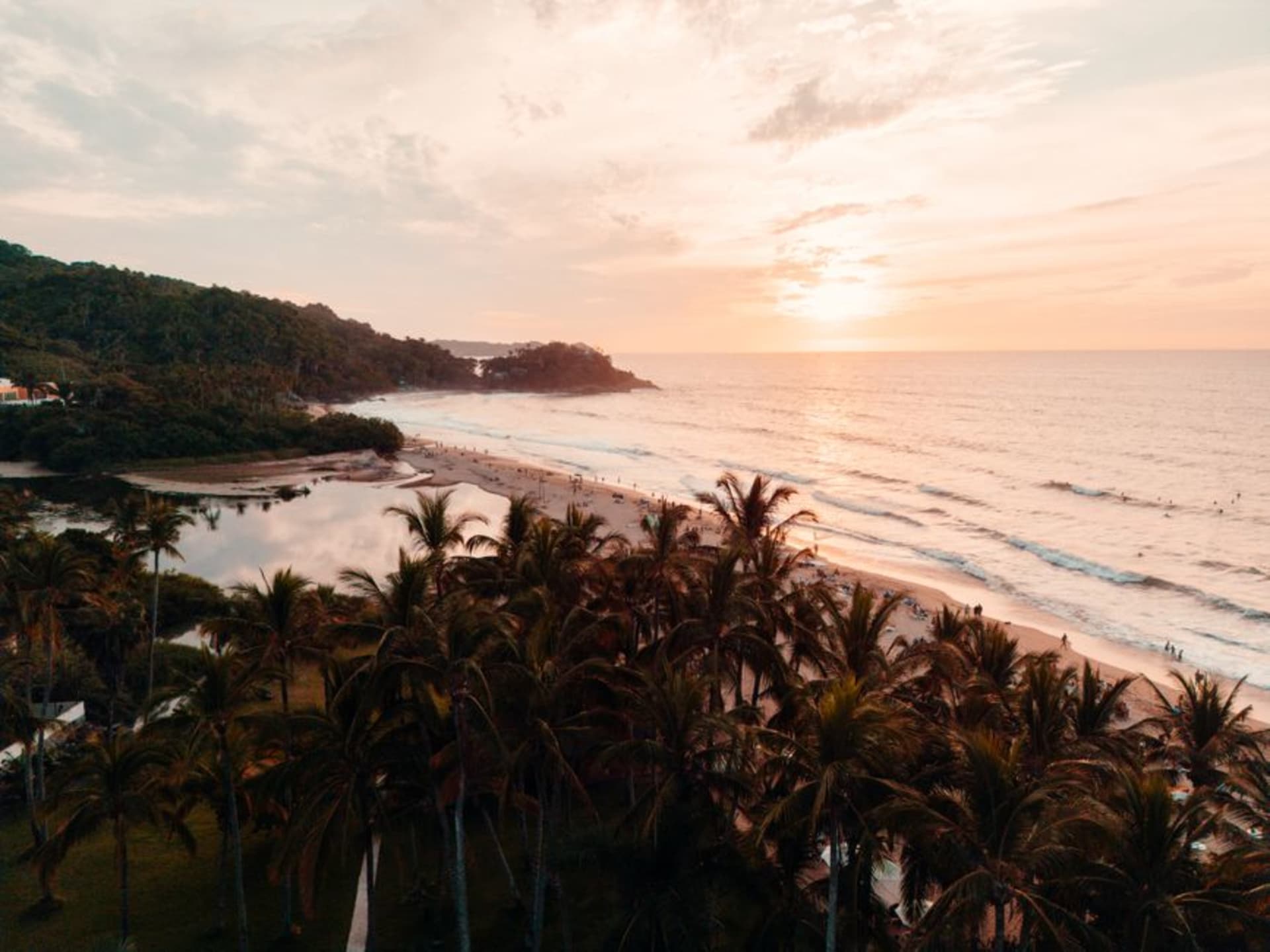
Bahía de Matanchén
"I watched a surfer ride for what felt like four minutes without falling, then glanced at my watch and understood that time works differently here — or maybe surfing does."
I drove south from San Blas one afternoon without a plan, which is the best condition for arriving somewhere that refuses to be summarized. The road bends through a tunnel of palms and then the bay opens — several kilometers of grey-green water backed by jungle hills that absorb the light as if they are trying to keep it. I pulled over, cut the engine, and sat for a while. A frigate bird crossed the sky at altitude, slow and deliberate. Nobody had told me this place existed.
The Longest Left in Mexico
The wave at Matanchén is not the tallest or most violent. What it offers instead is duration: on the right swell, a well-placed surfer can cover three, four, maybe five kilometers without the wave collapsing, running parallel to the shore in a slow, generous peel that looks almost mechanical from the sand. I watched one session from a white plastic chair outside a mariscos shack, nursing a cold Modelo, and I kept second-guessing what my eyes told me. The surfers — mostly Mexicans from Tepic and Guadalajara, a handful of Europeans who had figured out the secret — walked back along the waterline after each ride, grinning in the unselfconscious way that people grin when something genuinely remarkable has just happened to their body. The bay works best between June and October when the northwest swell runs, but even in the dry season, small waves pulse through here with a rhythm that makes sitting still feel productive. If you have never surfed and have no intention of starting, the spectacle alone is worth the detour from the highway.
The Shore Road Kitchens
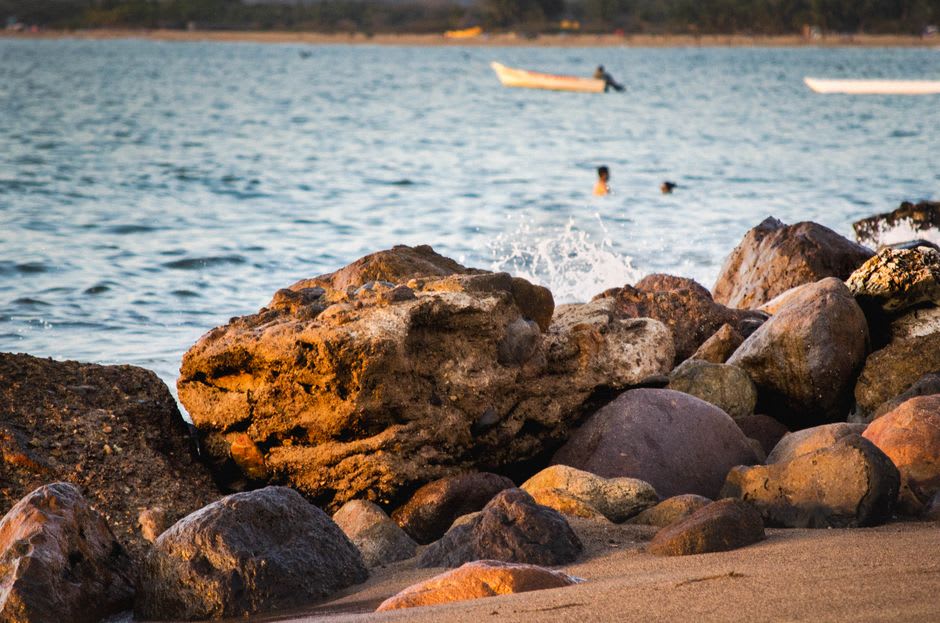
The restaurants along the Carretera Bahía de Matanchén do not advertise and do not need to. Each is a few plastic tables under a palapa roof, a chest freezer with drinks, and a cook behind a gas burner who has been making the same three or four things for twenty years. I ate aguachile de camarón at a place the locals call El Pelícano — lime-bright, laced with serrano, served with tostadas still warm from the comal. The camarones came from the bay that morning; the shrimper who caught them was, I was told, the cook’s brother-in-law. I tried the caldo de pescado the following day at the next shack over and found it less memorable, which is how this coast works: you find your place and you stay loyal. Order the mariscos, not the hamburguesas listed on the secondary chalkboard. Trust the specials written in marker on cardboard propped against the hot sauce bottles.
Frigates and Fading Light
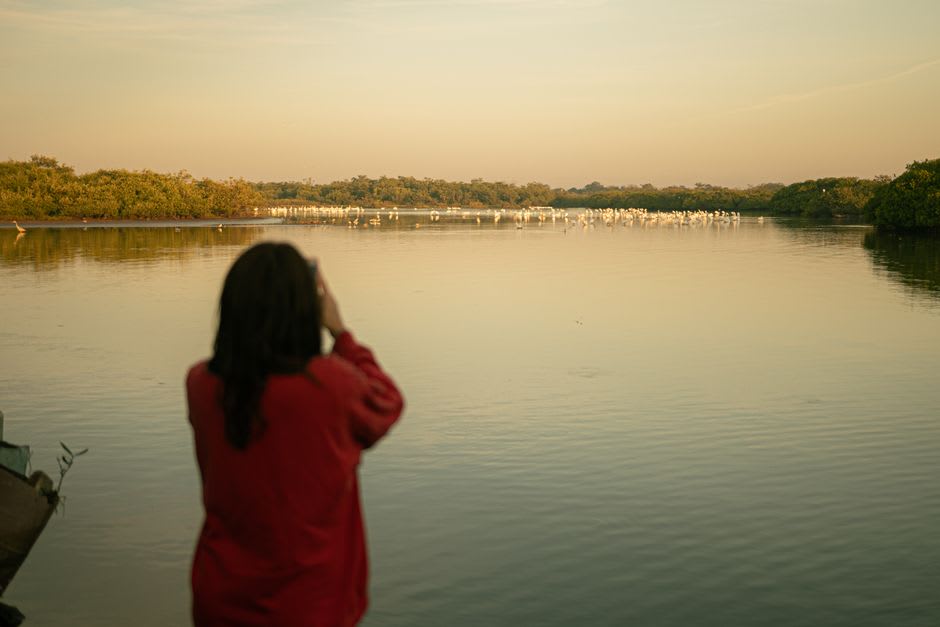
At the south end of the bay, where the beach gives way to estuary, a colony of magnificent frigates nests in the mangroves along the Estero San Cristóbal. In breeding season the males inflate their crimson gular pouches to the size of balloons — a display so absurd and so precise it almost seems choreographed. The better reason to come at dusk, though, is what happens to the water: the light moves across the bay in a way that changes every five minutes in the hour before sunset, going from silver to amber to a deep copper that turns the frigates into silhouettes against an orange sky. I have seen this quality of light in the Camargue once, standing at the edge of a different estuary, and I did not expect to find it again here, six time zones west.
Getting There
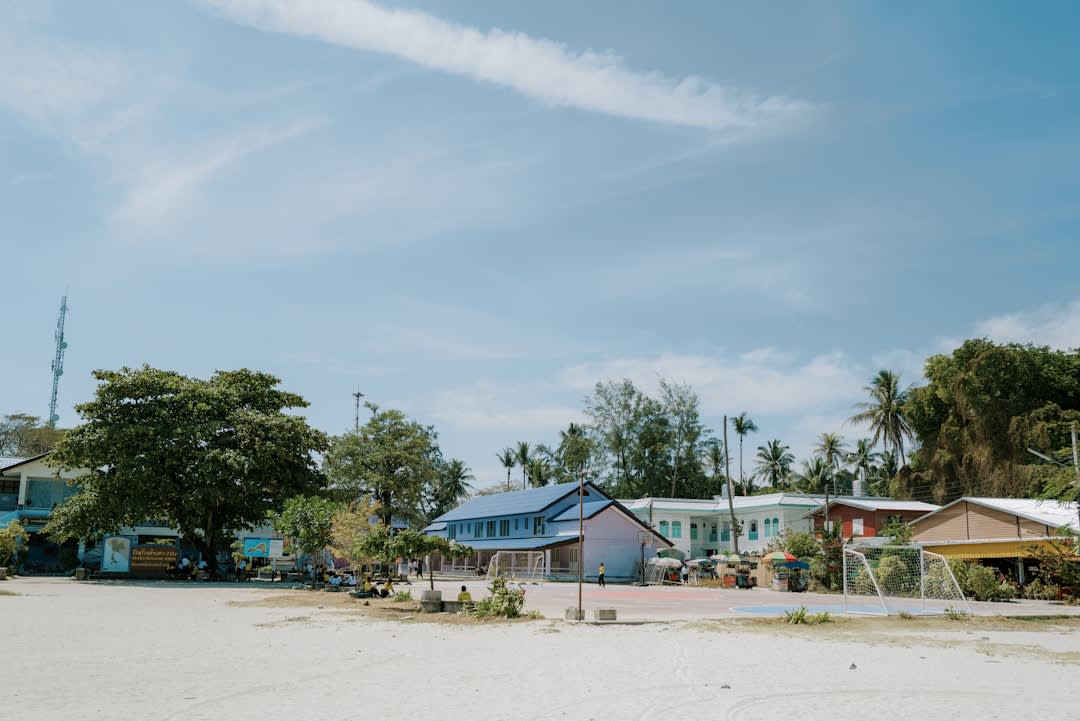
San Blas is the nearest town with lodging, roughly seven kilometers north on the Carretera Federal 54D. From San Blas, any collectivo or taxi heading toward Aticama passes the bay within ten minutes. From Tepic, the state capital, it is about ninety kilometers via the road through San Blas. There is no direct bus to the shore itself — the coastal road requires your own wheels or a negotiated taxi fare from San Blas.