Totolapan
"The faces in the murals were not the faces the Augustinians had in mind. That's the whole point."
The road to Totolapan climbs out of the Cuautla valley and doesn’t stop climbing for about twenty minutes. The vegetation changes as you go up — from the dry scrub and maguey of the eastern Morelos lowlands into pine and oak and the kind of dry forest that smells of resin and turned earth. By the time the town appears, the Morelos valley below has become a wide, hazy floor, and Totolapan itself sits at about 1,800 meters in a bowl in the sierra with views that on a clear morning are frankly theatrical.
I came up in the morning when the mist was still on the valley. It was sitting in the low areas between the hills, whitish and dense, and the town was above it, which gave the arrival a slightly cinematic quality that I was aware was weather and not inherent drama. But still.
The Convent and Its Murals
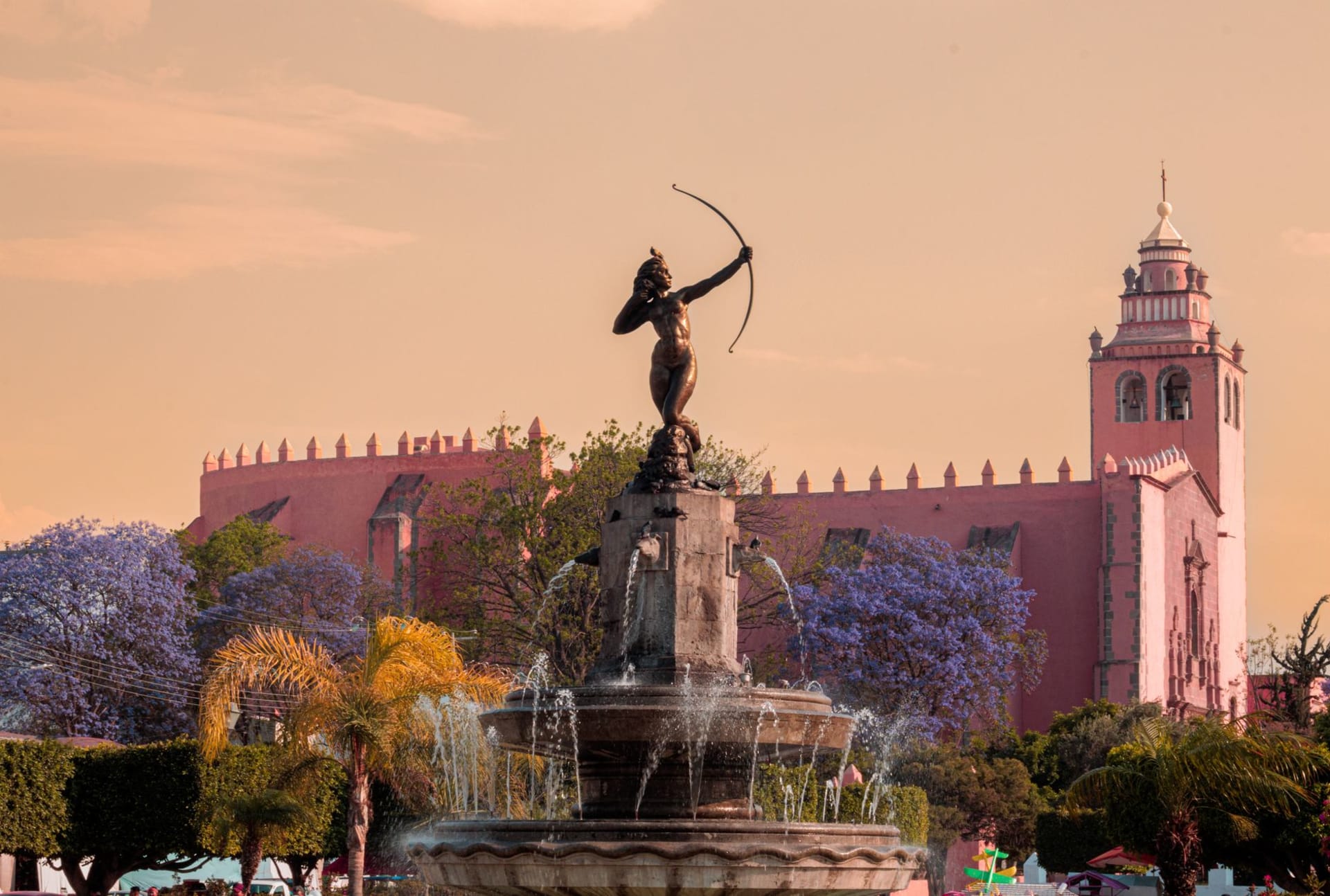
The Ex-Convento de San Guillermo is the reason to come to Totolapan, and it doesn’t disappoint. The Augustinian order built it in the mid-16th century as part of their evangelization campaign through Morelos, and like the best of their Morelos convents — Oaxtepec, Tlayacapan, Yecapixtla — it’s a structure of considerable ambition planted in a small town.
What makes Totolapan worth the drive specifically are the murals in the cloister. They depict scenes from Christian narrative: the life of Christ, saints, the symbols of the Augustinian order. Standard colonial religious painting. Except that when you look at the faces, they aren’t entirely standard. The Nahua artists who executed the murals — working under the direction of Augustinian friars — brought to them a specificity that is most visible in the faces of the figures. There are Nahua physiognomies in that cloister wearing Augustinian robes and performing biblical scenes, and the tension between the narrative the friars wanted and the hands that actually made the images is right there on the walls if you look at them with attention.
This is a thing I find throughout colonial Mexico that I did not expect when I first started living here: the ubiquity of indigenous presence in ostensibly Spanish colonial art. The artists were Nahua, Mixtec, Zapotec, Otomí. They were given a subject matter and a general framework and then they made the thing with their own hands and their own visual vocabulary. Sometimes the result is a near-perfect synthesis. Sometimes — and the Totolapan murals feel like this to me — the images carry a kind of doubled consciousness, where the official subject matter and the actual makers are both visible simultaneously.
The Town and the Views
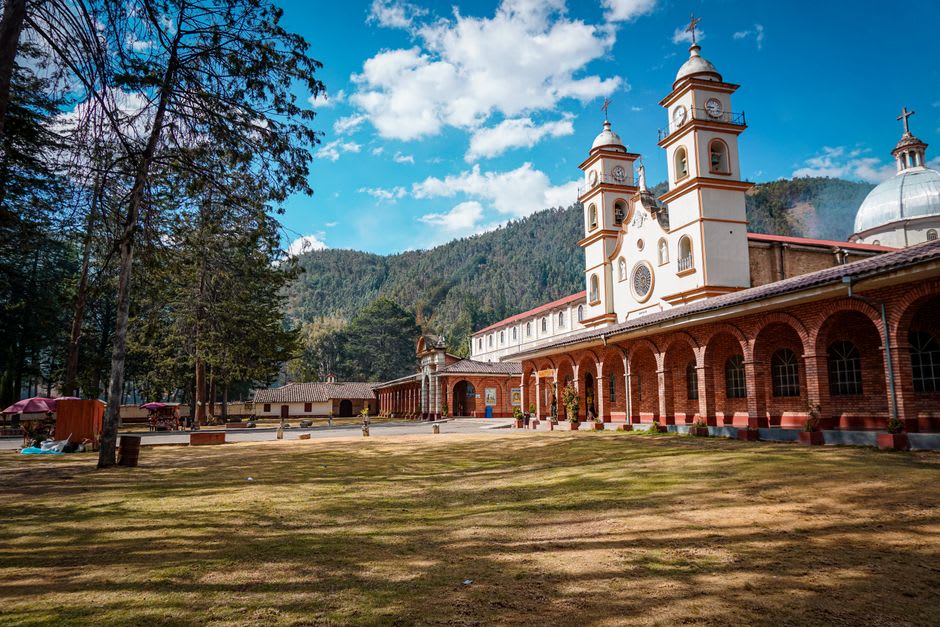
Totolapan is cold in winter. I was there in February and the morning air at 1,800 meters had a bite to it that the locals seemed unbothered by and that made me glad I’d brought a jacket. By late morning the sun had taken the edge off, which is the mountain town rhythm — dress for early morning and peel off layers as the day advances.
The town has a modest Sunday market and a few small restaurants near the plaza. I ate quesillo and black beans at a comedor near the church, which is the right breakfast at any altitude but particularly right when there’s cold air coming off the sierra. The woman running the place brought out tortillas made on the comal that morning, still soft, and I ate more of them than I had planned.
The views from the convent terrace are worth pausing over. The entire Morelos valley is visible on a clear day — Cuautla below to the south, the dry lowlands spreading east toward Puebla, and on the horizon to the west, if the visibility is good, you can pick out the outline of the volcanoes. Popocatépetl still venting its thin plume of smoke. The scale of the landscape is one of the things that genuinely surprised me about Morelos after arriving from France, where the distances are different. Here the vista from one town covers territory that would take days to walk.

Getting There
Totolapan is about 30 kilometers from Cuautla by a road that climbs steeply through the sierra. Colectivos run from Cuautla’s terminal on most days, though frequency is limited — check departure times before going, and plan your return in advance. The town has no accommodation that I’m aware of, so this is a day trip or morning excursion. Come between November and April when the air is clear and the views are at their best. The convent is open most days; an entrance fee is sometimes collected by the caretaker.