
Tlalnepantla
"I had eaten nopal a thousand times before I ever saw where it comes from. It comes from here."
You do not end up in Tlalnepantla by accident. It sits off in the rocky northern corner of Morelos, up where the state crumples into hills and volcanic rock on the way toward the Mexico City boundary, and the road to it is the kind you take on purpose. I went because I had become curious, after years of eating nopales in every form Mexico offers them, about where the paddles actually grow — and someone told me that a startling share of what turns up on tables across central Mexico comes from exactly this small municipality. So I drove up to see the fields.
The Nopal Fields
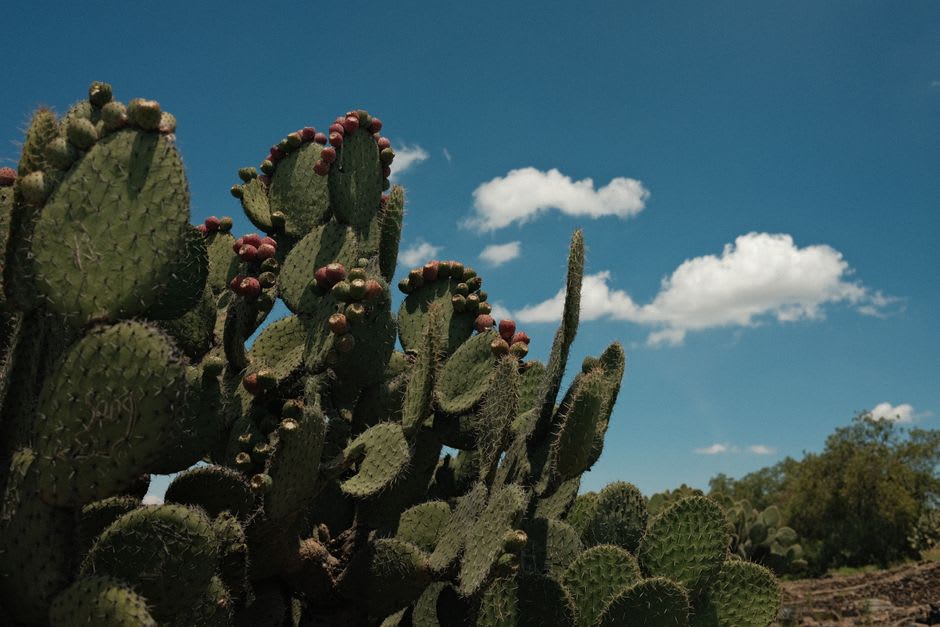
Nothing quite prepares you for the scale of it. I expected a few plots; what I found were entire hillsides given over to nopal, planted in dense disciplined rows, the flat green paddles held up to the light in their thousands across the rocky slopes. This is agriculture, not decoration — Tlalnepantla is one of the great nopal-producing towns of the country, and the whole rhythm of the place is organized around the cactus: planting it, cutting it, cleaning it, trucking it out at dawn.
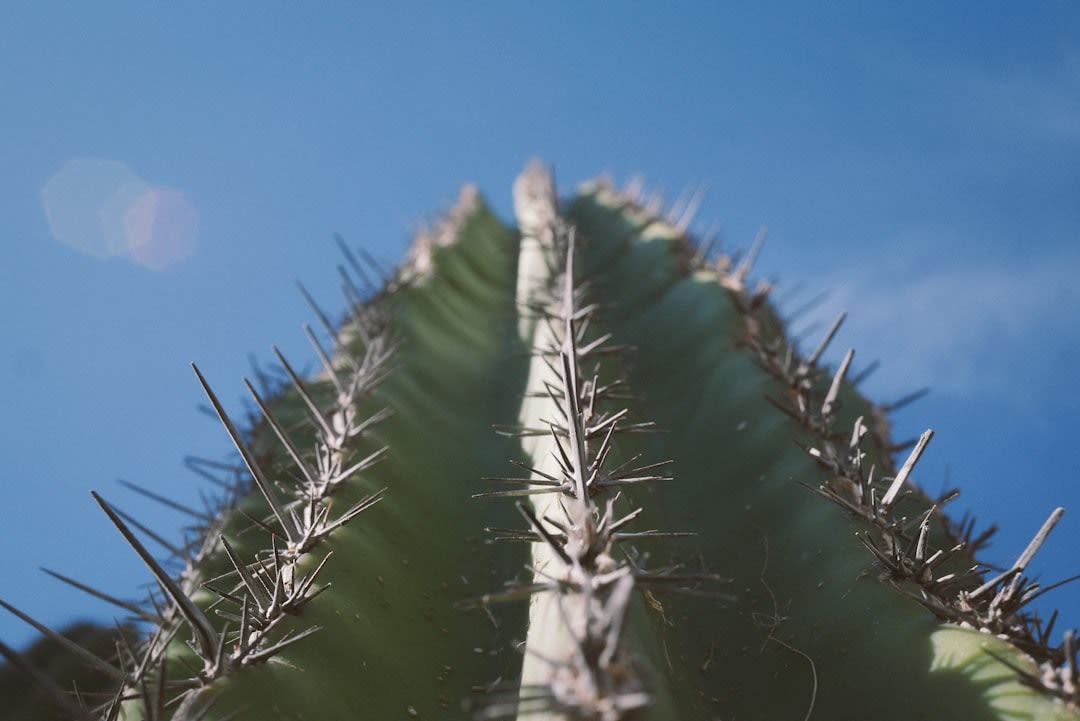
I watched two men working a row, cutting the young tender paddles with quick precise strokes and stacking them in crates, gloved against the tiny spines. There is a whole knowledge here — which paddles to take and when, how to keep the plant producing, how to handle a crop that fights back. The rocky, thin-soiled ground that would defeat most crops is exactly what the nopal wants.
Rocks and Cool Highland Edges
The land up here is the other half of the story. Tlalnepantla’s name comes from Náhuatl — roughly, “the land in the middle” — and it does feel like a hinge, a place perched on the cool rocky edge where warm Morelos gives way to the higher country above. Great outcrops of pale volcanic rock break through the hills, and the elevation keeps the air fresher and cooler than the sugarcane valleys to the south.
There is a rough, honest beauty to it that has nothing to do with prettiness. Grey rock, green cactus, blue distance — a landscape stripped down to a few strong elements. On the afternoon I was there the light came in low and hard across the outcrops and turned the whole hillside of nopal a bright acid green, and I stood at the edge of a field longer than I had any practical reason to.
An Honest Town
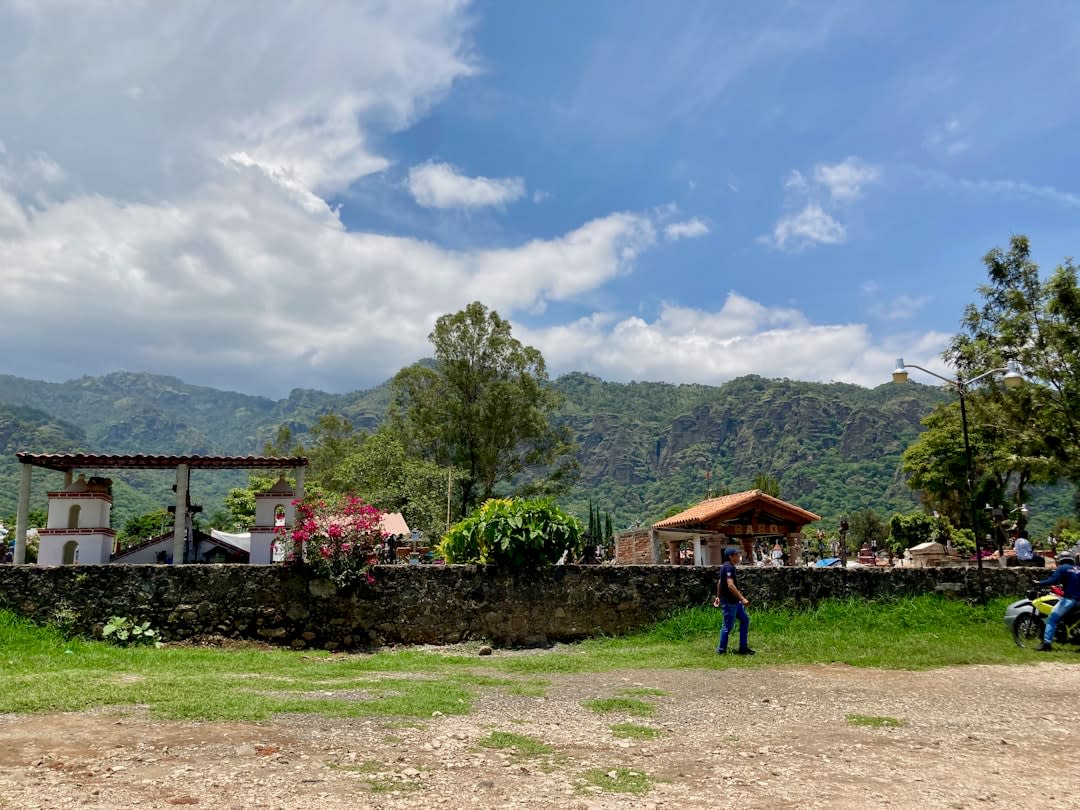
The town itself is modest and makes no effort to be otherwise. There is a plaza, a church, a few comedores, and the constant coming and going of trucks loaded with the day’s cut. If you want a meal, the nopal is obviously the thing — grilled, folded into eggs, cut into salads with onion and coriander, sharp and clean-tasting in a way the version that has ridden a truck to a distant city market never quite is. I ate a plate of them charred over coals beside a tortilla stand and it reframed an ingredient I thought I knew.
This is not a destination in the polished sense, and I would not send someone here who wanted comfort and spectacle. But if you have any interest in how the country actually feeds itself — in the unglamorous, skilled, essential work that puts a familiar thing on a plate — Tlalnepantla is one of the more quietly instructive places I have been in Morelos.
Getting There
Tlalnepantla lies in the rocky north of Morelos, reached by car from Cuernavaca in roughly an hour along roads that climb steadily into the hills; from Mexico City it is accessible over the northern boundary of the state. There is no tidy tourist route in — a car is much the easiest way, and the drive itself, up through the rock and cactus country, is part of what you come for.
Go in the morning if you want to see the fields being worked, when the day’s cutting and loading are underway. Bring a light layer for the cooler highland air, sturdy shoes for walking the rocky edges, and modest expectations of services — this is a working town, and the reward is exactly that honesty.